Have you ever stared at a blank page and wondered how to begin your essay? You’re not alone. Many students find the first paragraph the hardest part of writing. Once you know what belongs in an introduction, though, getting started becomes much easier.
This guide shares practical introduction paragraph examples, explains what makes a strong opening, and offers simple techniques you can use for school assignments, essays, reports, and other academic writing.
What Is an Introduction Paragraph?
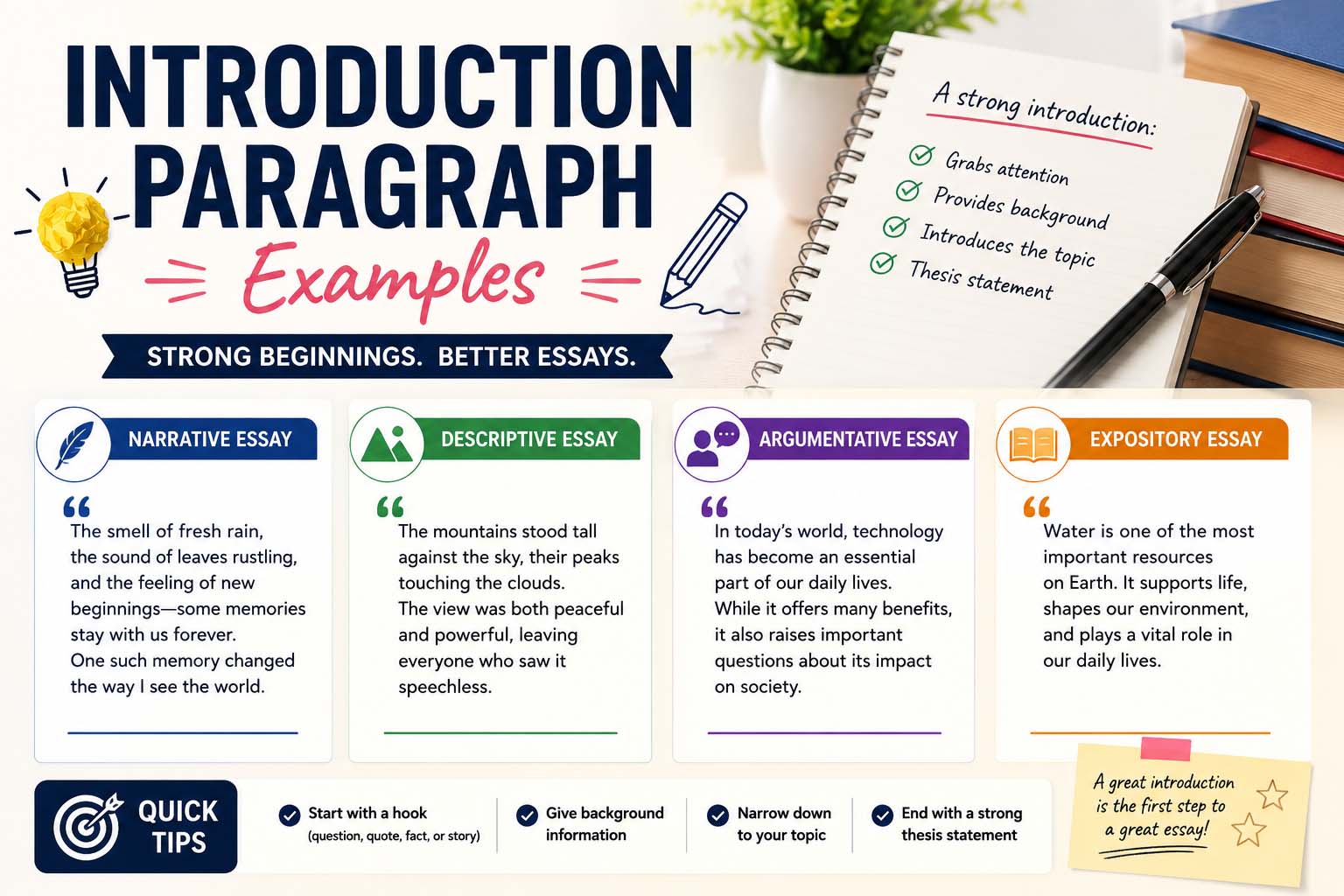
An introduction paragraph is the first section of a piece of writing. Its job is to prepare readers for the topic by introducing the subject, providing a little background, and presenting the main idea or thesis.
A good introduction should answer questions such as:
What is this paper about?
Why is the topic worth discussing?
What can readers expect?
A strong opening encourages people to keep reading.
Quick Reference Guide
| Part | Purpose |
|---|---|
| Hook | Grabs the reader’s attention |
| Background | Gives context about the topic |
| Thesis Statement | Explains the main point or argument |
Most introduction paragraphs include these three parts, although the length can vary depending on the assignment.
Why a Strong Introduction Matters
The first paragraph creates the reader’s first impression.
A good introduction can:
Capture attention
Introduce the topic clearly
Build interest
Show confidence
Make the essay easier to follow
A weak introduction often leaves readers confused before the main body even begins.
How to Start an Introduction Paragraph Examples
Many students ask how to begin without sounding repetitive.
Here are several effective ways to start.
Example 1: Ask a Question
Have you ever wondered why some students remember information more easily than others? Study habits often play a major role in academic success, especially when learning how to create a study guide.
Questions encourage readers to think before continuing.
Example 2: Use an Interesting Fact
More than half of students say they feel stressed before major exams. Learning effective study techniques can reduce anxiety and improve confidence.
Facts quickly introduce a topic.
Example 3: Share a Short Statement
Technology has changed the way students learn in today’s classrooms.
Simple statements work well for informative essays.
Example 4: Describe a Situation
Imagine walking into a classroom completely unprepared for a presentation. Good preparation helps students perform with confidence.
This approach creates an easy connection with readers.
Examples of Introduction Paragraph
Looking at complete examples makes writing much easier.
Education Essay Example
Education gives people the knowledge and skills needed for future success. While classrooms continue to change with new technology, strong study habits remain one of the biggest factors in student achievement. This essay explains how effective learning strategies improve academic performance.
Environmental Essay Example
Plastic pollution affects oceans, wildlife, and communities around the world. Small everyday choices can reduce waste and help protect the environment. This essay explores practical ways individuals can make a positive difference.
Technology Essay Example
Artificial intelligence has become part of everyday life, from smartphones to online shopping. As technology continues to develop, understanding its benefits and challenges becomes increasingly valuable. This essay examines how AI influences education and daily routines.
Health Essay Example
Healthy eating supports both physical and mental well-being. Choosing balanced meals can improve energy, concentration, and long-term health. This essay discusses simple nutrition habits students can build into daily life.
Good Introduction Paragraph Examples for Different Assignments
Different types of writing call for different opening styles.
Opinion Essay
School uniforms remain a topic of debate among students, parents, and teachers. While some believe uniforms create equality, others feel they limit personal expression. This essay explains why schools should carefully consider both viewpoints before making policy decisions.
Narrative Essay
The school hallway felt unusually quiet as I walked toward the science fair. Months of preparation had led to this moment, and I wasn’t sure what to expect.
Narrative introductions often begin with a scene.
Informative Essay
Renewable energy has become an increasingly popular solution for reducing pollution and protecting natural resources. Understanding different energy sources helps people make informed decisions about the future.
Compare-and-Contrast Essay
Online learning and traditional classroom education each offer unique advantages. Comparing these learning environments helps students choose the option that best fits their needs.
Step-by-Step Formula for Writing an Introduction
A compelling introduction captures the reader’s attention, introduces the topic, and encourages them to continue reading. Follow these simple steps:
Step 1: Write a Hook
Choose something that grabs attention.
Options include:
A question
A surprising fact
A short story
A bold statement
A quotation (when appropriate)
Step 2: Add Background Information
Give readers enough context to understand the topic.
Keep this section brief.
Step 3: Finish with a Thesis Statement
Your thesis tells readers the main idea of your paper.
Everything in the essay should support this statement.
Introduction Paragraph Examples for Essays
Many students search specifically for introduction paragraph examples for essays because essays are one of the most common school assignments.
Here’s another example.
Exercise benefits people of all ages by improving physical health, reducing stress, and increasing energy levels. While many people know exercise is good for them, building a consistent routine can be difficult. This essay explains several simple ways to make exercise part of everyday life.
Notice how the topic is introduced before presenting the essay’s purpose.
Common Mistakes Students Make
Even strong writers sometimes struggle with introductions.
Avoid these mistakes.
Making the Introduction Too Long
Save detailed explanations for the body paragraphs.
The introduction should stay focused.
Starting Too Broadly
Avoid beginning with extremely general statements like:
“Since the beginning of time…”
Readers usually find these openings weak.
Forgetting the Thesis
Without a clear thesis, readers may not understand your purpose.
Giving Too Many Details
The introduction should introduce ideas, not explain every point.
Repeating the Essay Question
Instead of copying the assignment prompt, rewrite it naturally.
Tips for Writing Better Introductions
Small improvements can make your opening much stronger.
Try these ideas:
Write the introduction after finishing the body if you’re stuck.
Keep sentences clear and direct.
Match your tone to the assignment.
Read your introduction aloud.
Remove unnecessary words.
Make sure every sentence leads naturally to the next.
Practicing with different types of questions can also help you create more engaging opening paragraphs.
Introduction Comparison
| Weak Introduction | Strong Introduction |
|---|---|
| Too general | Focused topic |
| No thesis | Clear main idea |
| Long and repetitive | Concise and organized |
| Doesn’t grab attention | Uses an engaging hook |
| Confusing | Easy to understand |
Classroom Practice Activity
Teachers often recommend practicing introductions with different topics.
Choose one subject and write three different openings.
For example:
Topic: Healthy Eating
Version 1:
Start with a question.
Version 2:
Start with a statistic.
Version 3:
Start with a short scenario.
This exercise helps students discover which style feels most natural.
Study Tips for Better Writing
Improving introductions takes practice.
Try these habits:
Read High-Quality Essays
Notice how experienced writers begin their papers.
Practice Often
Writing one introduction every week builds confidence.
Ask for Feedback
Teachers and classmates can point out areas for improvement.
Revise More Than Once
Your first draft doesn’t have to be perfect.
Many excellent introductions are rewritten several times.
Regular critical thinking exercises can also strengthen your ability to develop engaging ideas and logical essay openings.
When Should You Write the Introduction?
Many students assume it should always come first.
That’s not required.
Some writers prefer finishing the body paragraphs first because they already know exactly what the essay covers.
Then they return and write a stronger introduction.
Choose the method that works best for you.
FAQs
What is an introduction paragraph?
An introduction paragraph is the opening section of a paper that introduces the topic, provides background information, and presents the main idea or thesis.
What are examples of introduction paragraph?
Examples include openings that begin with a question, interesting fact, short story, or direct statement before introducing the essay’s main point.
What are good introduction paragraph examples?
Good introductions capture attention, clearly explain the topic, and end with a focused thesis statement that guides the rest of the essay.
How to start an introduction paragraph examples?
You can begin with a question, statistic, surprising fact, brief scenario, or clear statement that naturally leads into your topic.
How long should an introduction paragraph be?
For most school essays, one paragraph of about three to six sentences is enough, though longer research papers may require more detail.
Should every introduction have a thesis statement?
Yes. A thesis statement gives readers a clear understanding of the essay’s main idea and helps organize the rest of the paper.
Can I write the introduction last?
Yes. Many students find it easier to write the introduction after completing the body paragraphs because they already know what the essay will cover. Understanding what is second person point of view can also help when deciding how to engage readers in different types of writing.
Final Study Advice
Writing strong introductions becomes easier with regular practice. Focus on creating an interesting opening, provide just enough background to set the stage, and finish with a clear thesis statement. Reading sample introductions, revising your drafts, and practicing different opening styles will help you become a more confident writer in any subject.