Preparing for quizzes, exams, and major assignments can feel overwhelming when information is scattered across textbooks, lecture slides, and notebooks. That’s why learning how to create a study guide is one of the most valuable academic skills students can develop.
A study guide organizes important information into an easy-to-review format, helping students focus on key concepts, improve retention, and prepare more effectively for tests.
Whether you’re in high school, college, or pursuing professional certifications, a well-designed study guide can make studying more efficient and less stressful.
This guide explains how to create a study guide step by step, along with practical examples and student-friendly strategies.
What Is a Study Guide?
A study guide is a structured learning resource that summarizes important course material.
It may include:
Key concepts
Definitions
Formulas
Dates
Vocabulary terms
Practice questions
Diagrams
Review notes
Unlike regular notes, a study guide is specifically designed to help students review information quickly before assessments.
Why Study Guides Are Important
Study guides provide several academic benefits.
Better Organization
They combine information from multiple sources into one location.
Improved Memory
Reviewing summarized material helps strengthen retention.
More Efficient Studying
Students spend less time searching through textbooks and notes.
Reduced Stress
A clear study plan often makes exam preparation feel more manageable.
Better Exam Performance
Focused review can improve understanding and confidence.
Benefits of Creating Your Own Study Guide
While many teachers provide study guides, creating your own offers additional advantages.
Active Learning
Writing and organizing information encourages deeper understanding and can complement resources like the Student Perception Survey Guide when evaluating learning progress.
Personalized Content
Better Recall
Creating summaries helps move information into long-term memory.
Stronger Critical Thinking
Students learn to identify the most important concepts and connections through regular Critical Thinking Exercises.
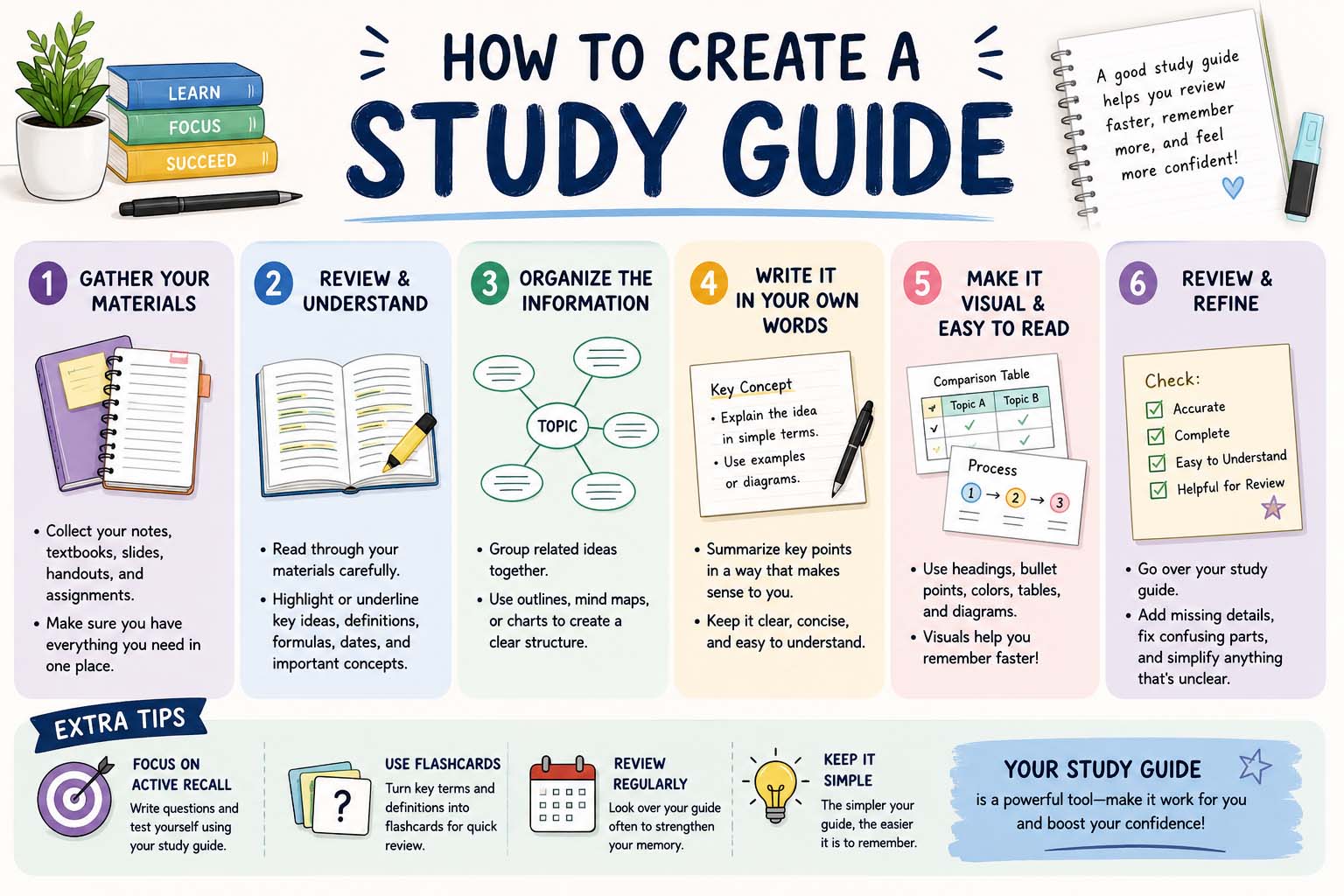
Step-by-Step: How to Create a Study Guide
The process becomes much easier when broken into simple steps.
Step 1: Gather All Learning Materials
Start by collecting:
Class notes
Lecture slides
Textbooks
Assignments
Handouts
Practice quizzes
Having everything in one place prevents missing important information.
Step 2: Identify Key Topics
Review the course outline and determine:
Major chapters
Learning objectives
Frequently discussed concepts
Topics emphasized by instructors
These areas often appear on exams.
Step 3: Organize Information by Category
Create sections for each topic.
For example:
Biology Study Guide
Cell Structure
Genetics
Evolution
Human Anatomy
Organized content is easier to review and remember.
Step 4: Summarize Important Concepts
Avoid copying large sections of text.
Instead:
Use short explanations
Create bullet points
Highlight key facts
Focus on understanding rather than memorization.
Step 5: Add Practice Questions
Testing yourself is one of the most effective learning strategies.
Examples:
What is photosynthesis?
Define opportunity cost.
Explain Newton’s First Law.
Practice questions reveal knowledge gaps before exams.
Step 6: Review and Update
Study guides should evolve throughout the course.
Add:
New concepts
Teacher feedback
Clarifications
Additional examples
Regular updates improve usefulness over time.
How to Create a Study Guide for Students
Many educators ask how to create a study guide for students that supports effective learning.
A student-friendly study guide should include:
Clear Headings
Break information into manageable sections.
Simple Language
Use easy-to-understand explanations whenever possible.
Visual Elements
Consider adding:
Charts
Diagrams
Tables
Color coding
Visual learning can improve comprehension.
Review Questions
Encourage active recall and self-assessment.
Key Vocabulary
Highlight important terms students are expected to understand.
These elements help create an effective learning resource for various subjects.
How to Create a Study Guide From Notes
One of the most common student questions is how to create a study guide from notes.
The process involves transforming raw notes into organized study material.
Highlight Main Ideas
Identify recurring concepts and themes.
Remove Unnecessary Details
Focus on information likely to appear on assessments.
Create Summaries
Condense long explanations into shorter versions.
Group Similar Topics
Organize related information together.
This approach makes review sessions much more productive.
How to Create a Study Guide From Lecture Notes
Students often collect extensive lecture material and wonder how to create a study guide from lecture notes.
Start by:
Reviewing Each Lecture
Look for:
Repeated concepts
Instructor emphasis
Important examples
Create Topic Sections
Separate content by subject area.
Convert Notes Into Questions
Transform statements into review questions.
Example:
Lecture Note:
“The mitochondria produce energy.”
Study Guide Question:
“What is the primary function of mitochondria?”
This method strengthens understanding and memory retention.
How to Create a Study Guide in Google Docs
Many students prefer digital learning tools and ask how to create a study guide in Google Docs.
Google Docs offers several advantages.
Create Headings
Use built-in heading styles for organization.
Add Bullet Lists
Summarize information clearly.
Insert Tables
Tables work well for comparisons and vocabulary reviews.
Include Images
Diagrams and charts can improve understanding.
Access Anywhere
Because documents are cloud-based, students can study from multiple devices.
Google Docs is especially useful for collaborative study groups, including students planning How Long to Get a Bachelor’s Degree?
Example of a Simple Study Guide
History Exam Study Guide
Topic: American Revolution
Key Dates:
1776 – Declaration of Independence
1783 – Treaty of Paris
Key Terms:
Patriot
Loyalist
Continental Congress
Practice Questions:
What caused the Revolutionary War?
Why was the Declaration of Independence significant?
This simple structure can be adapted for any subject.
Common Mistakes to Avoid
Including Too Much Information
Overloaded study guides become difficult to review.
Waiting Until the Last Minute
Creating a guide gradually is more effective.
Ignoring Weak Areas
Focus extra attention on challenging topics.
Passive Reading
Always combine reading with active recall and practice questions, just as you would when reviewing important skills to put on resume for career preparation.
Study Tips for Better Results
Study in Short Sessions
Use focused study periods with regular breaks.
Use Active Recall
Test yourself frequently rather than simply rereading notes.
Teach the Material
Explaining concepts to others strengthens understanding.
Review Regularly
Frequent review improves long-term retention.
Stay Organized
Keep study guides updated throughout the course.
FAQ
What is a study guide?
A study guide is an organized resource that summarizes important information for review and exam preparation.
How do I create a study guide?
Gather learning materials, identify key topics, summarize concepts, and add practice questions.
How to create a study guide from notes?
Review notes, identify important information, organize topics, and create concise summaries.
How to create a study guide from lecture notes?
Focus on major concepts, repeated themes, instructor emphasis, and key examples from lectures.
Use headings, bullet lists, tables, images, and cloud-based organization tools to build a digital study guide.
Are study guides effective?
Yes. Well-designed study guides improve organization, retention, and exam readiness.
Conclusion
Learning how to create a study guide is an essential academic skill that can improve organization, understanding, and exam performance. Whether you’re building a guide from textbooks, class materials, lecture notes, or digital resources, the key is organizing information into a simple and easy-to-review format.