Many students planning their future ask the same important question: how long does it take to get a bachelor’s degree? A bachelor’s degree is one of the most common higher education qualifications and can open doors to better job opportunities, career advancement, and graduate study. However, the amount of time it takes to complete depends on several factors.
For most students, earning a bachelor’s degree takes around four years of full-time study. But some people finish faster, while others may take five or six years depending on their schedule, finances, transfer credits, and chosen major. Understanding the timeline can help you plan your education goals more effectively.
In this guide, we explain how long a bachelor’s degree usually takes, what affects the timeline, and ways to complete it sooner.
What Is a Standard Time?
A bachelor’s degree is an undergraduate academic program offered by colleges and universities. It usually requires completing a set number of credit hours in general education courses, major-specific classes, and electives. Before beginning university research, students often learn what is a scholarly source to identify reliable academic information.
Common bachelor’s degrees include:
Bachelor of Arts (BA)
Bachelor of Science (BS)
Bachelor of Business Administration (BBA)
Bachelor of Engineering (BE or BEng)
Most programs require around 120 semester credit hours, though this can vary by country or institution.
Standard Time: Four Years
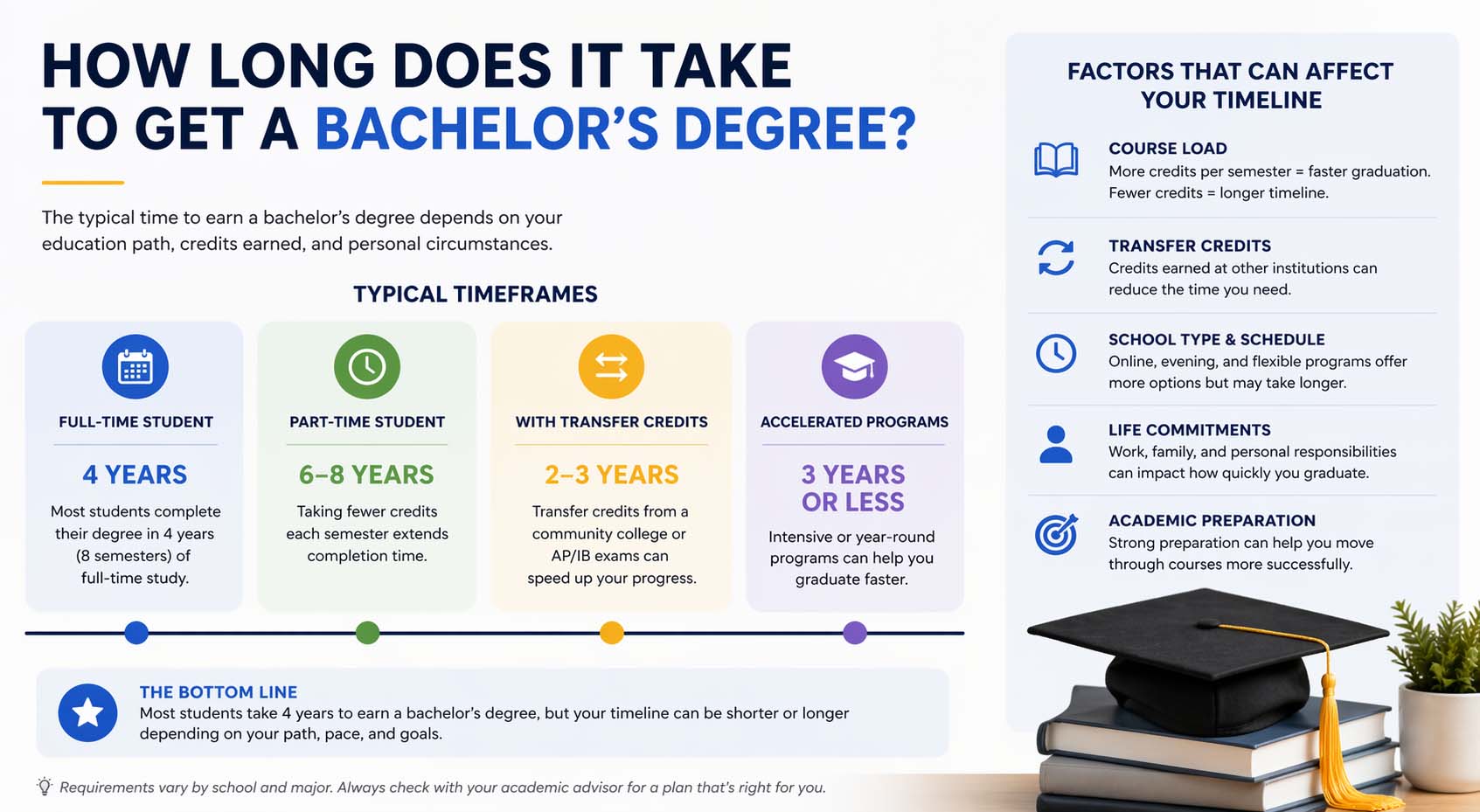
The most common answer to how long does it take to get a bachelor’s degree is four years. This timeline assumes a student attends full time and completes around 15 credit hours each semester.
A typical four-year path looks like this:
Year One
as writing, math, science, and humanities.
Year Two
More general courses are completed while students begin classes related to their major.
Year Three
Students focus more deeply on major requirements, internships, or specialized courses. Learning methods of business communication can also be valuable for students preparing for business-related careers.
Year Four
Final advanced courses are completed along with capstone projects, internships, or graduation requirements.
Students who stay on track can graduate in about four years.
Can You Finish Faster?
Yes, some motivated students complete a bachelor’s degree in three years or less. This usually requires heavier course loads, summer classes, or transfer credits.
Ways to Graduate Faster
Advanced Placement Credits
High school AP, IB, or dual-enrollment courses may count toward college credit.
Summer Semesters
Taking classes during summer helps reduce the total time needed.
Extra Courses Per Semester
Additionally, taking classes during summer helps reduce the total time needed.
Accelerated Online Programs
Some universities offer faster-paced online degrees designed for working adults.
Graduating early can save money and help students enter the workforce faster.
Part-Time Study: Five to Six Years or More
Not everyone studies full time. Many students work jobs, raise families, or manage other responsibilities. Part-time study often means taking fewer classes each semester, which extends graduation time.
For part-time students, the answer to how long does it take to get a bachelor’s degree may be five, six, or even more years depending on pace.
This path can still be an excellent option because it offers flexibility and lower semester workloads.
Online Can You Finish Faster Timelines
Online programs have become increasingly popular. Some follow traditional semester schedules, while others offer accelerated terms throughout the year.
Standard Online Programs
Accelerated Online Programs
Can sometimes be completed in two to three years if students transfer credits or study year-round.
Flexible Self-Paced Options
Some competency-based programs allow faster progress if students master material quickly.
Online learning can be ideal for adults balancing work and family commitments.
Does Your Major Affect the Timeline?
Yes, the chosen major can influence how long a degree takes.
Majors That Often Follow Four Years
Business
Psychology
English
Communications
Sociology
Majors That May Take Longer
Engineering
Architecture
Nursing
Education (with licensure requirements)
Double majors or combined programs
Programs with labs, clinical placements, or strict sequencing may extend timelines.
Factors That Delay Graduation
Several common issues can slow progress.
Changing Majors
Switching fields may require new classes and extra semesters.
Failed or Dropped Courses
Retaking classes adds time and cost.
Limited Course Availability
Some required classes are only offered once per year.
Financial Challenges
Students may pause studies due to tuition or personal finances.
Personal Responsibilities
Work, health, or family obligations can reduce study load.
Planning ahead with academic advisors can help minimize delays. Reading an executive summary example may also help students complete business assignments more effectively.
How Many Credits Are Needed?
In many U.S. universities, a bachelor’s degree requires around 120 credits. If a student earns:
15 credits per semester → about 4 years
12 credits per semester → around 5 years
18+ credits per semester → closer to 3 years
Credit systems vary internationally, but the principle is similar: more completed coursework means faster graduation.
Can You Get a Bachelor’s Degree Faster?
For many people, yes.
Higher earning potential
More job opportunities
Career advancement
Professional credibility
Preparation for graduate school
The time investment often pays off long term, especially in fields where degrees are expected.
Tips to Finish on Time
Meet with Advisors Regularly
They help ensure you stay on track.
Register Early
Secure required classes before they fill.
Use Summer Terms
Even one summer course can shorten your timeline.
Stay Organized
Track deadlines, credits, and graduation requirements. Understanding a student perception survey can also help education majors learn how schools evaluate the student experience.
Choose a Realistic Schedule
Balance ambition with personal responsibilities.
Conclusion
So, how long does it take to get a bachelor’s degree? For most full-time students, the answer is around four years. However, some finish faster through transfer credits, summer study, or accelerated programs, while part-time students may take five years or longer.
The right timeline depends on your goals, schedule, finances, and learning style. Whether you complete your degree quickly or at a slower pace, earning a bachelor’s degree is an important milestone that can create valuable personal and professional opportunities.