Understanding What Is a Second Person Point of View is an essential part of learning how to read and write effectively. Whether you’re writing a story, essay, speech, or instructional guide, choosing the correct point of helps shape how readers experience your work.
One of the most interesting perspectives is the second person point of view. Although it is less common than first-person or third-person narration, it can create a direct connection between the writer and the reader.
In this guide, you’ll learn what is second person point of view, how it works, when to use it, and how it compares with other narrative perspectives.
What Is a Second Person Point of View?
If you’ve ever wondered, what is a second person point of view, the answer is simple.
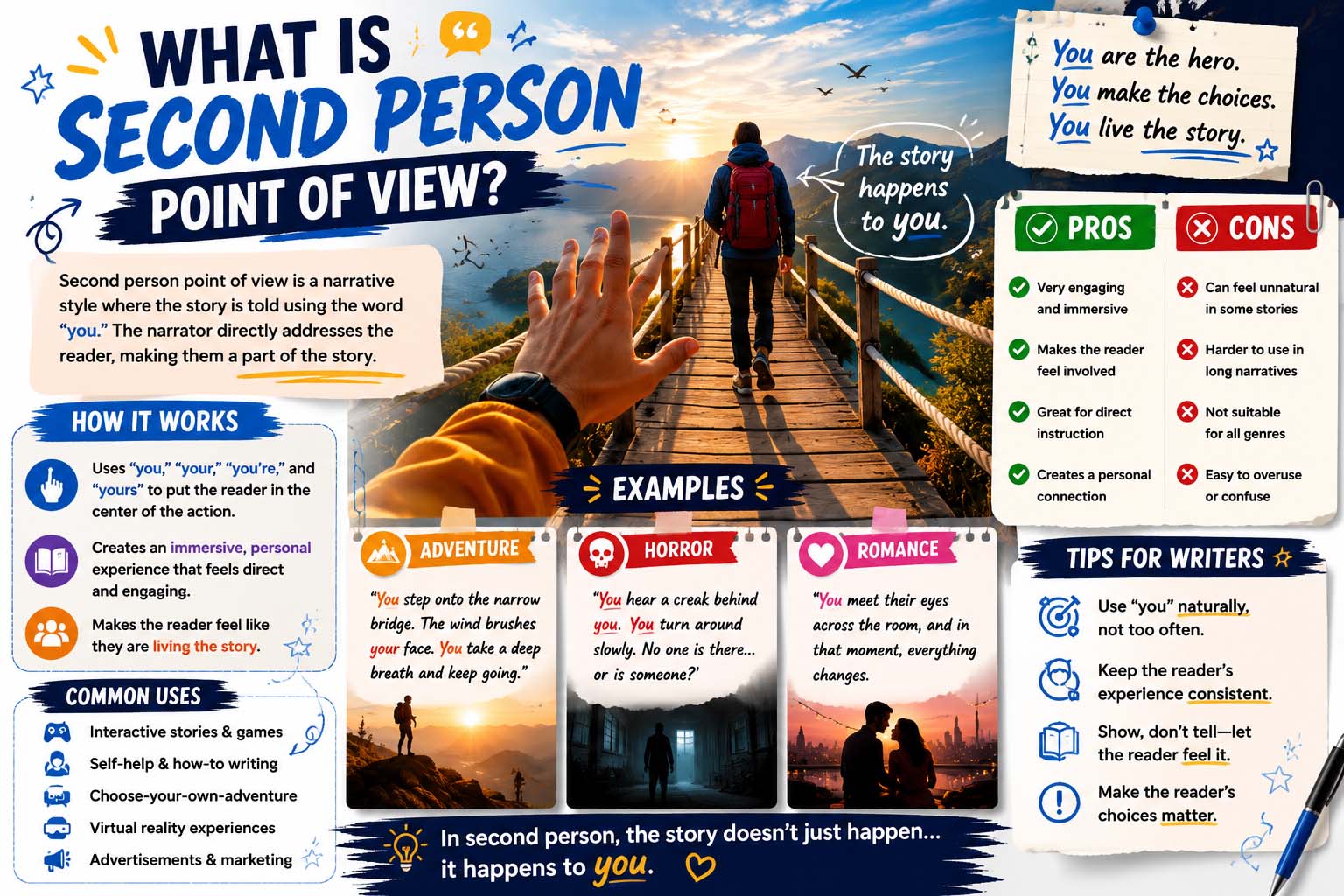
Second person point of view addresses the reader directly by using pronouns such as:
You
Your
Yours
Yourself
Instead of talking about “I” or “he,” the writer speaks directly to the reader, making them feel as though they are part of the experience.
Example
You walk into the classroom and notice everyone looking at you.
In this sentence, the reader becomes the main character.
What Is the Second Person Point of View?
Another common question is what is the second person point of view.
It is a narrative style where the writer communicates directly with the audience. This perspective makes readers feel personally involved because they are addressed as “you.”
Second person narration often appears in:
Instruction manuals
Recipes
Educational materials
Self-help books
Interactive fiction
Choose-your-own-adventure stories
Speeches
Advertisements
Because it creates direct engagement, it is especially effective for giving directions or encouraging action.
Characteristics of Second Person Point of View
Second person writing has several key features.
Direct Reader Involvement
Uses “You”
Second person almost always relies on:
You
Your
Yours
Yourself
Creates Personal Engagement
Readers often feel more connected because the writing speaks directly to them.
Common in Informational Writing
Educational articles, tutorials, and types of questions resources frequently use second person to explain steps clearly.
What Is Second Person Point of View in Writing?
Students also ask, what is second person point of view in writing.
In writing, second person is used when authors want readers to imagine themselves completing actions or experiencing events.
For example:
You should outline your essay before writing your introduction.
The sentence directly instructs the reader.
Second person is especially useful for:
Study guides
Writing tutorials
User manuals
Travel guides
Cooking instructions
Online learning materials
However, many academic essays require first-person or third-person writing instead, so students should always check assignment instructions.
Examples of Second Person Point of View
Each sentence directly involves the reader.
What Is First, Second, and Third Person Point of View?
Understanding what is first second and third person point of view makes it easier to recognize different writing styles.
Point of ViewPronounsExampleFirst PersonI, me, my, weI enjoy reading books.Second PersonYou, yourYou enjoy reading books.Third PersonHe, she, theyShe enjoys reading books.
Each perspective creates a different relationship between the writer, narrator, and reader.
When Should You Use Second Person?
Second person works best in specific situations.
Instructional Writing
Examples include:
User guides
Tutorials
Classroom activities
Educational Content
Teachers often use second person to explain concepts directly, especially when showing how to create a study guide.
Example:
You should review your notes before the test.
Marketing
Advertisements frequently address customers directly.
Example:
You deserve better performance.
Interactive Stories
When Should You Avoid Second Person?
Although useful, second person is not always appropriate.
Avoid it when:
Writing formal research papers
Following academic style guides that prohibit it
Creating objective scientific reports
Writing biographies
In these situations, third person is often preferred.
How to Write Using Second Person
Follow these simple steps.
Step 1: Think About Your Audience
Decide whether speaking directly to readers fits your purpose.
Step 2: Use “You”
Replace third-person references with second-person pronouns when appropriate.
Example:
Instead of:
Students should review their notes.
Write:
You should review your notes.
Step 3: Stay Consistent
Avoid switching between first, second, and third person unnecessarily.
Consistency improves readability.
Step 4: Keep Instructions Clear
Second person works best with simple, direct language.
Common Mistakes Students Make
Many beginners accidentally mix different points of view.
Mixing Pronouns
Incorrect:
You should finish your homework because they expect good grades.
Correct:
You should finish your homework because you want good grades.
Overusing Second Person
Not every sentence needs “you.”
Balance helps improve writing quality.
Ignoring Assignment Requirements
Some teachers prefer third-person academic writing.
Always review assignment instructions before choosing a point of view.
Tips for Students
To master second person writing:
Read instructional articles.
Practice rewriting first-person sentences into second person.
Keep pronouns consistent.
Focus on clarity.
Use direct, active language.
These habits improve both writing and reading comprehension and can be strengthened with regular critical thinking exercises.
Why Is Second Person Effective?
Second person offers several advantages.
Creates Reader Engagement
Readers feel personally involved.
Makes Instructions Easier
Directions become clearer and more conversational.
Improves Readability
Simple language makes educational content easier to understand.
Encourages Action
Many motivational and instructional texts use second person because it inspires readers to take the next step. Teachers may also gather feedback through a student perception survey to evaluate how effectively instructional materials engage learners.
Frequently Asked Questions
What is second person point of view?
Second person point of view addresses the reader directly using pronouns like “you” and “your.”
What is a second person point of view?
It is a writing perspective that places the reader directly into the action or instruction.
What is the second person point of view?
It is a narrative style commonly used in instructions, educational materials, advertisements, and interactive stories.
First person uses “I,” second person uses “you,” and third person uses “he,” “she,” or “they.”
What is second person point of view in writing?
It is a writing style where the author directly addresses the reader using second-person pronouns.
Is second person common in novels?
It is less common than first or third person but is sometimes used in experimental fiction and interactive storytelling.
Conclusion
Understanding what is second person point of view helps students become stronger readers and writers. By addressing the audience directly with words like “you” and “your,” second person creates an engaging and personal reading experience. It works especially well in educational materials, instructions, self-help books, and interactive stories.