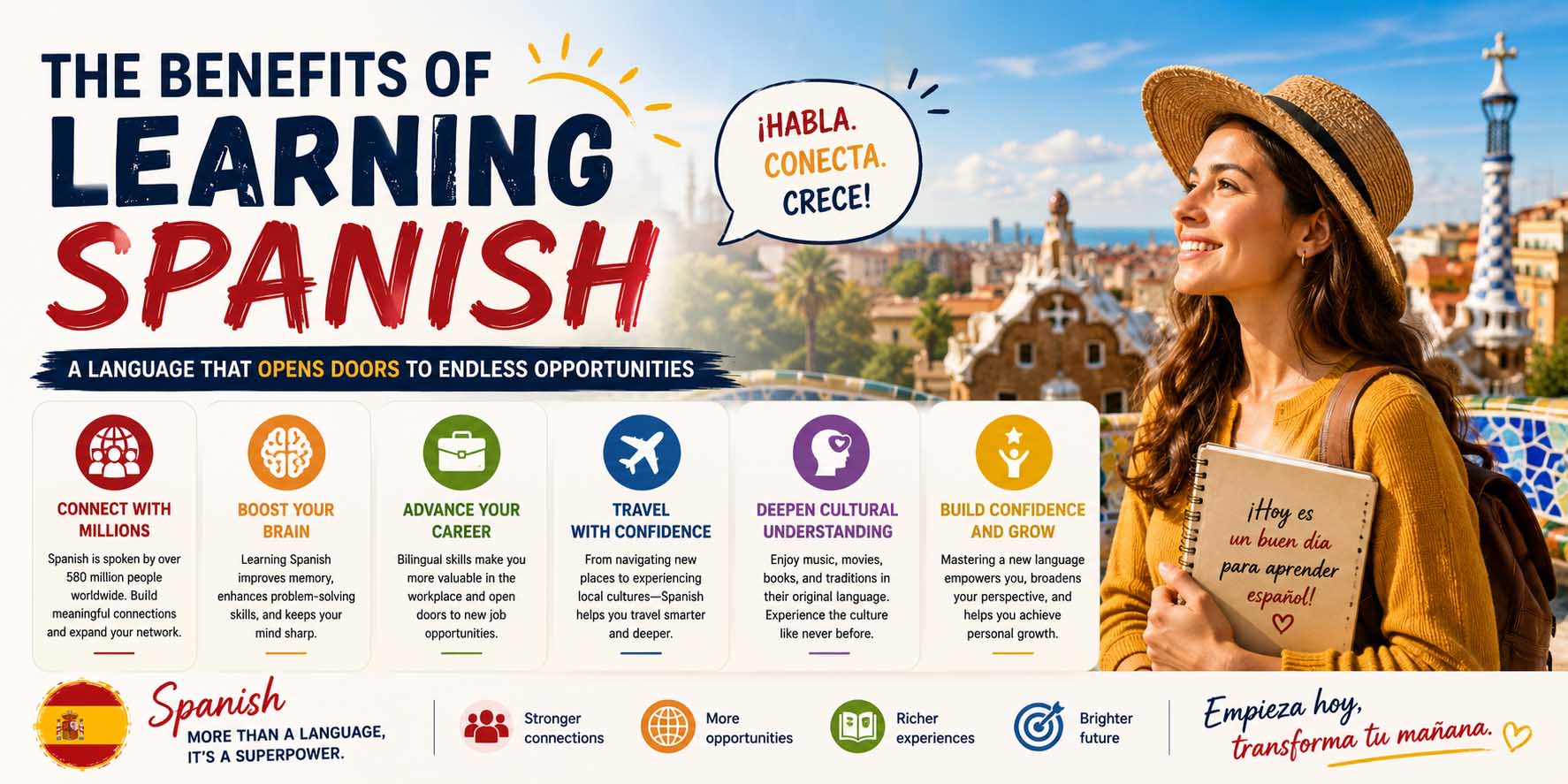
Learning a new language is one of the best investments you can make, and the benefits of learning Spanish go far beyond memorizing vocabulary. Spanish is spoken by hundreds of millions of people around the world, making it one of the most useful languages for travel, education, business, and everyday communication.
Whether you’re a student, a working professional, or simply someone who enjoys learning new skills, Spanish offers practical advantages that can enrich both your personal and professional life. This guide explores why so many people choose Spanish, how it can support your goals, and the best ways to begin learning.
Benefits of Learning Spanish for Everyday Life
Spanish is one of the world’s most widely spoken languages. Because it’s used across Europe, North America, South America, Central America, and parts of Africa, learning it opens the door to communicating with people from many different cultures.
Some everyday advantages include:
- Easier travel
- Better communication
- Access to more books, movies, and music
- Improved confidence when meeting new people
- Greater cultural understanding
Even learning basic phrases can make everyday interactions more enjoyable when visiting Spanish-speaking countries.
10 Benefits of Learning Spanish
If you’re wondering whether it’s worth the effort, here are 10 benefits of learning Spanish that make it one of the most rewarding languages to study.
| Benefit | Why It Matters |
|---|---|
| Better communication | Speak with millions of people worldwide |
| Career opportunities | Valuable skill in many industries |
| Travel confidence | Easier conversations abroad |
| Brain exercise | Strengthens memory and focus |
| Cultural understanding | Connect with diverse traditions |
| Academic success | Supports language learning skills |
| Networking | Build international relationships |
| Entertainment | Enjoy Spanish-language media |
| Personal achievement | Builds confidence and discipline |
| Lifelong learning | Creates opportunities for continued growth |
Each benefit becomes more noticeable as your language skills improve.
Career Advantages of Learning Spanish
Many employers value bilingual candidates.
Spanish can be useful in careers such as:
- Healthcare
- Education
- Customer service
- Business
- Tourism
- Law enforcement
- International trade
- Marketing
Being able to communicate with a wider range of customers or clients can make your résumé more competitive.
Even if Spanish isn’t required for your job, it often demonstrates commitment, adaptability, and strong communication skills.
Benefits of Learning Spanish Language for Students
The benefits of learning Spanish language begin long before graduation.
Students often find that language study helps develop:
- Listening skills
- Reading comprehension
- Grammar awareness
- Problem-solving
- Study habits
Learning another language also makes it easier to understand how languages work, which can improve writing and communication in your native language.
As your grammar improves, you’ll eventually encounter topics like difference between por and para, one of the most common challenges for intermediate Spanish learners.
Spanish Makes Travel Easier
Spanish is the official language in more than 20 countries.
Knowing even basic phrases helps you:
- Order food
- Ask for directions
- Read signs
- Book transportation
- Talk with local people
- Handle emergencies
Instead of relying entirely on translation apps, you’ll be able to interact more naturally during your travels.
It Improves Cognitive Skills
Research suggests that learning another language can strengthen several mental skills.
These include:
- Memory
- Concentration
- Pattern recognition
- Flexible thinking
- Problem-solving
Language learning encourages your brain to switch between vocabulary, grammar, pronunciation, and context, creating a challenging but rewarding mental workout.
Many teachers pair language study with activities such as Critical Thinking Exercises because both encourage students to analyze information rather than simply memorize it.
Access to More Culture
Learning Spanish allows you to experience content in its original language.
You’ll gain access to:
- Literature
- Films
- Television series
- Podcasts
- Music
- News
- Online communities
Understanding cultural references directly often provides a richer experience than relying on translations.
Practical Skills You’ll Learn
Spanish lessons involve much more than vocabulary.
You’ll gradually develop:
Reading Skills
You’ll become comfortable recognizing sentence structures and common expressions.
Listening Skills
Practice helps you understand conversations spoken at natural speed.
Speaking Skills
Confidence grows through regular conversations, even if you begin with simple phrases.
Writing Skills
Writing exercises reinforce grammar and vocabulary while improving communication.
What Are the Benefits of Learning Spanish for Families?
Parents often ask, what are the benefits of learning Spanish for children.
Starting early offers several advantages.
Children often:
- Develop strong pronunciation
- Learn grammar naturally
- Build confidence speaking
- Become more comfortable with multicultural environments
Learning together can also become a fun family activity.
Study Tips for Beginners
Success doesn’t require studying for hours every day.
Instead, focus on consistency.
Helpful strategies include:
- Study 15–20 minutes daily.
- Review vocabulary regularly.
- Listen to Spanish music.
- Watch beginner-friendly videos.
- Practice speaking aloud.
- Read simple articles.
- Keep a vocabulary notebook.
Small daily habits often produce better long-term results than occasional marathon study sessions.
If you’re unsure how to organize your lessons, guides like How to Create a Study Guide offer useful techniques that work for language learning as well as other subjects.
Everyday Vocabulary Practice
One of the easiest ways to remember new words is by learning vocabulary related to daily life.
Start with categories such as:
- Food
- Family
- Colors
- Numbers
- Weather
- Clothing
- Transportation
As you progress, studying topics like Partes del Cuerpo Humano helps expand your vocabulary while reinforcing practical conversation skills.
Common Challenges
Every learner faces obstacles.
Some of the most common include:
Verb Conjugations
Spanish verbs change depending on the subject and tense.
Regular practice gradually makes these patterns easier to recognize.
Pronunciation
Although Spanish pronunciation is generally consistent, certain sounds may take time to master.
Listening to native speakers helps build confidence.
Grammar Rules
Word order, gender, and agreement sometimes differ from English.
Making mistakes is a normal part of the learning process.
Five Benefits of Learning Spanish You’ll Notice Quickly
If you’re looking for 5 benefits of learning Spanish, these are often the first improvements learners experience:
- Greater confidence speaking with native speakers.
- Better understanding of Spanish-language media.
- Expanded vocabulary in everyday situations.
- Increased motivation to keep learning.
- A stronger appreciation for different cultures.
These early successes help maintain momentum as your skills continue to grow.
Best Resources for Learning
Today’s learners have many options.
Popular resources include:
- Language-learning apps
- Online courses
- Community college classes
- YouTube lessons
- Podcasts
- Conversation groups
- Flashcards
- Children’s books
Using a combination of resources usually works better than relying on a single method.
Learning Strategies That Work
Successful language learners often share similar habits.
Try this simple routine:
| Day | Activity |
| Monday | Vocabulary review |
| Tuesday | Listening practice |
| Wednesday | Reading exercise |
| Thursday | Grammar lesson |
| Friday | Speaking practice |
| Saturday | Watch Spanish content |
| Sunday | Weekly review |
A balanced schedule keeps learning interesting while reinforcing multiple language skills.
Does Learning Spanish Help With Other Languages?
Yes.
Spanish shares vocabulary and grammar features with several Romance languages, including:
- Italian
- Portuguese
- French
- Romanian
After learning Spanish, students often recognize familiar words when studying another related language.
Can Spanish Improve Communication Skills?
Absolutely.
Learning another language encourages you to think carefully about:
- Word choice
- Sentence structure
- Listening
- Context
- Nonverbal communication
Some educators also discuss topics like Gestalt language processing when exploring how different people acquire and use language, although it refers to a distinct approach to language development rather than learning Spanish specifically.
Frequently Asked Questions
Is Spanish difficult to learn?
For many English speakers, Spanish is considered one of the more approachable languages because of its consistent pronunciation and straightforward spelling.
How long does it take to become fluent?
The timeline depends on your goals, study habits, and opportunities to practice. Consistent learners often notice meaningful progress within several months.
Is Spanish useful even if I don’t travel?
Yes. Spanish is valuable for education, career opportunities, online communication, and connecting with local communities in many countries.
Should I learn grammar first or vocabulary?
Both are important. Building vocabulary gives you words to use, while grammar helps you combine those words into meaningful sentences.
What’s the best way to stay motivated?
Choose topics you genuinely enjoy, such as music, sports, cooking, or travel. Learning becomes much easier when you’re interested in the content.
Keep Building Your Spanish Skills
Learning Spanish is about much more than speaking another language. It helps you communicate with more people, understand new cultures, strengthen valuable learning skills, and create opportunities in education and your career.
The most effective approach is to start small, practice consistently, and celebrate steady progress. Whether your goal is traveling confidently, improving job prospects, or simply enjoying Spanish books and films, every lesson brings you one step closer to becoming a more capable and confident language learner.