If you are the first person in your family to attend college, you may wonder, what is a first generation college student, and does that description apply to you? Generally, a first-generation college student is someone whose parents did not complete a four-year college degree. However, definitions can vary between colleges, scholarship programs, and other organizations.
Being first-generation does not describe your academic ability or potential. Instead, the term mainly describes your family’s educational background. As a result, colleges often use it to identify students who may have less family experience with applications, financial aid, campus systems, and other parts of college life.
Understanding the definition can help you answer college application questions correctly. Likewise, it can help you find scholarships, advising programs, mentoring, and other resources designed for first-generation students.
What Is a First Generation College Student?
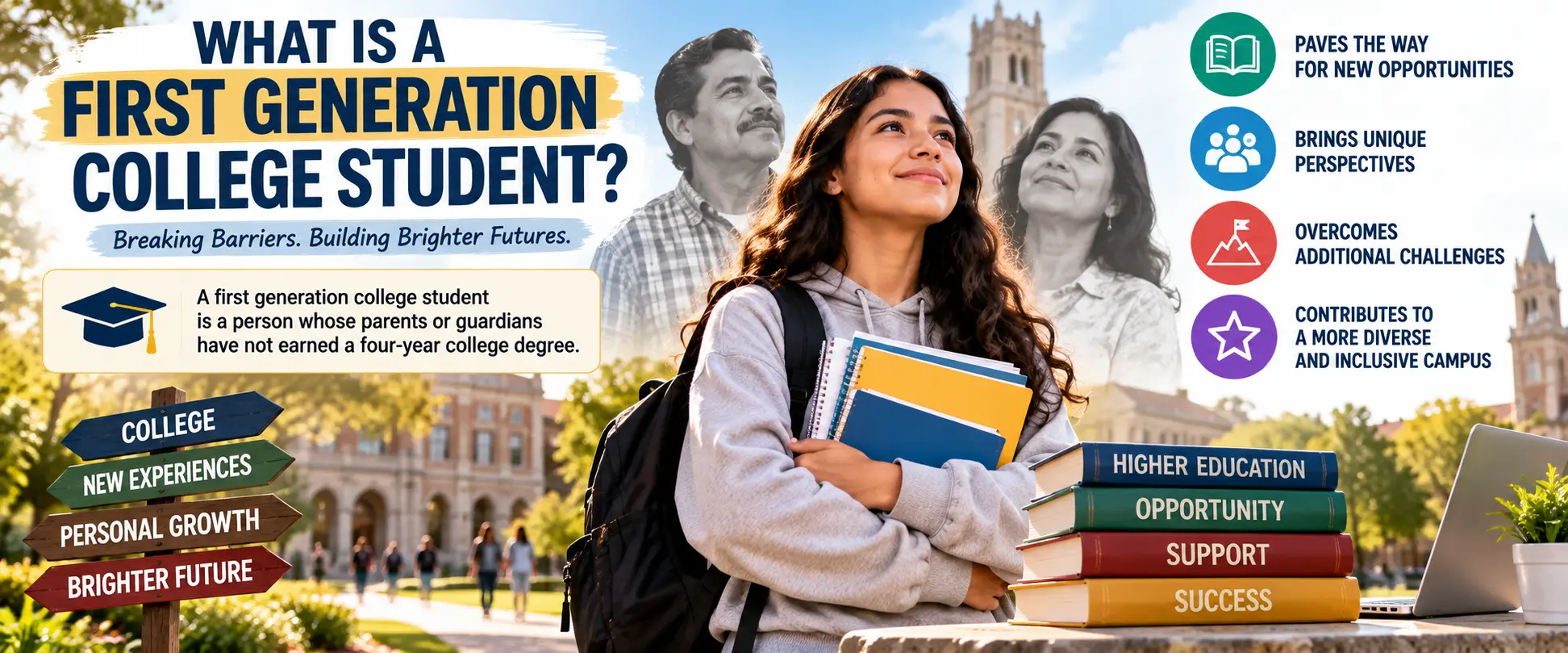
So, what is a first generation college student in practical terms? A common definition is a student whose parents or guardians have not earned a bachelor’s degree.
For example, suppose your parents graduated from high school but never attended college. In that case, you would generally be considered a first-generation college student.
Similarly, you may qualify if your parents attended college for a while but never completed a bachelor’s degree. However, individual institutions may define first-generation status differently. Therefore, you should always read the definition provided on a particular application or program.
The term is sometimes shortened to “first-gen student.” Although it sounds simple, family situations can make the definition less obvious.
What Is a First-Generation College Student When a Parent Attended College?
A parent attending college does not always mean you lose first-generation status. Instead, degree completion often matters.
For instance, imagine that your mother completed one year at a university before leaving. Meanwhile, your father finished high school but never attended college. Under many commonly used definitions, you could still be considered first-generation because neither parent earned a bachelor’s degree.
The same idea may apply when a parent earned an associate degree at a community college. Still, definitions differ between institutions. Therefore, students should rely on the specific eligibility language used by their college or program.
For students exploring different routes into higher education, learning about the benefits of community college can also help explain why many families have college experience without necessarily having a four-year degree.
Common First-Generation Student Examples
Examples can make the definition much easier to understand. Consider these situations:
| Family education background | Often considered first-generation? |
|---|---|
| Neither parent attended college | Yes |
| Parents attended college but earned no degree | Often yes |
| One parent has an associate degree | Often yes |
| Neither parent has a bachelor’s degree | Commonly yes |
| One parent earned a bachelor’s degree | Often no |
| Both parents earned bachelor’s degrees | Usually no |
These examples provide general guidance rather than universal rules. For that reason, you should check the definition used by the school, scholarship, or program you are applying to.
Family circumstances can also be more complicated. For example, you might live with a guardian rather than a biological parent. Likewise, a parent may have earned a degree in another country.
When an application does not clearly explain how your situation should be reported, contact the college’s admissions or financial aid office rather than guessing.
What Does First Generation College Student Mean for Applications?
Students sometimes search for what is a first generation college student mean because they encounter the term for the first time on an application.
Usually, the question helps an institution understand a student’s educational background. Colleges may use this information to identify students who could benefit from specific academic or campus resources.
For instance, first-generation programs may offer mentoring, academic advising, tutoring, workshops, peer communities, or guidance about financial aid.
Meanwhile, first-generation status does not mean that you are automatically admitted to a college. It also does not automatically determine whether you receive financial aid. Instead, eligibility depends on the rules of each college, scholarship, or support program.
As you plan your education, understanding How Long to Get a Bachelor’s Degree? can also help you estimate the time involved in completing the degree that often forms part of first-generation definitions.
Why First-Generation Status Matters
College has its own vocabulary, procedures, and expectations. Students whose parents have completed college may be able to ask family members how credit hours work, how to choose classes, or what office hours are.
First-generation students may have to learn some of those systems independently. Still, they can get that knowledge from advisers, professors, student services, mentors, and other campus resources.
For example, a student may initially be unfamiliar with terms such as FAFSA, credit hours, prerequisites, majors, minors, transcripts, or academic probation. Once those terms are explained, however, the college system often becomes much easier to navigate.
Knowing the difference between undergraduate and graduate education can be useful as well. A first-generation undergraduate, for example, may later continue to graduate or professional education after completing a bachelor’s degree.
Challenges First-Generation Students May Encounter
First-generation students do not all have the same experience. Nevertheless, some students may encounter situations that are less familiar because no one in their immediate family has previously completed the same process.
Understanding College Procedures
Applications, enrollment deadlines, course registration, financial aid forms, and degree requirements can involve unfamiliar terminology.
Therefore, asking questions early can prevent small misunderstandings from becoming bigger problems. Academic advisers and student support offices exist partly to help students navigate these processes.
Managing College Costs
Tuition is only one college expense. Students may also need to budget for textbooks, transportation, housing, food, technology, fees, and personal expenses.
Consequently, creating a semester budget can help students understand their actual costs before classes begin.
Scholarships may reduce some of those expenses. For example, students researching financial aid may want to understand what is merit based scholarship eligibility because merit awards usually depend on achievements or other stated criteria rather than simply first-generation status.
Building Academic Confidence
College classes can feel different from high school classes. Professors may expect more independent reading, research, note-taking, and time management.
At first, those expectations can seem unfamiliar. However, students can improve these skills through practice and campus support.
Practical Strategies for First-Generation College Success
Knowing what is a first-generation college student is useful, but knowing how to navigate college is even more valuable.
Meet Your Academic Adviser
Your adviser can help you understand degree requirements, course sequences, prerequisites, and registration.
Therefore, do not wait until you have an academic problem before scheduling a meeting. Regular check-ins can help you stay on track toward graduation.
Learn How Office Hours Work
Professors usually provide designated times when students can ask questions about coursework. Using office hours can help when a lecture, assignment, or reading is unclear.
Before attending, prepare one or two specific questions.
Use Tutoring Before You Fall Behind
Many students think tutoring is only for someone who is failing a class. In reality, tutoring can help students strengthen concepts before difficulties become serious.
For example, visiting a math tutoring center after the first confusing lesson can be much more effective than waiting until the week before the final exam.
Keep Track of Important Dates
College students often manage several deadlines at once. Therefore, use a calendar or planner for assignment deadlines, exams, registration periods, financial aid forms, and scholarship applications.
Then, review the calendar at the beginning of each week.
Build a Support Network
College becomes easier when you know where to ask for help. Your support network might include classmates, professors, advisers, tutors, mentors, family members, and student organizations.
Although your family may not have direct college experience, they can still provide encouragement and practical support.
Scholarships and Financial Support
First-generation students should explore several forms of financial assistance rather than relying on one source.
Depending on eligibility, funding might include grants, institutional scholarships, private scholarships, work-study opportunities, or other financial aid.
Some scholarships specifically consider first-generation status. Others focus on academic performance, community service, financial circumstances, leadership, athletics, or a particular field of study.
For instance, a student involved in competitive cheerleading may research can you get a scholarship for cheer while also applying for broader academic or first-generation opportunities.
Still, students should check every scholarship’s requirements carefully. First-generation status by itself does not guarantee an award.
How to Know Whether You Qualify as First Generation
If you are unsure about your status, use a simple process.
First, determine the highest level of education completed by your parents or guardians. Next, check whether either parent earned a bachelor’s or equivalent four-year degree.
Then, read the definition provided by the college, scholarship, or program you are considering. Finally, contact the organization directly if your family circumstances do not fit neatly into its listed options.
This last step matters because organizations can use different definitions. Rather than assuming, ask how they classify your specific situation.
Common Mistakes When Understanding First-Generation Status
One common mistake is assuming that “first generation” always means your parents never stepped onto a college campus. In many cases, a parent may have attended college without earning a bachelor’s degree, while the student may still meet the program’s definition.
Another mistake is assuming every college uses identical criteria. They do not necessarily do so. Therefore, one school’s definition should not automatically be applied to another institution.
Students may also assume first-generation status is the same as financial need. These concepts can overlap for some students, but they are not identical. A student’s first-generation status describes educational background, while financial aid programs may consider income and other eligibility factors.
Finally, students sometimes avoid asking questions because they think they should already understand how college works. Yet college policies can be complicated for anyone. Asking the right office for clarification is often the fastest way to get an accurate answer.
Frequently Asked Questions
What is a first generation college student if my parents went to college but did not graduate?
You may still qualify under many definitions if neither parent completed a bachelor’s degree. However, you should check the exact rules used by your institution or program.
What is a first-generation college student if one parent has a degree?
If one parent earned a bachelor’s degree, many institutions would not classify the student as first-generation. Still, definitions vary, so check the specific program’s criteria.
Does an associate degree count against first-generation status?
Not always. Some definitions focus specifically on whether a parent completed a bachelor’s degree. As a result, a student whose parent holds only an associate degree may still qualify under certain definitions.
Does being first-generation help with college admission?
First-generation status may provide context about a student’s educational background, and some colleges offer dedicated resources for first-generation students. However, admissions decisions depend on each institution’s policies and selection process.
Are there scholarships for first-generation college students?
Yes, some colleges, nonprofit organizations, foundations, and other scholarship providers offer opportunities aimed at first-generation students. Eligibility rules vary, though, so students should review each scholarship separately.
Can graduate students be first-generation students?
The term is most commonly discussed in relation to undergraduate education. However, someone who was the first in their family to complete college may continue to identify as a first-generation student while pursuing graduate or professional education.
Key Takeaways for Students
A first-generation college student is generally someone whose parents did not complete a bachelor’s degree, although the exact definition depends on the institution or program.
Therefore, if you are asking what is a first generation college student?, start by looking at your parents’ or guardians’ educational history. Then, compare that information with the definition provided by the college, scholarship, or support program.
If you qualify, explore the resources available to you. Academic advising, mentoring, tutoring, financial aid guidance, and first-generation student programs can make unfamiliar college processes easier to understand.
Most of all, learn the system one step at a time. Ask questions when something is unclear, keep track of deadlines, use campus resources early, and build relationships with people who can guide you through your education.