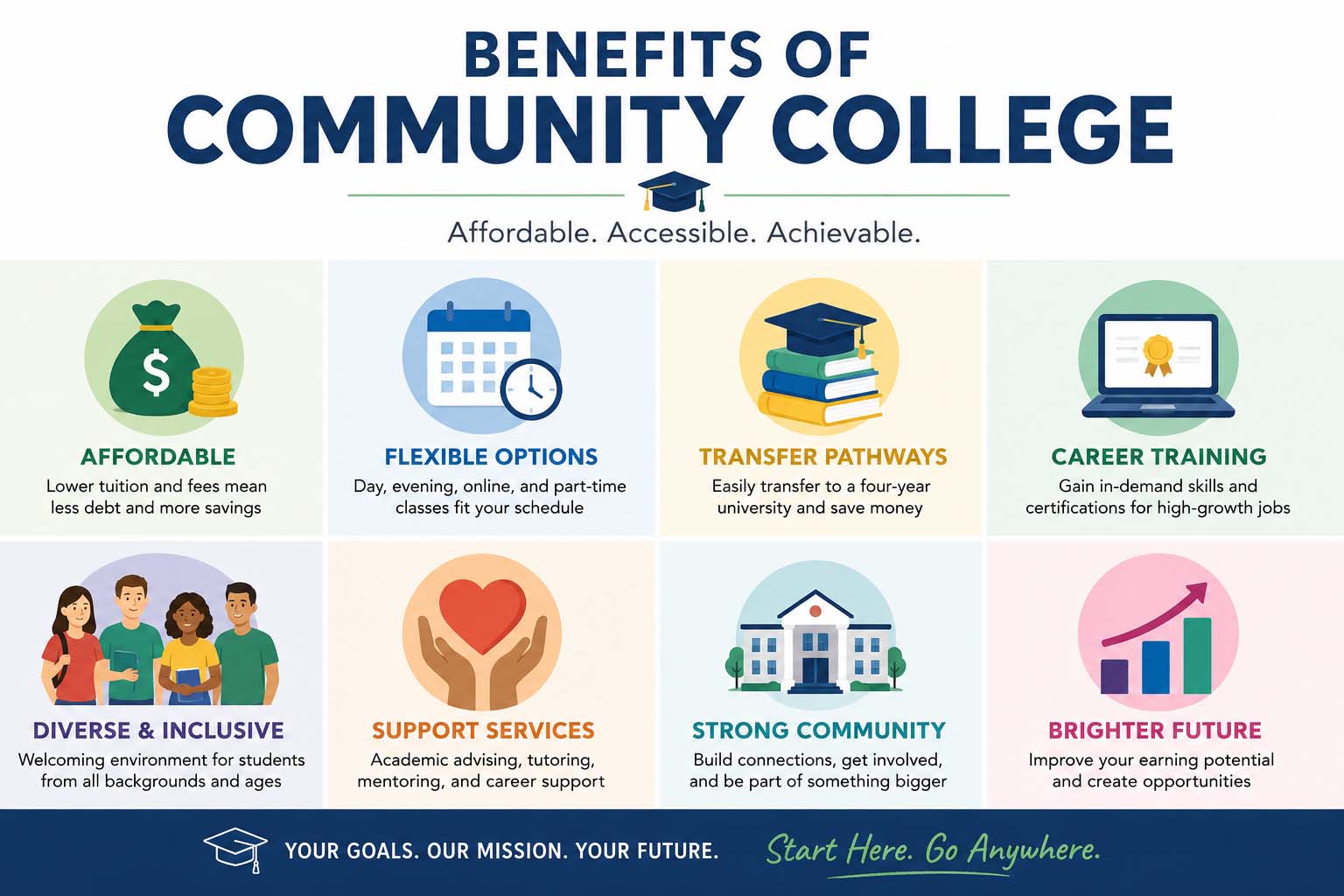
The benefits of community college go far beyond lower tuition costs. Community colleges offer flexible learning, career-focused programs, transfer opportunities, and practical skills that help students prepare for today’s job market. Whether you’re starting your education, changing careers, or building new professional skills, community college can be a valuable first step.
Many students choose community college because it provides quality education while reducing financial pressure. Others attend to explore career options before committing to a four-year university. No matter your goal, understanding the available opportunities can help you make a more informed decision.
What Is a Community College?
A community college is a higher education institution that typically offers:
- Associate degrees
- Certificate programs
- Workforce training
- Transfer programs
- Continuing education courses
Unlike many four-year universities, community colleges often focus on affordable tuition, flexible scheduling, and practical career preparation.
Students come from many backgrounds, including:
- Recent high school graduates
- Working professionals
- Parents returning to school
- Career changers
- Adult learners
This diversity creates classrooms with a wide range of experiences and perspectives.
Benefits of Community College for Students
One of the biggest benefits of community college is its ability to meet students where they are.
Instead of following one educational path, students can choose programs that fit their goals, schedule, and budget.
Lower Education Costs
Affordability is one of the strongest reasons students begin their education at a community college.
Compared with many universities, community colleges often have:
- Lower tuition
- Lower fees
- Reduced transportation costs
- Smaller textbook expenses in some programs
- Opportunities to live at home while studying
Graduating with less student debt gives many students greater financial flexibility after completing their education.
Flexible Class Schedules
Many community colleges understand that students balance multiple responsibilities.
As a result, they frequently offer:
- Morning classes
- Evening classes
- Weekend courses
- Online learning
- Hybrid programs
This flexibility allows students to continue working while earning a degree or certificate.
Students exploring healthcare careers, for example, often compare flexible options such as Online Radiology Tech Programs before deciding which educational pathway best matches their schedule and career goals.
Smaller Class Sizes
Community college classes are often smaller than large university lectures.
Smaller classrooms may provide:
- More interaction with instructors
- Easier access to academic support
- Better classroom discussions
- More opportunities to ask questions
Students who prefer a more personal learning environment often find this setting helpful.
Benefits of Going to Community College Before University
Many students transfer to a university after completing their first two years.
The benefits of going to community college before transferring may include both financial and academic advantages.
Common benefits include:
- Completing general education courses at lower cost
- Adjusting to college-level coursework
- Improving study habits
- Building confidence before transferring
- Exploring career interests
Many colleges also have transfer agreements that make moving to a university smoother.
Community College vs. Four-Year University
| Community College | Four-Year University |
|---|---|
| Lower tuition | Higher tuition in many cases |
| Smaller classes | Larger introductory lectures |
| Flexible schedules | More traditional schedules |
| Career certificates available | Greater selection of bachelor’s degrees |
| Easier local access | Often requires relocation |
Neither option is automatically better.
The best choice depends on your academic goals, financial situation, and preferred learning style.
Career-Focused Learning
Community colleges often design programs with employer needs in mind.
Students learn valuable, real-world skills in areas including:
- Healthcare
- Information technology
- Business
- Manufacturing
- Skilled trades
- Early childhood education
- Graphic design
Many programs include internships, clinical experiences, or laboratory training that prepare graduates for the workplace.
Practical Skills Employers Value
Today’s employers often look beyond academic knowledge.
Community colleges help students develop workplace skills such as:
- Communication
- Teamwork
- Time management
- Problem-solving
- Professional ethics
- Adaptability
These abilities support long-term career success across many industries.
A Good Choice for Career Exploration
Not all students have a clear career goal from the start.
Community college provides a lower-risk environment for exploring different interests before making a larger financial commitment.
Students may discover interests in:
- Healthcare
- Business
- Technology
- Education
- Skilled trades
- Public service
Learning about different careers early can help students make more confident educational decisions.
Opportunities Beyond Traditional Degrees
Community colleges offer more than associate degrees.
Many also provide:
- Professional certificates
- Industry certifications
- Workforce development
- Adult education
- Continuing education
For example, students interested in beauty careers sometimes compare certificate programs while researching How Long Is Cosmetology School? to better understand the time commitment for different career paths.
Building Professional Networks
Community college gives students opportunities to connect with:
- Faculty members
- Career advisors
- Local employers
- Internship supervisors
- Alumni
- Community organizations
These relationships often lead to internships, job opportunities, mentorship, and valuable career advice.
Some instructors teaching specialized courses may work in their industries while teaching part time. Understanding What Is an Adjunct Professor? can help students appreciate the practical experience these educators often bring into the classroom.
Is Community College Right for Everyone?
Community college can be an excellent choice, but it isn’t the perfect path for every student.
Before enrolling, consider questions such as:
- What career do I want?
- Do I plan to transfer later?
- What is my education budget?
- Do I need a flexible schedule?
- Would hands-on learning benefit me?
Answering these questions can help you choose the educational path that best supports your future.
Benefits of Community College Before University
For many students, starting at a community college is part of a long-term education plan rather than the final destination.
The benefits of community college before university include the chance to complete foundational courses, strengthen academic skills, and save money before transferring to a bachelor’s degree program.
Students often use this time to:
- Improve their GPA
- Explore different majors
- Meet transfer requirements
- Build strong study habits
- Gain confidence in college-level coursework
By the time they move to a university, many students feel better prepared for larger classes and more advanced subjects.
How Community College Supports Career Growth
Community colleges are closely connected with local employers and workforce needs. Because of that, many programs focus on practical skills that can be used immediately after graduation.
Depending on the program, graduates may qualify for entry-level positions in fields such as:
- Business administration
- Information technology
- Healthcare
- Manufacturing
- Hospitality
- Public safety
- Skilled trades
This career-focused approach makes community college appealing to students who want to enter the workforce quickly while still leaving the option to continue their education later.
What Are the Benefits of Community College for Adult Learners?
The answer isn’t the same for everyone.
For recent high school graduates, community college can provide an affordable introduction to higher education. For adults, it often offers a chance to learn new skills without leaving a current job.
The what are the benefits of community college question becomes especially relevant for people who are:
- Changing careers
- Returning to school after several years
- Looking for professional certifications
- Seeking promotions
- Building new technical skills
Flexible schedules and online classes make continuing education much easier for busy adults.
Common Misconceptions About Community College
Some students hesitate because they’ve heard outdated ideas about community colleges.
Let’s look at a few common myths.
“Community colleges aren’t as valuable.”
Many graduates successfully transfer to universities or begin rewarding careers directly after completing their programs.
“Only recent high school graduates attend.”
Community college classrooms often include students of many different ages and backgrounds.
You may study alongside:
- Working professionals
- Veterans
- Parents
- Career changers
- Adult learners
- Recent graduates
The variety of student experiences enriches classroom discussions and promotes broader thinking.
“You can’t build a successful career.”
Many employers value practical skills, certifications, and work experience. Community colleges frequently partner with local industries to prepare students for real workplace demands.
How to Choose the Right Community College
Not every school offers the same programs or student services.
Before applying, compare several colleges by considering:
Academic Programs
Choose a college that offers the degree, certificate, or transfer pathway you want.
Transfer Agreements
If you plan to earn a bachelor’s degree later, check whether the college has transfer partnerships with universities.
Student Support Services
Look for schools that provide:
- Academic advising
- Career counseling
- Tutoring
- Internship assistance
- Financial aid guidance
Strong support services can make your college experience much smoother.
Campus Flexibility
If you’re working or caring for family members, review class schedules and online learning options before making your decision.
Making the Most of Your Community College Experience
Success depends on more than attending classes.
Try these strategies to get the greatest value from your education.
Meet With Academic Advisors
Advisors can help you:
- Select courses
- Stay on track for graduation
- Prepare for transfer
- Explore career options
Meeting regularly can help you avoid unnecessary classes and graduate on time.
Participate in Campus Activities
Student organizations, volunteer opportunities, and leadership programs help you develop communication and teamwork skills while expanding your professional network.
Students interested in leadership, networking, and campus involvement may eventually explore organizations such as What Is a Sorority? if they transfer to a four-year university that offers Greek life.
Take Advantage of Scholarships
Many students focus only on tuition costs but overlook scholarship opportunities.
Community colleges, local organizations, and employers often provide financial assistance that can reduce education expenses.
Some students who continue into advanced education may also encounter opportunities such as What Is a Fellowship?, which can provide funding or professional development at later stages of their academic journey.
Frequently Asked Questions
What are the biggest benefits of community college?
Some of the most valuable benefits include:
- Affordable tuition
- Flexible schedules
- Smaller class sizes
- Career-focused training
- Transfer opportunities
- Practical workplace skills
- Local employer connections
These advantages make community college an excellent option for many students.
Can You Transfer from a Community College to a Four-Year University?
Yes.
Many students complete general education requirements at a community college before transferring to a four-year institution. Always review transfer requirements early to make the process as smooth as possible.
Is community college a good choice for working adults?
Absolutely.
Many schools offer evening, weekend, hybrid, and online classes designed for students balancing work, family, and education.
Will employers respect a community college education?
Employers typically evaluate candidates based on their skills, knowledge, certifications, and relevant experience.Completing a quality community college program demonstrates commitment, practical learning, and career preparation.
Can community college help me change careers?
Yes.
Many certificate and associate degree programs are designed specifically for people entering new industries or updating their professional skills.
Turn Education Into Opportunity
The benefits of attending community college extend far beyond saving money. Community colleges offer flexible learning, practical career preparation, supportive instructors, and clear pathways to both employment and university education.
Whether your goal is to begin a new career, earn professional credentials, or continue toward a bachelor’s degree, community college can provide a strong foundation for future success. By researching programs carefully, using campus resources, and staying focused on your long-term goals, you can make the most of every opportunity and build a rewarding educational and professional journey.