
Have you ever seen a scholarship, job posting, or university website mention a fellowship and wondered what it actually means?
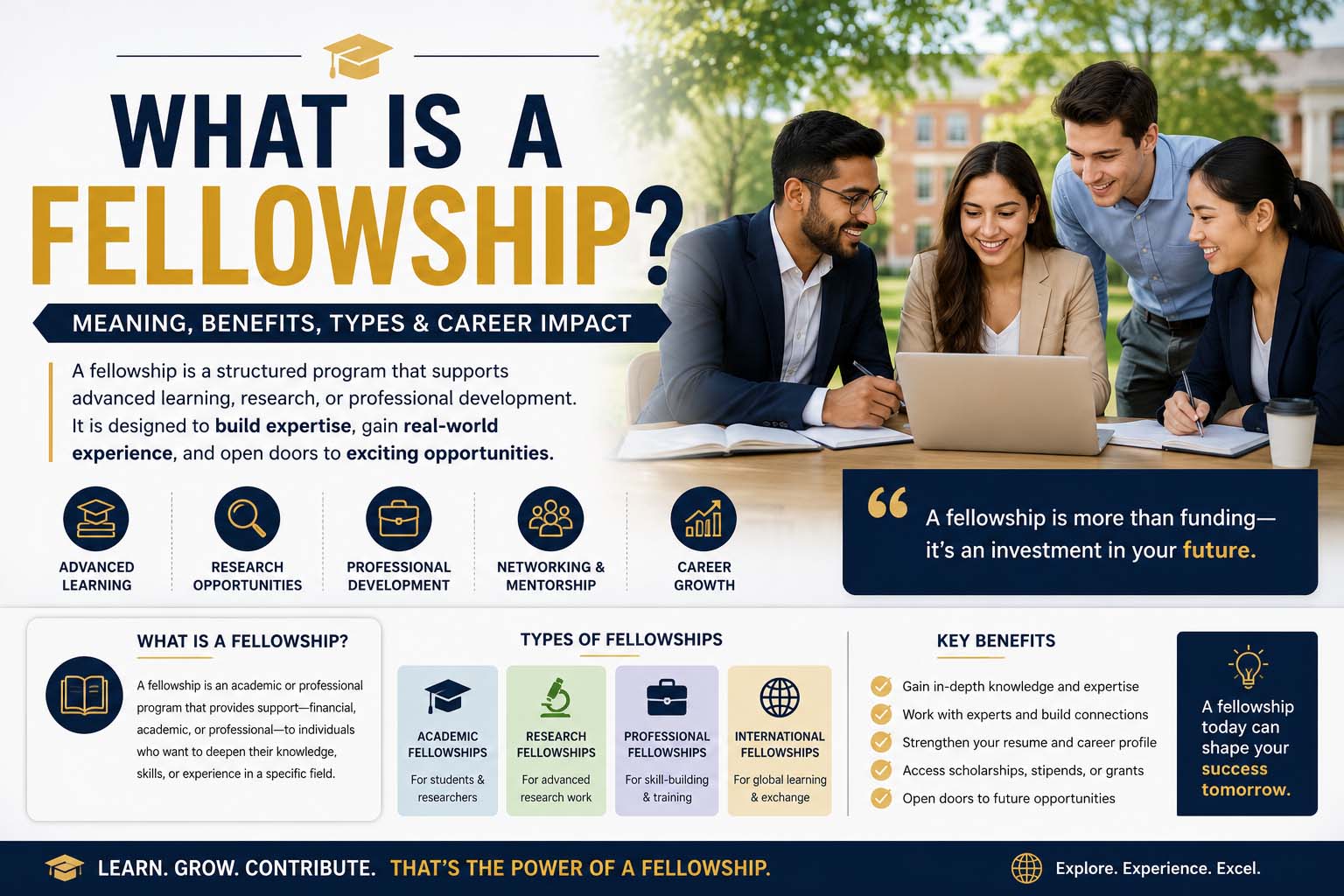
A fellowship is an opportunity that supports learning, research, professional development, or specialized training. Some fellowships provide funding, while others offer hands-on experience, mentoring, networking opportunities, or all of these combined.
Whether you’re preparing for college, graduate school, or a professional career, understanding fellowships can open doors to valuable educational and career opportunities.
This guide explains what is a fellowship, how programs work, who can apply, and why fellowships are valuable in education, medicine, research, and many other fields.
What Is a Fellowship?
A fellowship is a structured educational or professional opportunity that allows individuals to gain advanced knowledge, practical experience, research skills, or specialized training.
Unlike a traditional classroom course, a fellowship usually focuses on real-world learning.
Many fellowships provide:
Financial support
Research funding
Professional mentoring
Leadership training
Career development
Networking opportunities
Practical experience
Some fellowships last only a few weeks, while others continue for one or several years.
Why Are Fellowships Offered?
Organizations create programs to help develop future experts and leaders.
Universities, hospitals, governments, nonprofit organizations, and private companies all sponsor fellowships.
Their goals may include:
Supporting academic research
Encouraging innovation
Training future professionals
Improving healthcare
Advancing scientific discoveries
Developing leadership skills
Solving real-world problems
Many fellowship sponsors also benefit by working with talented students and professionals.
How Does a Fellowship Work?
Every fellowship is different, but most follow a similar process.
Step 1: Submit an Application
Applicants usually provide:
Application form
Resume or CV
Academic transcripts
Recommendation letters
Personal statement
Research proposal (if required)
Preparing strong skills to put on resume can help applicants present their qualifications more effectively.
Step 2: Selection Process
A review committee evaluates applicants based on:
Academic performance
Leadership experience
Career goals
Research interests
Community involvement
Professional achievements
Step 3: Fellowship Begins
Selected participants complete the program through research, projects, coursework, field experience, or professional training.
Step 4: Program Completion
Many fellows finish with:
Research publications
Presentations
Professional certifications
New technical skills
Expanded professional networks
Types of Fellowships
Fellowships exist in nearly every academic and professional field.
Academic Fellowships
These support students pursuing higher education or research.
Examples include:
Graduate fellowships
Doctoral fellowships
Postdoctoral fellowships
Research Fellowships
Researchers receive funding to study a specific topic.
These are common in:
Science
Engineering
Education
Social sciences
Environmental studies
Professional Fellowships
These help participants build career skills through workplace experience and mentoring.
Leadership Fellowships
Leadership fellowships focus on communication, public policy, management, and community development.
International Fellowships
Some programs allow students and professionals to study or conduct research abroad while working with global organizations.
What Is a Fellowship Program?
Many students search for what is a fellowship program because the phrase appears frequently during college and graduate school applications.
A fellowship program is an organized educational or professional experience that follows a structured plan.
A typical program may include:
| Program Element | Purpose |
|---|---|
| Orientation | Introduces goals and expectations |
| Mentorship | Guidance from experienced professionals |
| Research or Projects | Practical learning experience |
| Workshops | Build technical and leadership skills |
| Networking Events | Connect with experts and peers |
| Final Presentation | Share completed work or research |
Some fellowship programs also include travel opportunities or conference participation.
What Is a Fellowship in College?
If you’re asking what is a fellowship in college, the answer depends on the institution and program.
College fellowships often provide financial assistance and educational opportunities beyond regular classroom learning.
Students may receive:
Tuition support
Research funding
Leadership development
Faculty mentoring
Internship opportunities
Study abroad experiences
Unlike many scholarships, college fellowships often involve active participation in projects, research, or community service. Students planning their education may also explore how long to get a bachelor’s degree while considering future fellowship opportunities.
Fellowship vs Scholarship
Students often confuse these two opportunities.
| Fellowship | Scholarship |
|---|---|
| Focuses on learning and professional development | Primarily provides financial assistance |
| May include research or projects | Usually based on academic merit or financial need |
| Often requires active participation | Usually has fewer ongoing responsibilities |
| Common in graduate education | Available at all education levels |
| May include mentoring | Usually does not include structured mentoring |
Some programs combine both funding and activities.
Fellowship vs Internship
These opportunities also have different purposes.
| Fellowship | Internship |
|---|---|
| Advanced academic or professional training | Workplace learning experience |
| Often includes research | Usually focuses on job skills |
| May include funding | May be paid or unpaid |
| Can target experienced professionals | Common for students and recent graduates |
Internships typically prepare students for entry-level jobs, while fellowships often support advanced education or specialized careers.
What Is a Medical Fellowship?
Many healthcare students ask what is a medical fellowship after learning about residency programs.
A medical fellowship is advanced clinical training completed after a physician finishes residency.
Doctors choose fellowships to specialize in a specific area of medicine.
Examples include:
Cardiology
Oncology
Gastroenterology
Endocrinology
Neurology
Pediatric surgery
Medical fellowships allow physicians to develop deeper expertise before practicing independently in a specialty field.
What Is a Fellowship in Medicine?
The phrase what is a fellowship in medicine refers to the same advanced training process completed after residency.
A typical pathway looks like this:
Medical school
↓
Residency
↓
Medical fellowship
↓
Independent specialist practice
During fellowship, physicians work under experienced specialists while gaining hands-on experience with complex cases.
Some medical fellowships last one year, while others continue for three years or more depending on the specialty.
Benefits of Completing a Fellowship
Fellowships provide much more than financial support.
Advanced Knowledge
Participants develop specialized skills that are difficult to gain through traditional classroom learning alone.
Career Growth
Many employers value fellowship experience because it demonstrates dedication and expertise.
Professional Networking
Fellows meet professors, researchers, industry experts, and future collaborators.
Research Experience
Many fellowships allow participants to contribute to published research or innovative projects.
Leadership Development
Workshops and mentoring often strengthen communication, teamwork, and problem-solving skills through activities that may include critical thinking exercises.
Who Can Apply for a Fellowship?
Eligibility varies by program.
Common applicants include:
Undergraduate students
Graduate students
Doctoral candidates
Medical graduates
Researchers
Teachers
Engineers
Scientists
Public policy professionals
Some fellowships accept international applicants, while others are limited to citizens or residents of a specific country.
Always review eligibility requirements before applying.
How to Apply for a Fellowship
A strong application requires preparation.
Step 1
Research programs that match your academic interests and career goals.
Step 2
Read all eligibility requirements carefully.
Step 3
Prepare a professional resume or curriculum vitae (CV).
Step 4
Request recommendation letters well before the deadline.
Step 5
Write a clear personal statement explaining:
Your goals
Why you’re applying
What you hope to achieve
How the fellowship fits your future plans
A clear opening similar to good introduction paragraph examples can help make your personal statement more engaging.
Step 6
Review every document before submitting your application.
Common Mistakes to Avoid
Many applicants reduce their chances by making simple mistakes.
Avoid:
Missing deadlines
Ignoring application instructions
Writing generic personal statements
Submitting incomplete documents
Choosing recommenders who know you poorly
Failing to proofread
Taking extra time to prepare can make a noticeable difference.
Tips for Finding the Right Fellowship
Choosing the right program matters just as much as submitting a strong application.
Ask yourself:
Does this match my career goals?
Will I gain useful skills?
Is financial support available?
Will I receive mentoring?
What networking opportunities are included?
Are former participants successful in my field?
Comparing several programs helps you find the best fit.
Quick Reference Guide
| Question | Quick Answer |
|---|---|
| Purpose | Education, research, or professional development |
| Financial Support | Often included |
| Common Length | Several weeks to multiple years |
| Participants | Students and professionals |
| Main Benefit | Advanced skills and career growth |
| Application Materials | Resume, essays, transcripts, recommendations |
Frequently Asked Questions
What is a fellowship?
A fellowship is a structured educational or professional opportunity that provides advanced training, research experience, funding, mentoring, or career development.
What is a fellowship program?
A fellowship program is an organized learning experience that combines training, projects, mentoring, and professional development to help participants achieve specific academic or career goals.
What is a fellowship in college?
A college fellowship supports students through research opportunities, leadership development, funding, mentoring, or specialized educational experiences beyond regular coursework.
What is a medical fellowship?
A medical fellowship is advanced specialty training completed by physicians after finishing residency, allowing them to become experts in a specific medical field.
What is a fellowship in medicine?
A fellowship in medicine is additional clinical education that helps doctors gain specialized knowledge and hands-on experience before practicing independently in a medical specialty.
Are fellowships paid?
Many fellowships provide a stipend, tuition assistance, research funding, or living expenses. Others focus mainly on educational or professional experience without direct financial support.
Your Next Step
A fellowship can be one of the most rewarding opportunities in education and professional development. Whether you’re a college student exploring research, a graduate student pursuing advanced study, or a physician considering specialized training, fellowships provide valuable experience that goes far beyond financial support.
By understanding how fellowship programs work, preparing a thoughtful application, and choosing programs that match your goals, you can build stronger academic credentials, develop practical skills, and create meaningful connections that benefit your future career.