Choosing the right school is one of the biggest educational decisions a student or family can make. Understanding the different types of schools helps you find an environment that matches your learning style, career goals, interests, and budget. While every school aims to educate students, each offers unique programs, teaching methods, and opportunities.
Whether you’re choosing a school for a young child, planning your high school years, or exploring higher education, this guide explains the most common school types and how to decide which one fits your goals.
What Are Types of Schools?
The term types of schools refers to the different educational institutions available for students at various stages of learning.
Schools differ in areas such as:
- Funding
- Curriculum
- Teaching methods
- Admissions requirements
- Class size
- Academic focus
- Career preparation
Some schools emphasize traditional academics, while others specialize in vocational training, arts, technology, or college preparation.
Types of Schools by Education Level
Most students progress through several educational stages.
| School Type | Typical Age | Primary Purpose |
|---|---|---|
| Preschool | 3–5 | Early childhood learning |
| Elementary School | 5–11 | Foundational education |
| Middle School | 11–14 | Transitional learning |
| High School | 14–18 | Secondary education and career preparation |
| College or University | 18+ | Higher education |
| Graduate School | After bachelor’s degree | Advanced study |
Each stage builds knowledge and skills for the next.
Different Types of Schools
When people search for different types of schools, they often mean schools that offer different learning environments rather than different grade levels.
Here are the most common options.
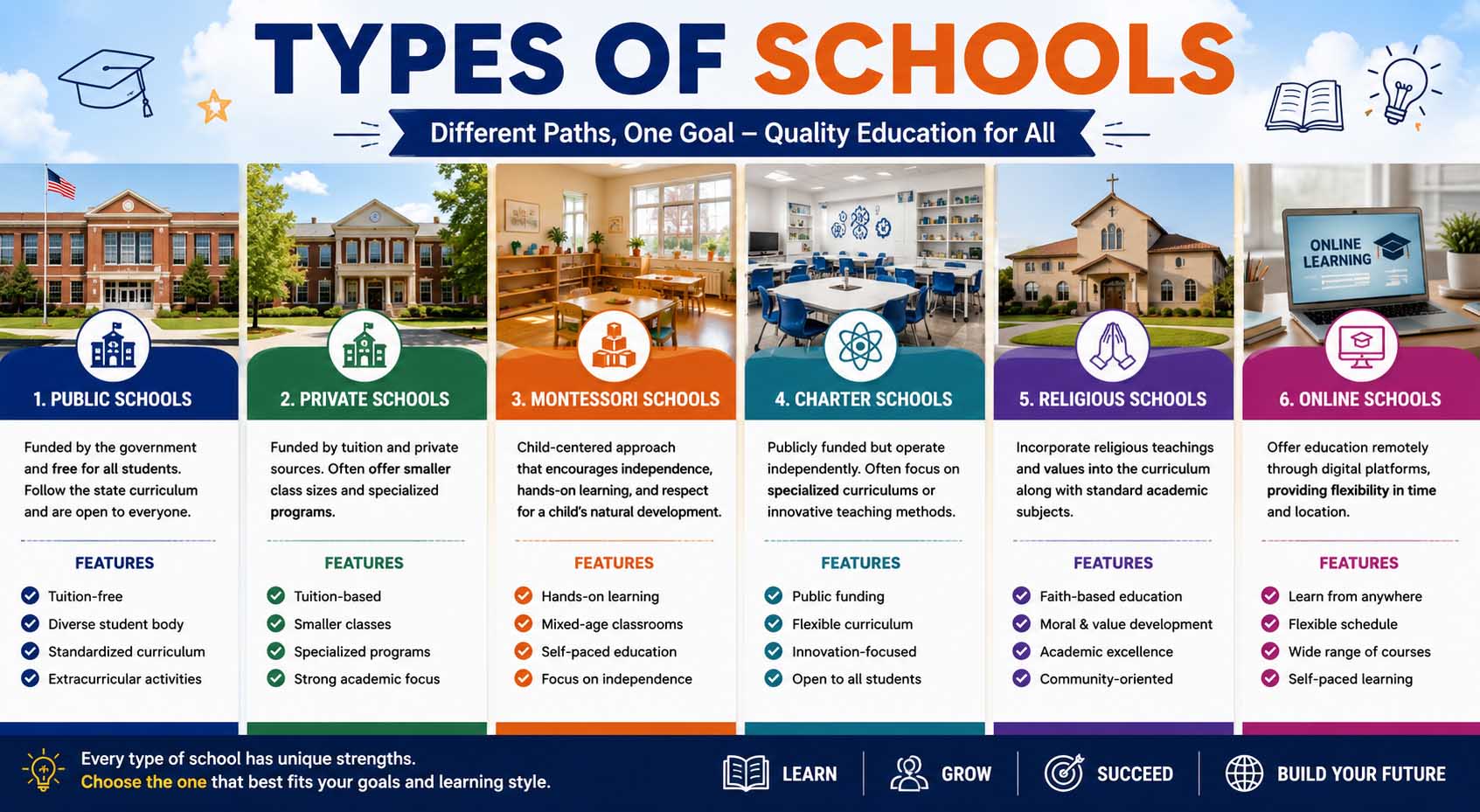
Public Schools
Public schools receive government funding and are available to students living within designated attendance areas.
Advantages include:
- No tuition
- Certified teachers
- Wide variety of academic subjects
- Sports and extracurricular activities
- Special education services
Public schools educate millions of students each year and remain the most common educational option.
Private Schools
Private schools operate independently and typically charge tuition.
Many offer:
- Smaller class sizes
- Specialized academic programs
- Religious education
- College-preparatory curricula
When researching types of private schools in US, you’ll find several categories, including independent schools, religious schools, military academies, boarding schools, and Montessori schools.
Private schools vary significantly in admissions standards, curriculum, and tuition costs.
Charter Schools
Charter schools are publicly funded but operate independently under a charter agreement.
They often focus on:
- STEM education
- Arts
- College readiness
- Language immersion
- Project-based learning
Because charter schools have greater flexibility, teaching approaches may differ from traditional public schools.
Magnet Schools
Magnet schools specialize in particular subjects while remaining part of the public education system.
Popular focus areas include:
- Science
- Engineering
- Performing arts
- International studies
- Mathematics
Admission may involve applications or entrance requirements depending on the district.
Homeschooling
Homeschooling allows parents or guardians to educate children outside a traditional classroom.
Benefits may include:
- Flexible schedules
- Customized lessons
- Individual learning pace
- Personalized instruction
Families must still follow local education laws and curriculum requirements.
Online Schools
Online schools deliver instruction through virtual classrooms.
Students often appreciate:
- Flexible schedules
- Remote learning
- Self-paced coursework
- Access from almost anywhere
Online schools have become increasingly common and now serve learners from elementary school through university.
Types of Trade Schools
Not every student plans to attend a traditional four-year college.
Types of trade schools prepare students for skilled careers through hands-on training rather than primarily academic coursework.
Popular trade programs include:
- Electrician
- HVAC technician
- Automotive technician
- Welding
- Plumbing
- Dental assisting
- Medical assisting
- Cosmetology
Many students compare vocational education with college because both can lead to rewarding careers.
Different Types of Trade Schools
The different types of trade schools include institutions that specialize in specific industries.
Examples include:
Technical Schools
Focus on engineering, manufacturing, and technology.
Career Colleges
Offer short-term job training programs.
Apprenticeship Programs
Combine classroom instruction with paid work experience.
Vocational High Schools
Allow students to complete academic studies while learning career skills.
Trade schools usually require less time than traditional degree programs, making them attractive for students who want to enter the workforce quickly.
Community Colleges
Community colleges offer affordable higher education while providing multiple educational pathways.
Students often attend community colleges to:
- Earn associate degrees
- Complete general education requirements
- Transfer to universities
- Learn technical skills
If you’re weighing your options after high school, exploring the benefits of community college can help you understand why this pathway is a popular choice for many students.
Colleges and Universities
Colleges and universities provide undergraduate and graduate education across many academic disciplines.
Students may pursue:
- Associate degrees
- Bachelor’s degrees
- Master’s degrees
- Doctoral degrees
A common question is How Long to Get a Bachelor’s Degree? The time required to earn a degree varies based on enrollment status and program requirements, but many full-time students graduate in about four years.
Professional Schools
Some careers require education beyond a bachelor’s degree.
Professional schools prepare students for specialized occupations such as:
- Medicine
- Law
- Pharmacy
- Veterinary medicine
- Dentistry
If you’re exploring advanced career paths, understanding What Is a Professional Degree? can clarify how these programs differ from traditional academic degrees.
Graduate Schools
Graduate schools offer advanced education after earning a bachelor’s degree.
Programs include:
- Master’s degrees
- Doctoral degrees
- Research-based qualifications
Many students ask What Is Grad School? when considering careers that require specialized knowledge or academic research.
Graduate study often focuses on independent learning and advanced subject expertise.
Choosing the Right Type of School
No single school is best for everyone.
Instead, consider these factors:
Your Career Goals
Think about the career you want before selecting a school.
For example:
- Engineers often attend universities.
- Skilled trades may require vocational schools.
- Healthcare careers may involve specialized professional programs.
Your Learning Style
Ask yourself:
- Do you enjoy hands-on learning?
- Do you prefer lectures?
- Do you learn independently?
- Would smaller class sizes help?
Matching your learning style with the right environment often improves academic success.
Budget
Education costs vary widely.
Public schools are generally tuition-free through high school.
Private schools, colleges, and universities may require significant tuition, although scholarships and financial aid can reduce costs.
Academic Interests
Some schools specialize in:
- Performing arts
- Science
- Technology
- Languages
- Business
- Engineering
Choosing a school aligned with your interests can make learning more enjoyable.
Undergraduate vs. Graduate Education
As students continue their education, they often compare bachelor’s programs with advanced study.
Learning the difference between undergraduate and graduate education helps students understand admission requirements, coursework expectations, and future career opportunities.
Generally:
- Undergraduate education builds foundational knowledge.
- Graduate education develops advanced expertise in a specific field.
Common Mistakes When Choosing a School
Students sometimes make decisions based on reputation alone.
Instead, avoid these common mistakes:
- Ignoring career goals
- Choosing solely based on friends’ decisions
- Overlooking financial costs
- Not researching academic programs
- Forgetting about campus culture
- Ignoring available student support services
Visiting campuses, speaking with current students, and reviewing graduation outcomes can provide valuable insight.
Quick Checklist Before Choosing a School
Before making your decision, ask yourself:
- Does the school offer programs I’m interested in?
- Can I afford the tuition and related costs?
- Does the learning environment suit me?
- What career opportunities do graduates have?
- Are internships or practical experiences available?
- Does the school provide academic support?
Answering these questions can narrow your options and make your decision easier.
Frequently Asked Questions
What are the main types of schools?
The most common types include public schools, private schools, charter schools, magnet schools, homeschool programs, online schools, trade schools, community colleges, colleges, universities, and graduate schools.
What is the difference between public and private schools?
Public schools receive government funding and usually serve local communities without tuition. Private schools operate independently and typically charge tuition while offering different educational approaches.
Are trade schools a good alternative to college?
Yes. Trade schools are an excellent option for students pursuing skilled careers that require practical training rather than traditional academic degrees.
Which school type is best?
The best school depends on your goals, learning style, budget, and career interests. What works well for one student may not be the best choice for another.
Can students transfer between different school types?
In many cases, yes. Students may transfer between public and private schools, move from community colleges to universities, or continue into graduate or professional programs after completing earlier education.
Finding the Best Educational Path for You
Understanding the different types of schools gives you the confidence to make informed educational decisions. Every option—from public schools and private academies to trade schools, community colleges, and universities—offers unique strengths designed to meet different student needs.
Rather than searching for the “perfect” school, focus on finding the one that aligns with your goals, preferred learning style, and future plans. Taking the time to compare programs, ask questions, and explore available opportunities will help you choose a learning environment where you can grow, succeed, and prepare for the next stage of your education.