A well-crafted press release remains one of the most effective ways to share news, attract media attention, and improve online visibility. Businesses, startups, bloggers, and organizations use press releases to announce important updates, product launches, partnerships, and events. Learning how to write a press release correctly can help your story reach journalists, customers, and search engines at the same time.
The structure of a professional press release is simple, but the wording and presentation matter greatly. A strong headline, engaging introduction, informative body, and clear contact details all work together to create a polished and SEO-friendly article. Whether you are promoting a company announcement or trying to gain media coverage, understanding the basics of press release writing is essential.
How to Write a Greate Press Release
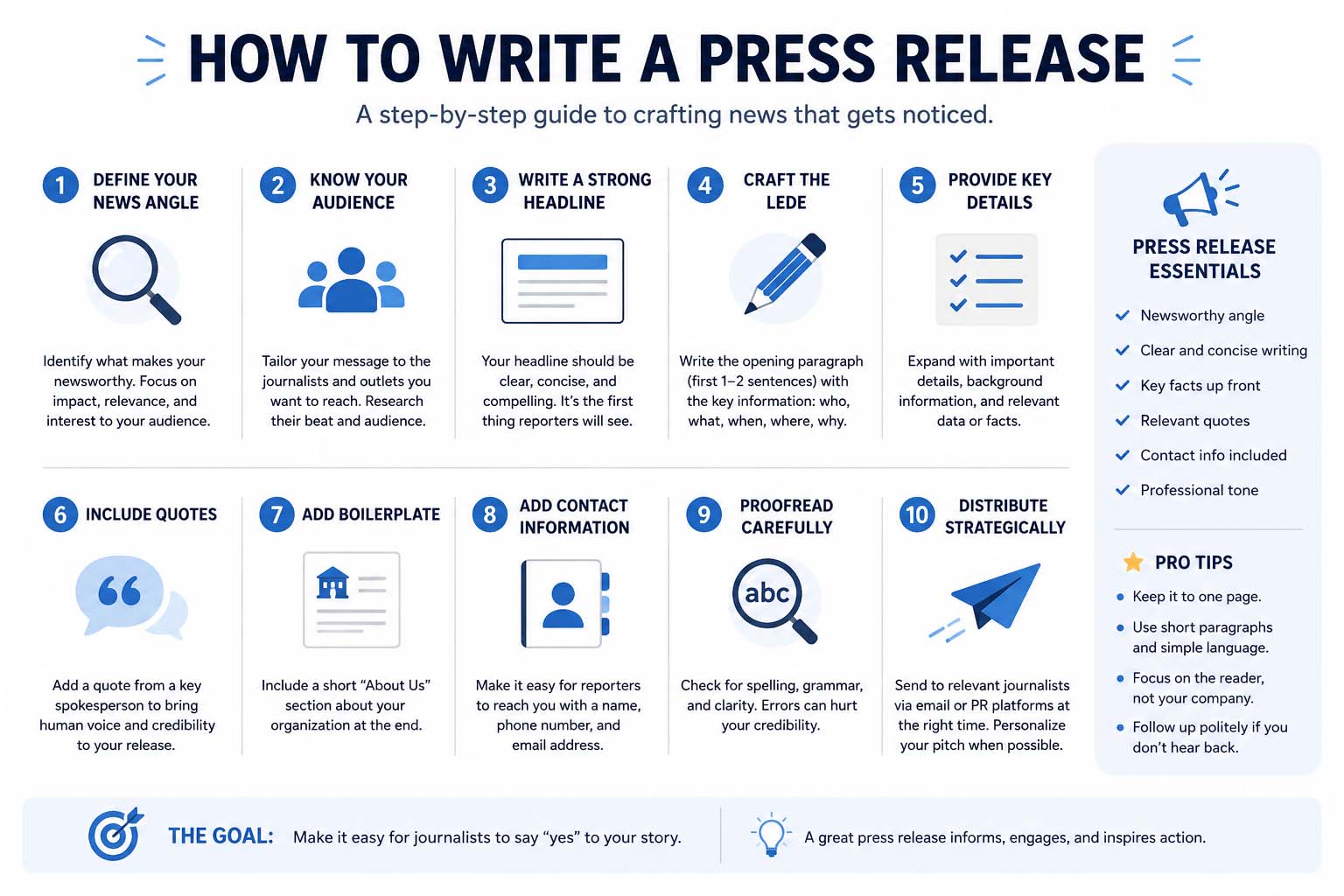
Understanding starts with identifying the main purpose of your announcement. A press release should provide clear and newsworthy information that readers and journalists can quickly understand. The opening paragraph should answer the most important questions, including who, what, when, where, and why.
The headline is one of the most important parts of the release because it creates the first impression. A strong title should be short, engaging, and directly related to the news being shared. Avoid overly promotional language and focus on facts that create interest naturally.
The introduction paragraph should immediately explain the reason for the announcement. Readers should understand the main story within the first few lines. Journalists often scan press releases quickly, so clarity is extremely important.
Another key factor in writing an effective release is including quotes. Quotes from company representatives, event organizers, or industry experts add credibility and a human touch to the content. These quotes should sound natural and provide additional insight into the announcement.
SEO optimization also plays an important role in modern press releases. Including keywords naturally throughout the article can help improve search engine visibility. However, keyword stuffing should always be avoided because it can reduce readability and lower content quality.
How to Write a Press Release UK
Learning how to write a press release UK style involves understanding professional formatting and tone commonly used in British media. Press releases in the United Kingdom often maintain a formal yet approachable writing style. Accuracy, concise wording, and factual reporting are highly valued.
A UK press release usually begins with a strong headline followed by the publication date and location. This format allows journalists to identify relevant details quickly. The first paragraph should summarize the announcement clearly while maintaining a professional tone.
When writing for UK audiences, spelling and grammar should follow British English conventions. Words like “organisation,” “optimise,” and “favour” are preferred instead of American spellings. Small details like these can make the content appear more authentic and regionally appropriate.
Another important aspect of a UK press release is maintaining neutrality. Journalists prefer factual statements rather than exaggerated marketing language. Instead of claiming a product is “the best in the world,” explain what makes it useful or innovative through facts and supporting information.
Including local relevance can also strengthen a UK-focused press release. Mentioning regional events, local partnerships, or community involvement helps create a stronger connection with readers and media outlets.
How to Write a Great Press Release
Knowing how to write a great press release requires more than simply sharing information. A truly successful release captures attention while remaining informative and professional. The content should provide genuine value to readers and explain why the news matters.
The headline should encourage curiosity without becoming misleading. A compelling title increases the likelihood that journalists and readers will continue reading. Supporting subheadings can also improve readability and help organize information more effectively.
The body of the release should expand on the announcement with relevant details, background information, and supporting data. Each paragraph should flow naturally into the next, creating a smooth reading experience. Avoid overly long sentences and complicated terminology that could confuse readers.
Strong press releases often include statistics, research findings, or industry trends that support the announcement. Adding relevant data can make the story more credible and appealing to journalists looking for informative content. Developing critical thinking exercises can also help evaluate supporting information before publishing.
Another important element is the call to action. Readers should know what step to take next after reading the release. This could involve visiting a website, registering for an event, contacting the company, or learning more about the announcement.
How to Write a Press Release for an Event
Understanding is especially important for businesses, charities, schools, and organizations looking to attract public attention. Event press releases are designed to generate interest before the event takes place while also encouraging attendance and media coverage.
The headline should clearly state the type of event and why it is important. Readers should instantly understand whether the announcement involves a conference, concert, product launch, fundraiser, or community gathering.
The introduction paragraph should include essential details such as the event date, location, and purpose. Journalists need quick access to this information so they can determine the relevance of the story.
Event press releases become more engaging when they explain why the event matters. Instead of simply listing details, describe the impact or significance of the occasion. Mention guest speakers, entertainment, partnerships, or charitable goals that make the event unique.
Including quotes from organizers or participants can help personalize the announcement. A meaningful quote creates emotional connection and gives readers insight into the purpose of the event.
Another useful strategy is adding background information about the organization hosting the event. This section helps journalists understand the broader context and mission behind the announcement. Professionals preparing announcements for career growth may also find guidance on skills to put on resume useful when creating supporting documents.
Conclusion
Learning how to write a press release is a valuable skill for businesses, marketers, and organizations seeking media attention and online exposure. A professional press release combines clear structure, factual information, engaging writing, and SEO optimization to create effective communication.