
First, choosing a technology degree can feel overwhelming, especially when two programs have similar names. In fact, many students wonder about the difference between computer science and computer engineering before they apply. Although both fields prepare students for exciting careers in technology, they focus on different aspects of computing.
Simply put, computer engineering combines computer science with electrical engineering to design, build, and improve computer hardware and embedded systems. Therefore, knowing how these programs differ can help you select a degree that matches your interests and career goals.
Difference Between Computer Science and Computer Engineering at a Glance
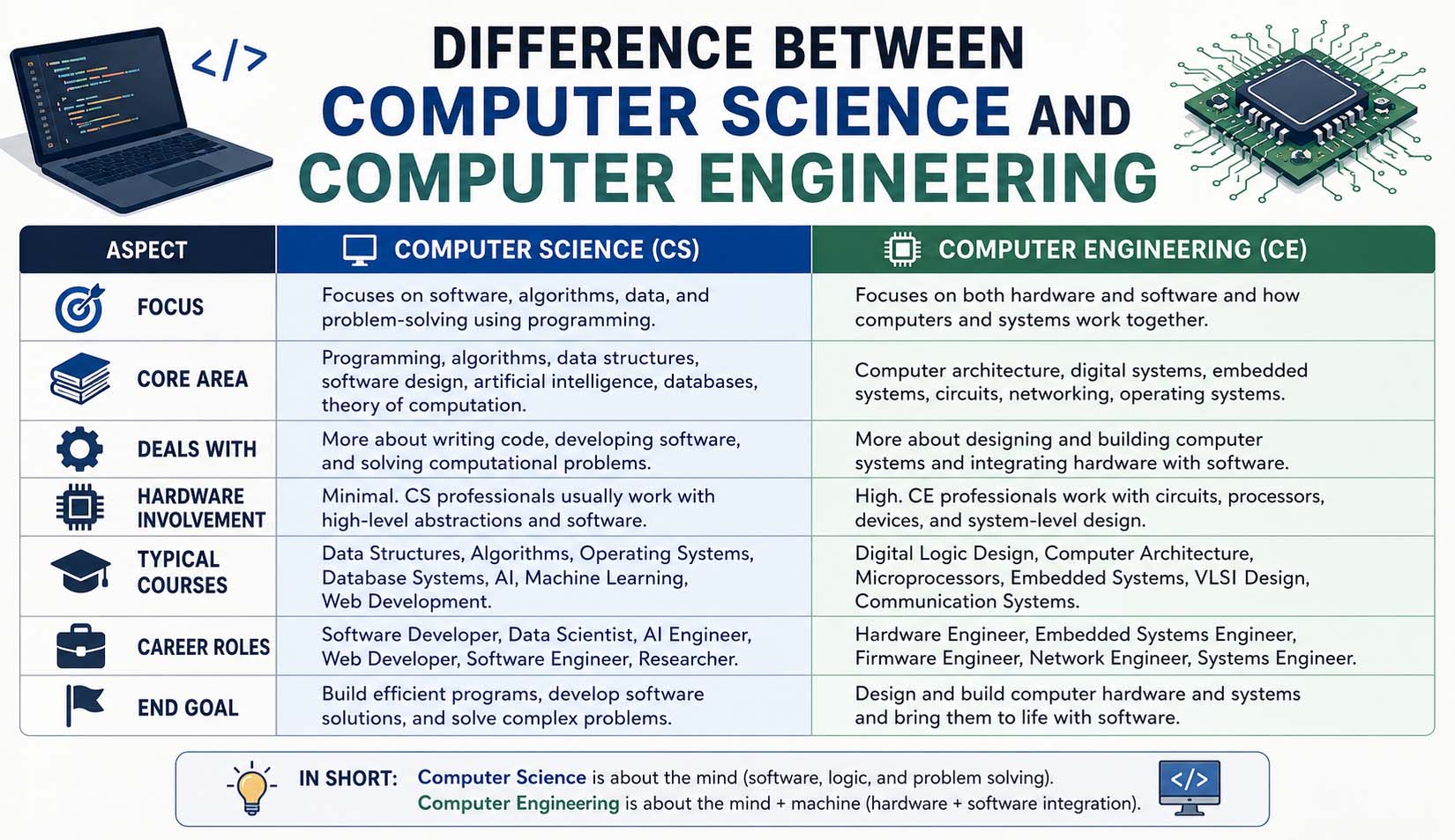
First, the quickest way to understand the difference between computer science and computer engineering is to compare their main features.
| Feature | Computer Science | Computer Engineering |
|---|---|---|
| Primary Focus | Software and computing theory | Computer hardware and software integration |
| Core Skills | Programming, algorithms, databases | Electronics, processors, embedded systems |
| Math Requirements | High | High |
| Engineering Courses | Limited | Extensive |
| Hardware Design | Minimal | Major focus |
| Software Development | Major focus | Moderate focus |
| Common Careers | Software developer, data scientist | Hardware engineer, embedded systems engineer |
Although the two degrees overlap in several areas, their coursework and career outcomes differ.
What Is Computer Science?
Basically, computer science is the study of computers, software, and computational problem-solving. For example, students learn how to write programs, create algorithms, build applications, manage databases, and develop artificial intelligence systems.
Typically, a computer science program includes programming, data structures, algorithms, and database systems. In addition, students study operating systems, computer networks, artificial intelligence, and cybersecurity. As a result, the emphasis falls on creating software solutions rather than designing physical computer components.
Also, if you’re comparing different college programs, learning What Is a Professional Degree? can help you understand how career-focused degrees differ from traditional academic programs.
Skills You’ll Build in Computer Science
First, computer science students develop a wide range of technical and analytical abilities. For instance, they practice programming in multiple languages, logical thinking, problem-solving, and software testing. Likewise, they build skills in system design, data analysis, and team collaboration.
Consequently, these abilities are valuable across many industries, including healthcare, finance, education, and entertainment.
What Is Computer Engineering?
Put simply, computer engineering combines computer science with electrical engineering. Instead of focusing mainly on software, students also learn how computers work at the hardware level.
Typically, computer engineering courses include digital logic, electronics, computer architecture, and microprocessors. In addition, students study embedded systems, circuit design, robotics, and communication systems. As a result, graduates understand both software and hardware, which makes them well suited for designing complete computing systems.
According to the U.S. Bureau of Labor Statistics, computer hardware engineers research, design, develop, and test computers and related equipment. Moreover, entry-level jobs in this field typically require a bachelor’s degree in computer engineering or a related field.
Skills You’ll Build in Computer Engineering
First, students often gain experience with circuit analysis, hardware troubleshooting, and embedded programming. Next, they work on processor design, electronics, system integration, and technical documentation.
Because the curriculum combines computer science and electrical engineering, computer engineering programs often include more laboratory work and hardware projects. Therefore, students get more hands-on design experience than most computer science programs offer.
Difference Between Computer Science and Computer Engineering Coursework
Overall, one of the biggest differences appears in the classroom.
Computer Science Courses
Generally, most computer science degrees emphasize software development and theory. For example, students spend much of their time writing code, building software projects, and studying algorithms. Also, they learn database management and explore machine learning. As a result, programming assignments are a major part of the curriculum.
Computer Engineering Courses
In contrast, computer engineering students divide their time between software and hardware. Specifically, their coursework often includes electronic circuits, microcontrollers, hardware testing, and embedded programming. Besides, they study digital system design and signal processing.
Furthermore, many classes include laboratory sessions where students build and test electronic systems.
What Is the Difference Between Computer Science and Computer Engineering?
Often, students ask what is the difference between computer science and computer engineering when choosing a major. Simply put, computer science teaches you how to create software. On the other hand, computer engineering teaches you how to design and improve both the hardware and software that power computers.
For example, a computer scientist might build a mobile banking app. Meanwhile, a computer engineer might design the processor that allows smartphones to run that app efficiently.
Which Degree Is More Difficult?
Actually, neither program is universally harder. Instead, the answer depends on your interests and strengths.
First, computer science may feel easier if you enjoy programming, mathematics, logical reasoning, and software development. On the other hand, computer engineering may be a better fit if you enjoy electronics, physics, hardware design, and building physical systems.
Either way, both programs require dedication, strong study habits, and a willingness to solve complex problems.
Career Paths After Graduation
Fortunately, graduates from both programs have excellent career opportunities.
Careers in Computer Science
For example, common roles include software developer, data scientist, machine learning engineer, and cybersecurity analyst. In addition, graduates work as mobile app developers, cloud engineers, and web developers. Moreover, many of these positions continue to grow as businesses adopt new technologies.
Careers in Computer Engineering
Likewise, computer engineering graduates often work as computer hardware engineers, embedded systems engineers, or robotics engineers. Also, they become network hardware engineers, firmware developers, semiconductor engineers, or systems engineers. As a result, these professionals help create the devices and systems used in homes, businesses, hospitals, and manufacturing facilities.
Hands-On Learning
Although both degrees include practical learning, the experience differs. For example, computer science students usually complete programming assignments, software projects, and coding challenges. In contrast, computer engineering students often spend additional time in electronics laboratories building circuits, programming microcontrollers, and testing hardware.
Also, many universities encourage internships because real-world experience strengthens technical knowledge and improves employment opportunities.
Finally, as graduation approaches, employers often look for technical projects alongside strong communication and teamwork. Therefore, building these skills to put on resume can help technology students stand out during internship and job applications.
Difference Between Computer Science and Software Engineering
Often, students compare more than two technology majors before deciding on a degree. Therefore, understanding the difference between computer science and software engineering can make that decision easier.
First, computer science focuses on the theory behind computing. For example, students learn how algorithms work, how operating systems manage resources, and how programming languages solve complex problems.
On the other hand, software engineering emphasizes designing, building, testing, and maintaining reliable software. While programming is part of both fields, software engineering places greater attention on project management, software architecture, quality assurance, and teamwork.
Overall, if your goal is to become a software developer, either degree can lead there. Ultimately, the choice depends on whether you enjoy studying the science behind computing or the process of developing large software systems.
Difference Between Software Engineering and Computer Science
Similarly, the difference between software engineering and computer science becomes clearer when you look at daily work. For example, a computer scientist may spend time researching algorithms, optimizing code, or working with artificial intelligence.
By comparison, a software engineer often collaborates with designers, testers, and product managers to build applications that solve real business problems.
Although many employers hire graduates from either program, universities organize these degrees differently. Therefore, reviewing each curriculum before applying is a smart idea.
Salary and Job Outlook
Overall, technology careers continue to offer strong employment opportunities across many industries. For example, common employers include technology companies, healthcare organizations, banks, and government agencies. In addition, manufacturing companies, research institutions, and educational organizations hire these graduates.
However, salary varies based on factors such as experience, location, industry, and job role. Still, graduates who continue developing technical skills, earn certifications, and complete internships often improve their long-term career prospects.
How to Choose the Right Degree
First, choosing between these majors starts with understanding your interests rather than chasing a specific job title.
Consider computer science if you enjoy writing code, solving logical problems, mathematics, artificial intelligence, data analysis, or software development. On the other hand, consider computer engineering if you enjoy electronics, building devices, robotics, embedded systems, computer hardware, or circuit design.
In the end, think about the type of work you would enjoy every day instead of focusing only on salary.
Additionally, students beginning their academic journey may discover that the benefits of community college include lower tuition costs and smaller class sizes before transferring into a four-year technology program.
Should You Attend Graduate School?
Sometimes, technology careers require only a bachelor’s degree, while others benefit from advanced education. For that reason, learning What Is Grad School? can help you understand whether a master’s or doctoral program matches your career goals.
In particular, graduate education may be valuable if you plan to conduct research, teach at a university, or work in artificial intelligence. Likewise, it helps if you want to specialize in cybersecurity or enter advanced engineering roles. Also, many professionals return to graduate school after gaining several years of industry experience.
Research and Fellowship Opportunities
Often, students interested in innovation participate in undergraduate research projects before graduation. In addition, universities may offer opportunities through What Is a Fellowship, which can provide funding, mentorship, or research experience for students pursuing advanced academic or professional goals.
As a result, these experiences strengthen graduate school applications and help students build valuable professional networks.
Common Misconceptions
Unfortunately, many students choose a major based on assumptions that are not always accurate.
“Computer Science Is Only Coding”
Although programming is a major part of computer science, students also study algorithms, data structures, operating systems, computer networks, and computational theory.
“Computer Engineering Doesn’t Require Programming”
In fact, computer engineers write software too, especially for embedded systems, firmware, and hardware devices. Therefore, programming remains an essential skill in both majors.
“One Degree Is Better Than the Other”
Actually, neither degree is objectively better. Instead, employers value graduates who have strong technical knowledge, practical experience, and problem-solving abilities regardless of which degree they earned.
Quick Decision Guide
| If You Enjoy… | Consider This Major |
|---|---|
| Programming applications | Computer Science |
| Artificial intelligence | Computer Science |
| Data science | Computer Science |
| Computer hardware | Computer Engineering |
| Robotics | Computer Engineering |
| Embedded systems | Computer Engineering |
| Both software and electronics | Computer Engineering |
Overall, use this guide as a starting point rather than a final decision. Additionally, reviewing university course plans and speaking with academic advisors can provide extra insight.
Frequently Asked Questions
What is the difference between computer science and computer engineering?
Primarily, computer science focuses on software, algorithms, and computing theory. In contrast, computer engineering combines software with electrical engineering to design, develop, and improve computer hardware and integrated systems.
What’s the difference between computer science and computer engineering?
Basically, the main difference is the area of specialization. While computer science concentrates on software development and computational problem-solving, computer engineering focuses on both hardware and software working together.
Which degree has more programming?
Generally, computer science programs include more programming courses. However, computer engineering students also learn programming for embedded systems and hardware applications.
Can computer engineers become software developers?
Yes. In fact, many computer engineering graduates work in software development because their education includes programming alongside hardware knowledge.
Which major is better for artificial intelligence?
Usually, computer science is the more direct path because AI relies heavily on programming, mathematics, machine