
First, business success depends heavily on clear and effective communication. Indeed, whether a company is small or large, the right methods of business communication help teams stay connected, improve productivity, and build stronger relationships with customers. In fact, communication is the foundation of daily operations, from sharing ideas to solving problems and closing deals. Overall, understanding how communication works in today’s fast-moving business world can give any organization a competitive advantage.
Why Methods of Business Communication Matter
First, every business relies on communication to function properly. For example, managers communicate goals to employees, teams collaborate on projects, and companies interact with customers and partners. On the other hand, without clear communication, confusion grows, mistakes happen, and productivity slows down.
In addition, the best methods of business communication ensure that information reaches the right people at the right time. Moreover, effective communication creates trust, improves morale, and helps companies adapt quickly to changes in the market. For that reason, these principles are important in understanding the nature of business.
Internal and External Communication
Generally, business communication falls into two main categories: internal and external communication. First, internal communication happens within the company between employees, managers, and departments. Second, external communication involves clients, suppliers, investors, and the public.
For example, internal communication includes meetings, emails, and training sessions. Likewise, external communication includes marketing messages, customer support, business proposals, and social media updates.
Types of Business Communication Methods
Overall, modern organizations use many types of business communication methods. However, each method serves a different purpose depending on the message, audience, and urgency.
According to Business LibreTexts, spoken communication works better for emotion and immediate feedback. In contrast, written communication does a better job of conveying facts.
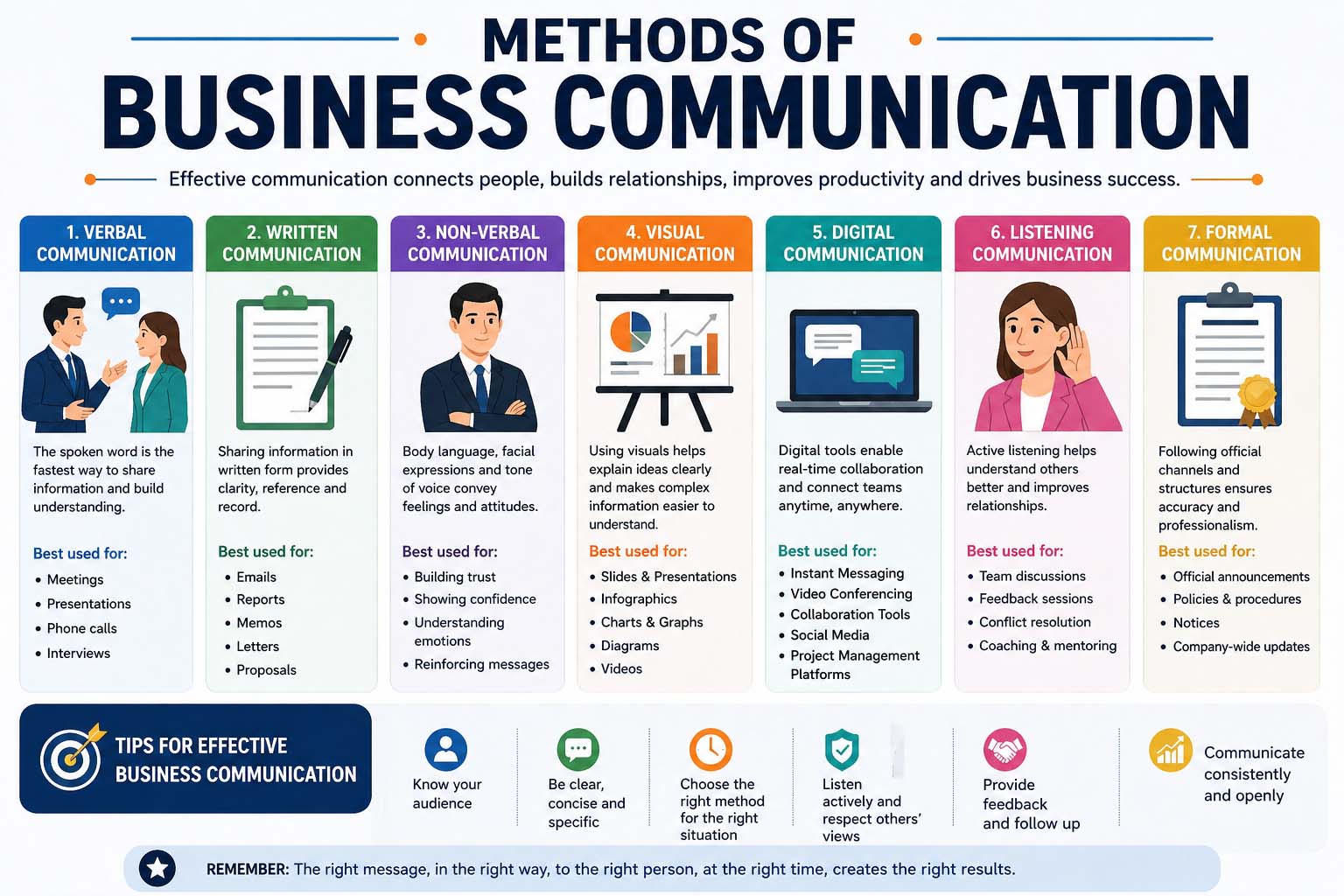
First, verbal communication is one of the most common methods. In particular, it includes face-to-face conversations, phone calls, presentations, and video conferences. As a result, this method allows immediate feedback and helps build stronger relationships.
Second, written communication includes emails, reports, memos, proposals, and contracts. Because it creates a record, people can review it later. Therefore, businesses often depend on written communication for formal matters, including How to Write a Press Release.
Third, nonverbal communication also plays an important role. For instance, body language, facial expressions, tone of voice, and gestures can influence how people receive messages. Likewise, positive nonverbal signals can improve trust and understanding.
Fourth, visual communication uses charts, graphs, infographics, presentations, and videos. Thus, this method helps explain complex ideas quickly and clearly.
Finally, digital communication has become increasingly important. For example, instant messaging apps, project management tools, and collaboration platforms allow teams to communicate in real time from different locations.
Methods of Communication in Business Today
In fact, modern companies use many methods of communication in business to stay competitive. For example, email remains one of the most popular options because it is fast, professional, and easy to organize. Also, video conferencing has grown rapidly, especially for remote teams and international meetings.
Similarly, social media is another powerful tool. For instance, businesses use platforms to promote products, respond to customers, and strengthen brand awareness. Additionally, live chat systems on websites help companies answer customer questions instantly.
However, traditional methods like letters and printed documents remain valuable in some industries, especially where legal records or formal notices are necessary. For that reason, the most effective companies combine traditional and digital communication methods.
3 Methods of Communication in Business
Simply put, if someone asks about 3 methods of communication in business, the most common answers are verbal, written, and visual communication.
First, verbal communication includes meetings, phone calls, and direct conversations. In particular, it is ideal for discussing ideas, giving feedback, or resolving issues quickly.
Second, written communication covers emails, reports, letters, and policies. Therefore, it works best when teams need to document details or share them with multiple people.
Third, visual communication uses images, slides, diagrams, and videos to simplify information. As a result, it is highly effective for training, presentations, and marketing campaigns.
Overall, these three methods often work best when combined. For example, a manager may explain a strategy in a meeting, send a written summary by email, and include charts for clarity.
What Are the 5 Methods of Communication in Business
Indeed, many people ask, what are the 5 methods of communication in business? In short, the five commonly recognized methods are verbal, written, nonverbal, visual, and digital communication.
First, verbal communication builds connection and allows immediate discussion. Second, written communication creates records and supports formal processes. Third, nonverbal communication influences trust and emotional understanding. Fourth, visual communication helps simplify data and concepts. Fifth, digital communication connects teams instantly through modern tools.
Overall, these five methods create a complete communication system for businesses of all sizes.
Choosing the Right Communication Method
Of course, not every situation requires the same approach. For example, sensitive topics may work better face to face, while routine updates can go through email or chat. Likewise, urgent matters may require a phone call, while detailed instructions may need a written document.
Therefore, businesses should consider speed, clarity, professionalism, and audience preferences when choosing communication channels. Otherwise, using the wrong method can lead to misunderstandings or delays. In addition, developing Commercial Awareness Meaning can help professionals choose the most appropriate communication approach.
For instance, sending a complex project plan through a quick text message may confuse employees. Instead, a formal report or presentation would work better.
Improving Business Communication Skills
First, strong communication skills are valuable for every employee and leader. In fact, listening carefully is just as important as speaking clearly. Also, good communicators ask questions, confirm understanding, and adapt their style to the audience.
Next, companies can improve communication by offering training, encouraging feedback, and using reliable tools. Moreover, managers should create an open culture where employees feel comfortable sharing ideas or concerns. Besides, strong communication is one of the top skills to put on resume.
Finally, consistency matters too. When messages stay clear and consistent across departments, the entire business works more efficiently. For that reason, understanding What Is a Business can help explain why effective communication is essential across every department.
The Future of Business Communication
Clearly, technology continues to change how companies communicate. For example, artificial intelligence, automation, virtual meetings, and smart collaboration tools are becoming more common. Additionally, remote work has increased demand for flexible communication systems.
However, the basics remain the same, even with new tools. In fact, clear, respectful, and timely communication will always be essential for success. As a result, businesses that adapt while maintaining strong communication principles will continue to grow.
Conclusion
In short, understanding the best methods of business communication is essential for any successful organization. Indeed, from verbal and written communication to digital and visual tools, each method plays a unique role in sharing information and building relationships. As a result, companies that choose the right communication approach improve teamwork, customer satisfaction, and overall efficiency.