Higher education offers many different degree paths, and one of the most important categories is the professional degree. Many students researching careers in medicine, law, business, engineering, or education often ask questions like what is a professional degree and what is considered a professional degree now.
Unlike general academic degrees, professional programs focus heavily on practical skills, licensing requirements, and job readiness.
What Is a Professional Degree?
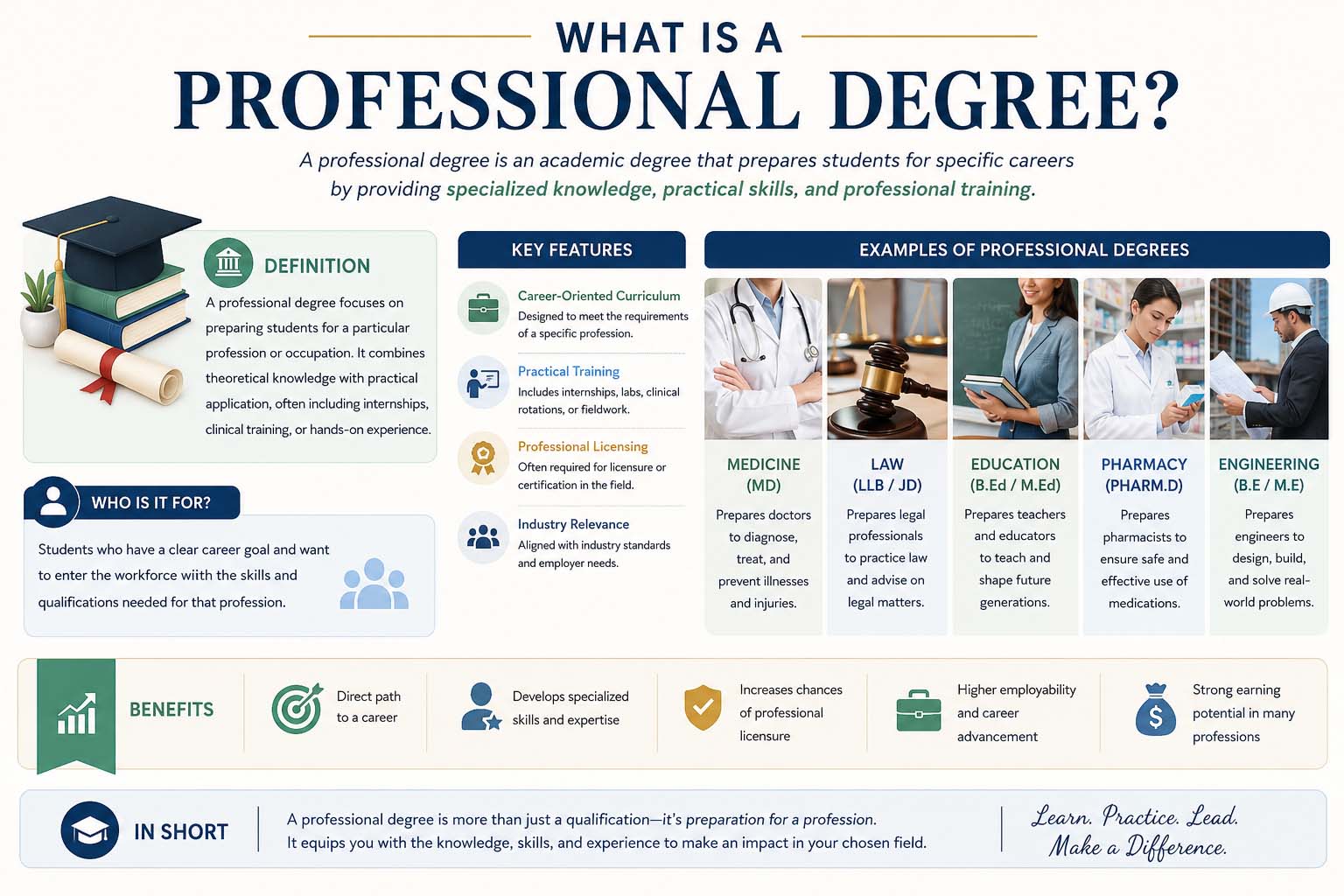
A professional degree is a type of academic degree designed to prepare students for a particular profession or career field.
These degrees usually focus on:
Practical training.
Industry skills.
Professional licensing.
Career preparation.
Real-world application.
Professional degrees often lead directly to careers in regulated industries such as healthcare, law, engineering, or business.
What Is Considered a Professional Degree?.
Common professional degrees include:
Doctor of Medicine (MD).
Juris Doctor (JD).
Doctor of Pharmacy (PharmD).
Master of Business Administration (MBA).
Doctor of Dental Surgery (DDS).
Engineering degrees in licensed fields.
Teaching certification programs.
What Is Considered a Professional Degree Now?
In 2026, the meaning of professional degrees has expanded because modern industries increasingly value specialized career-focused education.
Today, many schools consider programs in:
Data science.
Cybersecurity.
Healthcare management.
Artificial intelligence.
Digital marketing.
Business analytics.
to be professionally oriented as well.
Technology and business changes continue shaping how universities define career-ready education.
Difference Between Academic and Professional Degrees
Understanding the difference between academic and professional degrees is important for students planning their future.
| Academic Degree | Professional Degree |
|---|---|
| Focuses on theory and research | Focuses on career preparation |
| Often research-oriented | Practical and skill-based |
| Common for academic careers | Common for industry jobs |
| Examples: BA, BS, PhD | Examples: MD, JD, MBA |
What Is a First Professional Degree?
A first professional degree is the first degree required to enter a specific profession.
For example:
An MD is required to become a physician.
A JD is required to practice law in many regions.
A PharmD is required for pharmacists.
These degrees are considered “first professional” because they represent the entry-level educational requirement for licensed professions.
What Is No Longer a Professional Degree?
Educational definitions sometimes change over time.
Some older degree classifications are no longer officially categorized as professional degrees in certain educational systems.
For example:
Some teaching credentials previously considered professional degrees may now fall under graduate certifications.
Certain business programs have shifted toward academic classifications depending on accreditation standards.
Educational policies continue evolving as industries and job markets change.
Why Students Choose Professional Degrees
Professional degrees remain popular because they often provide direct career pathways.
Benefits may include:
Clear job preparation.
Industry-specific training.
Higher earning potential.
Professional licensing eligibility.
Practical experience.
Many students prefer professional degrees because they connect education directly to employment opportunities.
Examples of Popular Professional Degrees
Medicine
Medicine programs prepare students for healthcare careers through clinical and scientific training.
Law
Law degrees focus on legal systems, ethics, and courtroom practice.
Business Administration
Business Administration programs teach leadership, finance, operations, and management skills.
Engineering
Engineering degrees often combine advanced mathematics with hands-on technical applications.
Pharmacy
Pharmacy students study medication science, patient care, and healthcare systems.
How to Choose the Right Professional Degree
Choosing the right degree requires careful planning.
Step 1: Identify Career Goals
Think about the type of work you want to do long-term.
Step 2: Research Licensing Requirements
Some careers require professional certification or exams.
Step 3: Compare Programs
Review curriculum, internships, and accreditation.
Step 4: Consider Costs and Time
Professional programs can vary greatly in length and tuition.
Step 5: Evaluate Job Demand
Research employment trends and salary expectations.
Careful planning helps students make better educational decisions.
Skills Learned in Professional Degree Programs
Professional degrees often focus on practical workplace abilities.
Students may develop:
Leadership skills.
Technical expertise.
Communication abilities.
Problem-solving techniques.
Industry-specific knowledge.
Professional ethics.
These skills help graduates transition into careers more smoothly.
Are Professional Degrees Worth It?
For many students, professional degrees offer strong long-term value.
Potential benefits include:
Higher career stability.
Better salary opportunities.
Specialized expertise.
Industry recognition.
Professional licensing access.
However, students should also consider tuition costs, workload, and career requirements before choosing a program.
Challenges of Professional Degrees
Professional programs can also be demanding.
Common challenges include:
Heavy coursework.
Long study hours.
Clinical or internship requirements.
Licensing exams.
Higher educational expenses.
Students often need strong time management and motivation to succeed.
Online Professional Degrees in 2026
Online learning continues growing rapidly.
Many universities now offer online professional programs in fields such as:
Business.
Technology.
Healthcare administration.
Education.
Cybersecurity.
Hybrid learning models allow students greater flexibility while still gaining career-focused training.
Professional Degrees and Job Market Trends
Modern employers increasingly value specialized expertise.
Industries such as healthcare, technology, finance, and engineering continue demanding highly trained professionals.
As automation and AI reshape industries, professional education remains important for competitive careers.
Tips for Students Considering Professional Degrees
Students should:
Research career outlooks carefully.
Compare accredited schools.
Understand licensing requirements.
Look for internship opportunities.
Build networking connections early.
Strong preparation improves long-term educational success.
FAQ About What Is a Professional Degree
What is a professional degree?
A professional degree prepares students for specific careers or licensed professions.
What is considered a professional degree?
Degrees in medicine, law, pharmacy, engineering, and business are common examples.
What is a first professional degree?
It is the entry-level degree required for a specific licensed profession.
What is no longer a professional degree?
Some older classifications have changed depending on educational policy updates.
Are professional degrees better than academic degrees?
Neither is universally better. The best option depends on career goals and personal interests.
Conclusion
Understanding what is a professional degree helps students make smarter educational and career decisions. Professional degrees focus on practical training, industry preparation, and career readiness in fields such as medicine, law, engineering, business, and technology.