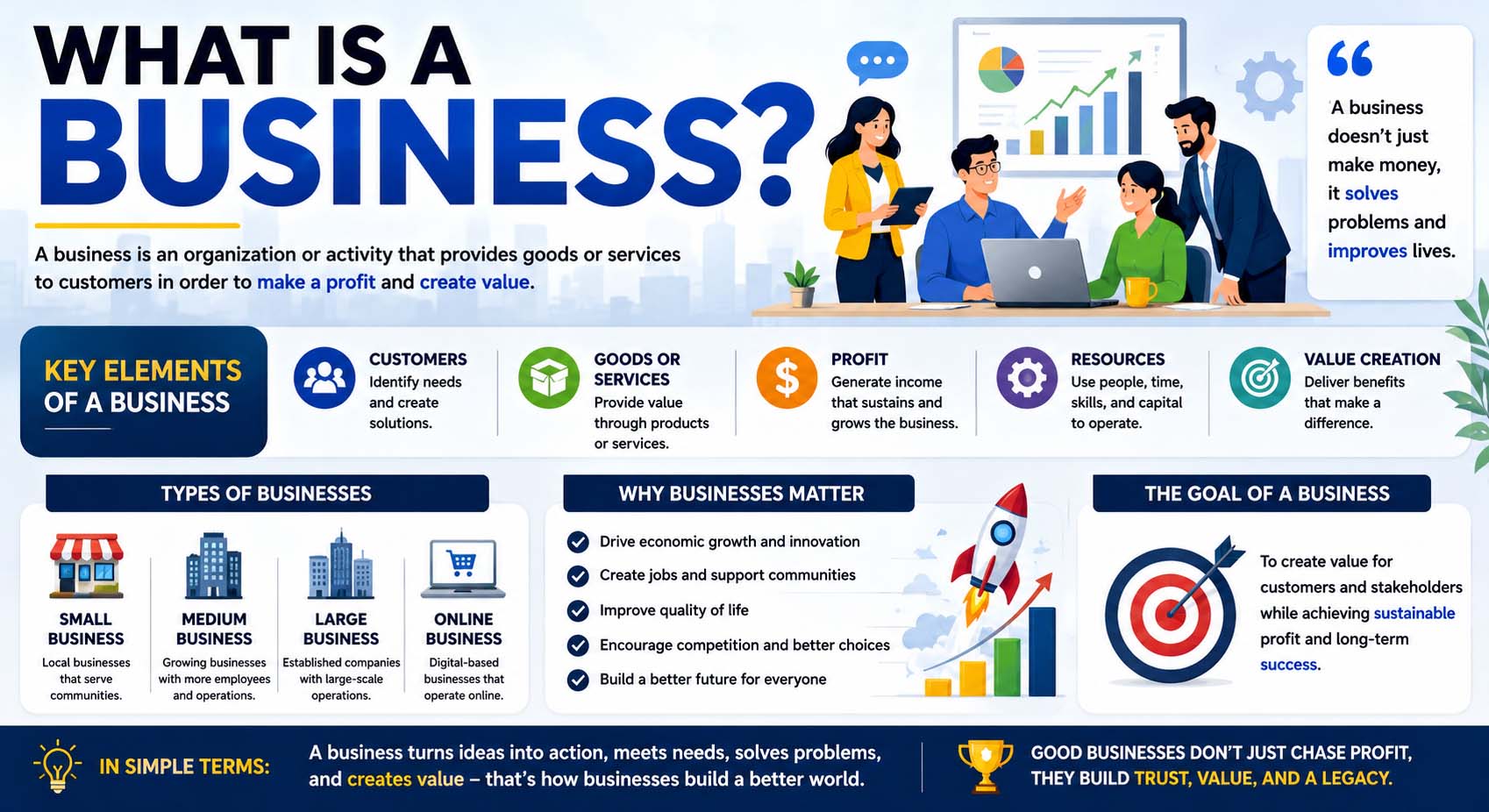
Many people ask the question, “what is a business,” especially when learning about entrepreneurship, finance, or management. A business is an organization or activity that provides goods or services to customers in exchange for money or value. Businesses exist in nearly every industry, from small local stores to large international corporations. Their primary goal is usually to generate profit while meeting the needs of consumers.
A business can operate in different ways depending on its size, structure, and purpose. Some businesses focus on selling products, while others provide services such as consulting, healthcare, education, or technology support. Every plays an important role in the economy because it creates jobs, supports innovation, and contributes to financial growth.
The concept of has evolved significantly over time. Traditional businesses once relied heavily on physical stores and local customers, but digital technology has expanded opportunities worldwide. Today, online businesses can reach global audiences through websites, social media, and e-commerce platforms. This transformation has made entrepreneurship more accessible than ever before.
What Is a Business and Why It Matters
Understanding what is a business helps people recognize how the economy functions. Businesses provide products and services that improve daily life, from food and transportation to entertainment and communication. Without businesses, modern society would struggle to meet consumer needs efficiently.
A business usually begins with an idea or solution to a problem. Entrepreneurs identify market opportunities and develop products or services that customers want. Successful businesses focus on understanding customer behavior, market trends, and financial management to remain competitive.
Businesses can be classified into different categories. Sole proprietorships are owned by one individual, while partnerships involve two or more owners sharing responsibilities and profits. Corporations are larger legal entities that operate separately from their owners. Limited liability companies combine elements of both corporations and partnerships, offering flexibility and legal protection.
The growth of digital platforms has also changed the definition of business success. Modern companies often rely on branding, online visibility, and customer engagement to build trust and increase revenue. Businesses that adapt quickly to changing technologies and customer preferences usually achieve long-term success.
What Is a Stakeholder in Business
One of the most important concepts in management is understanding what is a stakeholder in business. A stakeholder is any individual or group affected by a company’s actions, decisions, or performance. Stakeholders can include employees, customers, investors, suppliers, and even local communities.
Stakeholders play a critical role in business success because their support influences growth and reputation. Employees contribute their skills and productivity, while customers provide revenue by purchasing products or services. Investors supply financial resources that help companies expand and innovate.
Businesses must maintain strong relationships with stakeholders to achieve sustainable growth. Companies that ignore customer satisfaction or employee well-being often struggle with reputation issues and declining performance. Successful organizations focus on communication, transparency, and ethical practices to build trust among stakeholders.
Corporate social responsibility has become increasingly important in recent years because stakeholders expect businesses to operate ethically and responsibly. Consumers often support companies that demonstrate environmental awareness, fair labor practices, and community involvement. This shift has encouraged businesses to balance profitability with social responsibility.
What Is a Business Analyst
Many professionals entering the corporate world ask, “what is a business analyst?” analysis and process evaluation. Business analysts work closely with management teams, employees, and technology departments to identify opportunities for improvement.
The role of a business analyst has become increasingly valuable in modern companies because businesses rely heavily on data-driven decisions. Analysts collect information, evaluate performance trends, and recommend solutions that improve productivity and profitability. Their work often helps organizations reduce costs, streamline operations, and improve customer experiences.
Business analysts can work in many industries, including finance, healthcare, information technology, retail, and manufacturing. They may analyze customer behavior, evaluate market trends, or develop strategies for implementing new systems and technologies. Strong communication and problem-solving skills are essential because analysts must explain complex information clearly to different departments.
What Is a Business Day
Another common question is “what is a business day.” A business day refers to a standard working day when companies, banks, and government offices are open for regular operations.
Understanding business days is important for financial transactions, shipping schedules, customer service, and contract agreements. Many services operate according to business day calculations rather than calendar days. For example, a bank transfer that takes three business days may not process during weekends or holidays.
Contracts, payment deadlines, and delivery schedules often specify timelines based on business days instead of regular calendar days. This system helps businesses maintain predictable working schedules and operational consistency.
The Importance of Innovation in Modern Business
Innovation is one of the most important factors influencing business success today. Companies that continuously improve products, services, and customer experiences are more likely to remain competitive in rapidly changing markets. Innovation allows businesses to adapt to technological advancements and evolving consumer expectations.
Modern businesses invest heavily in research, marketing, and digital transformation to stay ahead of competitors. Social media, artificial intelligence, and e-commerce platforms have completely changed how companies interact with customers. Businesses that embrace innovation often experience stronger growth and increased brand recognition.
The Future of Business
The future of business will likely continue evolving through technology, globalization, and changing consumer behavior. Automation, remote work, and digital communication tools are already transforming traditional business operations. Companies that adapt quickly to these changes will have better opportunities for growth and success.
Consumers are also becoming more conscious of sustainability and ethical practices. Businesses that prioritize environmental responsibility and transparency may gain stronger customer trust in the future. This shift is encouraging organizations to develop more sustainable production methods and socially responsible strategies.