When crafting a professional resume, one of the most important sections is your list of skills to put on resume. Employers often scan resumes quickly, and your skills section can make or break your chances of getting noticed. Knowing how to present your abilities clearly and effectively can help you stand out in a competitive job market.
A well-written resume highlights both your technical expertise and your personal strengths. These include hard skills such as software knowledge and soft skills like communication. Understanding how to balance and present them is key to building a powerful and SEO-friendly resume that aligns with modern hiring trends.
Skills to Put on a Resume
Choosing the right skills to put on a resume requires careful thought about the job you are applying for. Each role has unique requirements, and your resume should reflect the specific skills that match those expectations. Employers look for candidates who can demonstrate value immediately, so your skills section should be relevant and tailored.
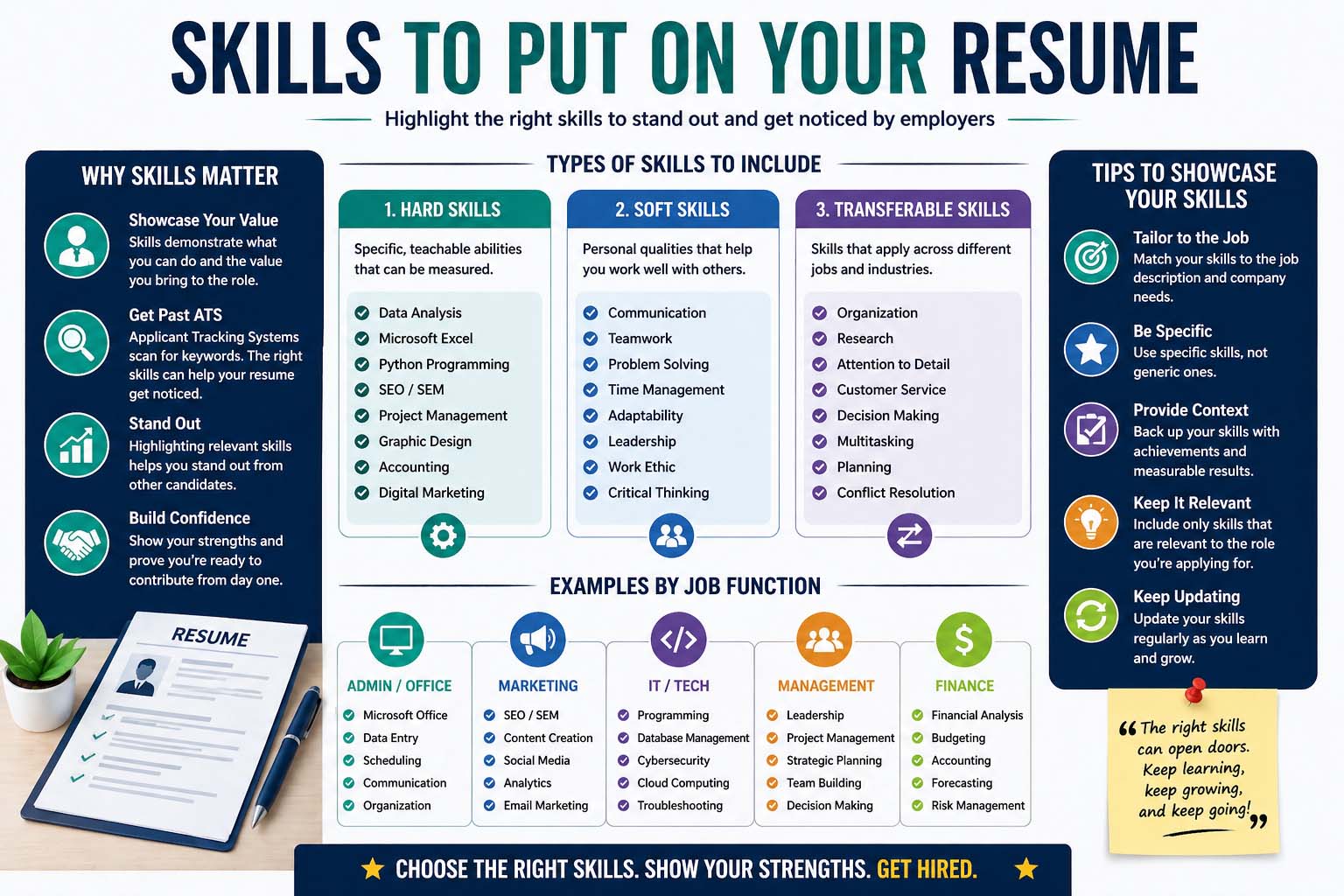
Hard skills are measurable and often learned through education or training. Examples include data analysis, project management, graphic design, and proficiency in tools like Excel or coding languages. These skills show that you can perform specific tasks required for the job.
Soft skills, on the other hand, focus on how you interact with others and handle work situations. Skills such as communication, teamwork, adaptability, and problem-solving are highly valued across industries. Including both types ensures your resume presents you as a well-rounded candidate.
Another important aspect is how you phrase your skills. Instead of simply listing them, consider integrating them into your experience descriptions. This approach shows how you have applied your abilities in real situations, making your resume more compelling.
Good Skills to Put on a Resume
When considering good skills to put on a resume, it’s essential to think about what employers are currently looking for. In today’s job market, digital literacy is a major advantage. Being familiar with online tools, remote collaboration platforms, and basic technical systems can significantly boost your profile.
Communication remains one of the most sought-after skills. Whether written or verbal, the ability to express ideas clearly is critical in almost every profession. Employers value candidates who can collaborate effectively and contribute to team success.
Leadership is another valuable skill, even if you are not applying for a managerial role. Demonstrating initiative, decision-making abilities, and the capacity to guide others can set you apart from other candidates. It shows that you are capable of growth within the organization.
Time management is equally important. Employers want individuals who can prioritize tasks, meet deadlines, and maintain productivity. Highlighting this skill indicates reliability and professionalism.
Problem-solving skills are also highly desirable. Companies seek individuals who can analyze situations, think critically, and develop effective solutions. This ability is especially important in fast-paced and dynamic work environments.
What Skills to Put on Resume
Understanding what skills to put on resume involves analyzing the job description carefully. Many companies use applicant tracking systems to filter resumes based on keywords. Including relevant skills that match the job listing increases your chances of passing these automated screenings.
Start by identifying the key requirements mentioned in the job posting. If a role emphasizes teamwork, customer service, or technical expertise, make sure those skills are clearly highlighted in your resume. Customizing your skills for each application can significantly improve your success rate.
It is also helpful to include industry-specific skills. For example, marketing professionals might list SEO, content creation, and analytics, while IT professionals may include programming languages, cybersecurity knowledge, and system administration.
Transferable skills are another important category. These are skills that can be applied across different roles and industries, such as communication, organization, and leadership. Including them shows versatility and adaptability, which are highly valued by employers.
Additionally, avoid overloading your resume with too many skills. Focus on quality rather than quantity. A concise, targeted list of skills is more effective than a long, unfocused one.
Best Skills to Put on a Resume
Selecting the best skills to put on a resume depends on your career goals and the specific role you are targeting. However, some skills consistently rank among the most valuable across industries.
Adaptability is one of the top skills in today’s rapidly changing work environment. Employers want candidates who can adjust to new challenges, technologies, and workflows. Highlighting your ability to learn quickly and embrace change can make a strong impression.
Critical thinking is another essential skill. It demonstrates your ability to evaluate information, make informed decisions, and approach problems logically. This skill is particularly important in roles that require analysis and strategic planning.
Emotional intelligence is increasingly recognized as a key workplace skill. Being able to understand and manage your own emotions, as well as those of others, contributes to better teamwork and leadership.
Technical skills remain crucial, especially as technology continues to evolve. Even in non-technical roles, having basic digital skills can give you a competitive edge. Employers appreciate candidates who are comfortable using modern tools and platforms.
Creativity is also highly valued, particularly in roles that involve innovation and problem-solving. Being able to think outside the box and generate new ideas can set you apart from other applicants.
Finally, strong organizational skills are essential for maintaining efficiency and productivity. Employers look for candidates who can manage tasks effectively and keep projects on track.
Conclusion
Choosing the right skills to put on resume is a critical step in building a successful job application. By carefully selecting and presenting your skills, you can demonstrate your value to potential employers and increase your chances of landing an interview.
Focus on relevance, clarity, and balance when listing your skills. Combine hard and soft skills, tailor your resume to each job, and highlight your strengths in a way that aligns with employer expectations. With the right approach, your resume can become a powerful tool that opens doors to new career opportunities.