When studying literature, students often encounter the concept of a thematic statement. Whether analyzing a novel, short story, poem, or film, understanding themes helps readers identify the deeper messages authors communicate through their work.
Learning about thematic statement examples can make literary analysis much easier. A strong thematic statement goes beyond simply identifying a theme—it explains what the author is saying about that theme.
This guide explores thematic statements, provides step-by-step instructions, and includes practical examples to help students improve their reading and writing skills.
What Is a Thematic Statement?
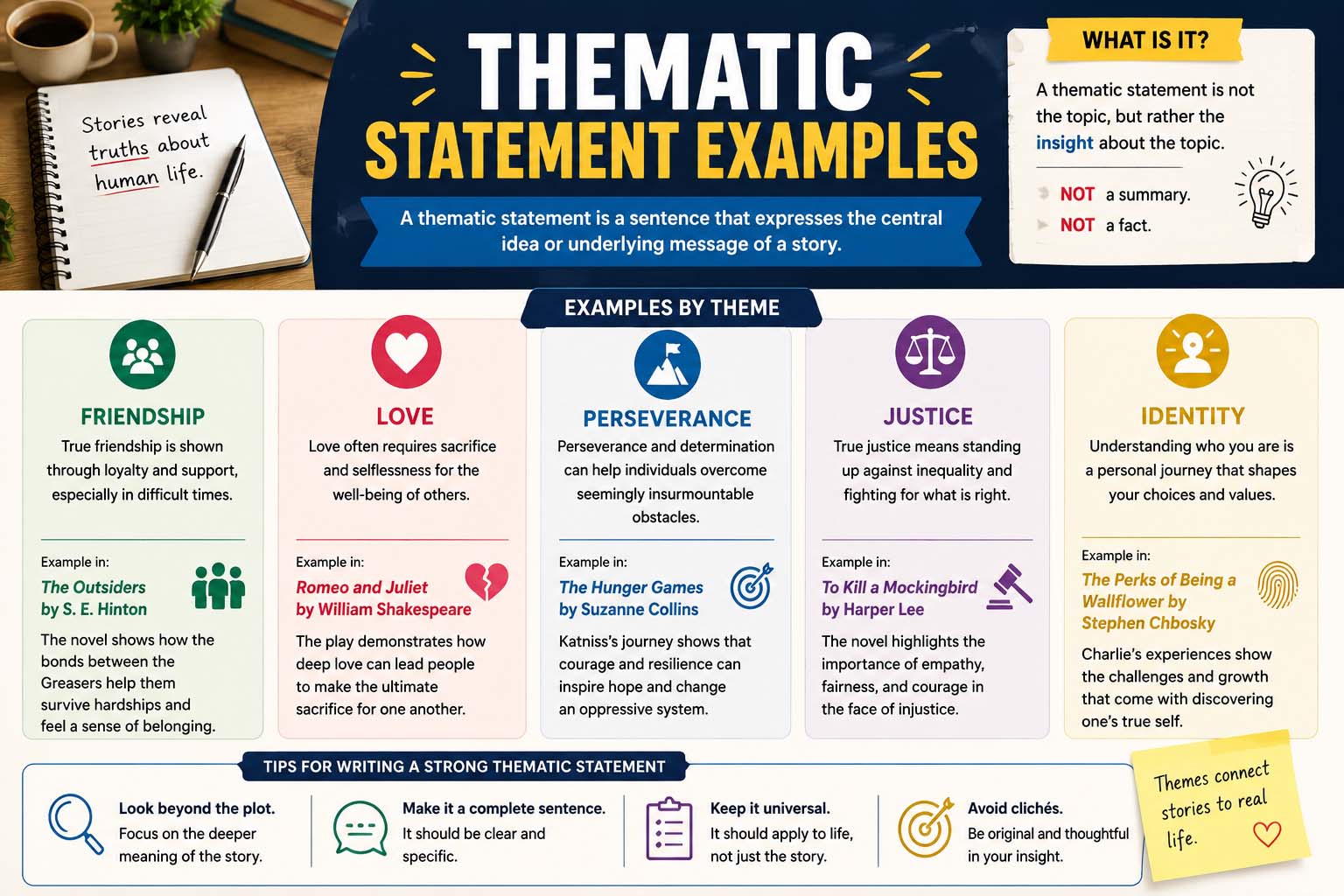
A thematic statement is a sentence that expresses the central message or lesson of a literary work.
Unlike a theme, which is usually a single word or concept, a thematic statement explains the author’s viewpoint about that concept.
Theme Example
Friendship
Thematic Statement Example
True friendship helps people overcome difficult challenges and grow as individuals.
The difference is important because thematic statements provide deeper analysis rather than simple topic identification.
Why Are Thematic Statements Important?
Thematic statements help students:
- Analyze literature more effectively
- Understand author intentions
- Improve essay writing
- Develop critical thinking skills
- Support literary arguments
Many academic assignments require students to identify themes and explain their significance through thematic statements.
Characteristics of a Strong Thematic Statement
A good thematic statement usually includes several qualities.
It Is Universal
The statement applies beyond the story itself.
The statement focuses on broader lessons.
It Encourages Discussion
Strong thematic statements often invite interpretation and analysis.
For example:
Weak Theme: Love
Strong Thematic Statement: Love requires trust, sacrifice, and commitment to survive difficult circumstances.
Step-by-Step Guide to Writing a Thematic Statement
Students often struggle with creating thematic statements. The following process can help.
Step 1: Identify the Theme
Ask yourself:
- What idea appears repeatedly?
- What lesson does the story teach?
Examples include:
- Love
- Family
- Courage
- Friendship
- Loyalty
Step 2: Consider the Author’s Message
Think about what the story says regarding the theme.
Step 3: Write a Complete Sentence
Step 4: Avoid Plot Details
Keep the statement broad and universal.
Step 5: Revise for Clarity
Following these steps makes thematic statement writing much easier.
Examples of a Thematic Statement
Many students search for examples of a thematic statement to better understand the concept.
Here are several examples.
Friendship
True friendship provides support during life’s most difficult moments.
Courage
Courage allows individuals to overcome fear and achieve personal growth.
Loyalty
Loyalty strengthens relationships but can sometimes create difficult moral choices.
Perseverance
Persistence helps people overcome obstacles and achieve long-term success.
These examples demonstrate how a theme becomes a complete statement.
Examples of Thematic Statement for Common Themes
Students frequently encounter recurring themes in literature.
Freedom
The pursuit of freedom often requires sacrifice and determination.
Identity
Self-discovery helps individuals understand their purpose and values.
Justice
Justice is essential for maintaining fairness and social stability.
Hope
Hope enables people to remain resilient during difficult circumstances.
These examples can serve as models for classroom assignments.
Thematic Statement Examples for Love
One of the most common literary themes is love.
Students often search for thematic statement examples for love because love appears in countless novels, poems, and plays.
Examples include:
Example 1
Love grows stronger when built on trust and understanding.
Example 2
True love requires sacrifice and commitment during challenging times.
Example 3
Love can inspire personal growth and positive change.
Example 4
Unconditional love provides strength during adversity.
These statements go beyond simply identifying love as a theme.
Family Thematic Statement Examples
Another frequently explored topic is family.
Here are several family thematic statement examples.
Example 1
Strong family relationships provide support during life’s challenges.
Example 2
Family bonds help shape personal identity and values.
Example 3
Forgiveness within families can heal emotional wounds and strengthen relationships.
Example 4
These examples demonstrate how family themes can be expressed in meaningful ways.
Common Themes Found in Literature
Recognizing common themes can help students create thematic statements more quickly.
Popular literary themes include:
- Love
- Family
- Friendship
- Courage
- Loyalty
- Justice
- Freedom
- Identity
- Power
- Sacrifice
- Hope
- Survival
Identifying these themes is often the first step toward writing effective analysis.
Common Mistakes Students Make
Many students struggle with thematic statements because of several common errors.
Using Single Words
A theme alone is not a thematic statement.
Incorrect:
Love
Correct:
Love requires trust and sacrifice to endure difficult challenges.
Being Too Specific
Avoid mentioning character names or plot details.
Writing Opinions Instead of Messages
The statement should reflect the author’s message rather than personal preference.
Being Too Vague
Specific ideas create stronger thematic statements.
Avoiding these mistakes improves literary analysis significantly.
How Thematic Statements Help Essay Writing
Thematic statements are useful beyond literature classes.
They often serve as:
- Thesis statements
- Essay foundations
- Discussion prompts
- Analytical frameworks
A strong thematic statement can guide an entire essay and help maintain focus.
Students who master thematic statements often become stronger academic writers.
Practice Examples for Students
Try identifying themes and writing statements for the following topics.
Theme: Friendship
Possible Statement:
Meaningful friendships encourage personal growth and resilience.
Theme: Determination
Possible Statement:
Theme: Honesty
Possible Statement:
Honesty builds trust and strengthens relationships over time.
Practicing regularly helps improve literary analysis skills.
FAQ
What is a thematic statement?
A thematic statement is a sentence that explains a literary work’s central message about a theme.
A theme is a topic, while a thematic statement explains what the author says about that topic.
What are examples of a thematic statement?
Examples include statements about friendship, love, courage, family, and perseverance.
How do I write a thematic statement?
Identify the theme, determine the author’s message, and express it as a complete sentence.
What are thematic statement examples for love?
Examples include: “True love requires trust and sacrifice to survive difficult challenges.”
What are family thematic statement examples?
Examples include: “Strong family relationships provide support and guidance throughout life.”
Conclusion
Understanding thematic statement examples is an essential skill for students studying literature and writing analytical essays. By exploring examples of a thematic statement, reviewing examples of thematic statement for common themes, studying thematic statement examples for love, and examining family thematic statement examples, students can develop stronger critical thinking and writing abilities. Thematic statements help reveal the deeper meanings within stories and allow readers to connect literary works to universal human experiences. With practice, creating effective thematic statements becomes a valuable tool for academic success.