Higher education institutions rely on various types of faculty members to provide quality instruction and academic support. One position that often raises questions among students and aspiring educators is the adjunct professor.
If you have ever wondered what is an adjunct professor, you are not alone. Adjunct professors play an important role in colleges and universities, teaching courses and sharing professional expertise with students. However, their employment structure differs significantly from that of traditional full-time faculty members.
What Is an Adjunct Professor?
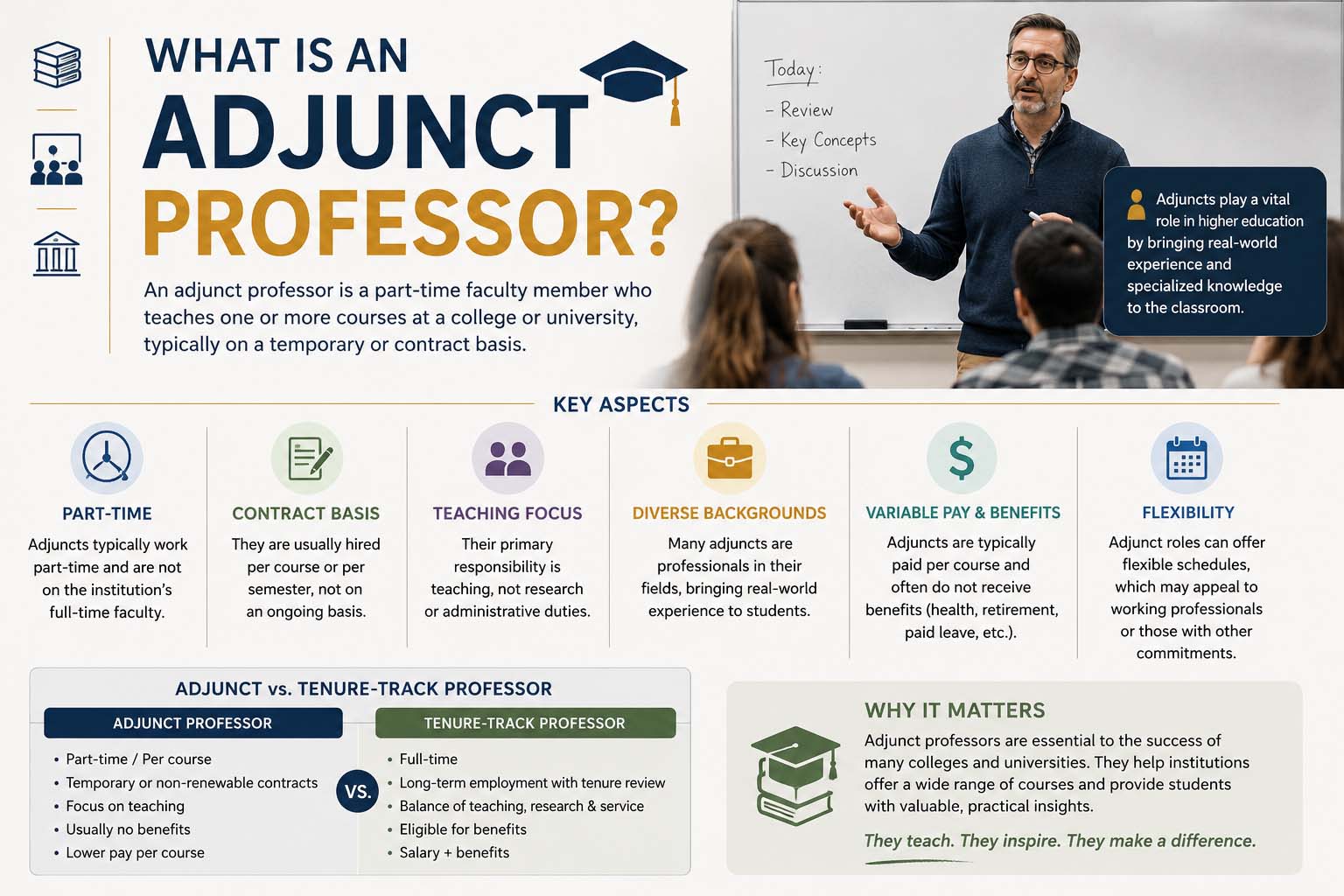
An adjunct professor is a part-time instructor hired by a college, university, or educational institution to teach specific courses without holding a permanent full-time faculty position.
Unlike tenured or tenure-track professors, adjunct professors are generally employed on a contract basis. They may teach one course, several courses, or work for multiple institutions simultaneously.
Many adjunct faculty members bring real-world experience from industries such as business, healthcare, engineering, law, technology, and education.
What Is an Adjunct Professor Mean?
Many people search for what is an adjunct professor mean when trying to understand academic job titles.
Simply put, the term “adjunct” refers to someone who works in a supporting or supplemental role. In higher education, an adjunct professor supplements the teaching staff rather than serving as a permanent full-time faculty member.
Adjunct professors typically:
- Teach assigned courses
- Grade assignments and exams
- Support student learning
- Hold office hours when required
- Follow institutional academic policies
While their responsibilities may resemble those of full-time professors, their employment arrangements are usually different.
Why Colleges Hire Adjunct Professors
Universities hire adjunct professors for several reasons.
Industry Expertise
Many adjunct instructors actively work in their professional fields. Their current experience can provide students with practical insights beyond textbooks.
Flexible Staffing
Educational institutions can adjust course offerings based on student demand without committing to long-term faculty contracts.
Specialized Knowledge
Adjunct faculty often teach niche subjects requiring specific professional expertise.
Cost Efficiency
Part-time contracts can reduce institutional staffing costs compared to full-time faculty positions.
These benefits make adjunct professors an important part of modern higher education systems.
Duties and Responsibilities of an Adjunct Professor
Although adjunct professors are usually part-time employees, they perform many of the same teaching tasks as traditional professors.
Common responsibilities include:
Teaching Courses
The primary duty is delivering lectures, discussions, labs, or online instruction.
Preparing Course Materials
Adjunct instructors develop lesson plans, assignments, quizzes, and examinations.
Evaluating Student Performance
They assess student progress through grading and feedback.
Supporting Students
Many adjunct professors answer questions, provide guidance, and help students succeed academically.
Maintaining Academic Standards
Adjunct faculty must follow institutional policies regarding grading, attendance, and curriculum requirements.
The exact responsibilities may vary depending on the institution and academic discipline.
What Is an Adjunct Assistant Professor?
Another commonly searched term is what is an adjunct assistant professor.
An adjunct assistant professor is typically a part-time faculty member who holds a rank similar to an assistant professor but is not employed as a full-time tenure-track faculty member.
The title may indicate:
- Advanced qualifications
- Specialized expertise
- Professional accomplishments
- Teaching experience
Universities often use different adjunct titles depending on institutional policies and academic departments.
Although the title sounds similar to a traditional assistant professor role, the employment structure is usually temporary or contract-based.
Qualifications Needed to Become an Adjunct Professor
Most colleges expect adjunct professors to possess at least a master’s degree in the field they teach.
In some disciplines, especially research-focused universities, a doctoral degree may be preferred or required.
Typical qualifications include:
Educational Credentials
Most adjunct faculty hold advanced degrees related to their teaching subject.
Professional Experience
Industry experience can be highly valuable, especially in applied fields such as business, nursing, engineering, or information technology.
Teaching Skills
Strong communication and instructional abilities help create effective learning environments.
Subject Expertise
Institutions seek instructors with deep knowledge of their academic disciplines.
How to Become an Adjunct Professor: Step-by-Step Guide
Many professionals consider adjunct teaching as a way to share expertise and enter higher education.
Step 1: Earn the Required Degree
Obtain a master’s degree or higher in your chosen field.
Step 2: Build Professional Experience
Practical experience strengthens your qualifications and teaching credibility.
Step 3: Develop Teaching Skills
Experience in training, mentoring, presenting, or teaching can be beneficial.
Step 4: Prepare Application Materials
Create a professional resume, curriculum vitae (CV), and teaching statement.
Step 5: Apply to Colleges and Universities
Many institutions regularly recruit adjunct faculty for specific courses and programs.
Following these steps can improve your chances of securing adjunct teaching opportunities.
What Is an Adjunct Professor Salary?
One of the most common questions is what is an adjunct professor salary.
Adjunct professor compensation varies significantly based on factors such as:
- Institution type
- Geographic location
- Academic discipline
- Teaching experience
- Number of courses taught
Many adjunct professors are paid per course rather than receiving an annual salary.
For example, compensation may range from several thousand dollars per course at community colleges to higher rates at prestigious universities.
Some adjunct faculty teach multiple courses or work at several institutions to increase earnings.
Because employment arrangements differ, salary expectations should be researched based on specific institutions and regions.
Adjunct Professor vs Full-Time Professor
Students often wonder how adjunct professors compare to traditional faculty members.
| Feature | Adjunct Professor | Full-Time Professor |
|---|---|---|
| Employment Status | Part-time | Full-time |
| Contract Length | Temporary | Ongoing |
| Benefits | Often Limited | Typically Included |
| Research Requirements | Usually Minimal | Often Significant |
| Teaching Load | Variable | Structured |
| Tenure Eligibility | Rare | Possible |
Both roles contribute significantly to student learning, but their employment structures differ substantially.
Advantages of Learning From Adjunct Professors
Students can benefit greatly from courses taught by adjunct faculty.
Real-World Experience
Professional Networking
Students may gain valuable career insights and professional connections.
Practical Applications
Many adjunct professors use real workplace examples to explain academic concepts.
Industry-Relevant Skills
Their teaching often emphasizes skills employers currently seek.
These advantages can help students better prepare for future careers.
Challenges Faced by Adjunct Professors
While adjunct teaching offers flexibility, it also presents challenges.
Common issues include:
- Limited job security
- Variable course assignments
- Lower compensation compared to full-time faculty
- Reduced access to institutional resources
- Limited opportunities for advancement
Despite these challenges, many adjunct professors find teaching personally rewarding and professionally fulfilling.
Higher education continues to evolve, and adjunct faculty remain an important component of university staffing.
Online learning, professional certification programs, and workforce-focused education have increased demand for instructors with practical industry expertise.
As educational models become more flexible, adjunct professors will likely continue playing a significant role in delivering specialized instruction and supporting student success.
Frequently Asked Questions
What is an adjunct professor?
An adjunct professor is a part-time college or university instructor hired to teach specific courses without holding a permanent full-time faculty position.
What is an adjunct professor mean?
The term refers to a faculty member who serves in a supplemental teaching role, usually on a contract basis.
What is an adjunct assistant professor?
An adjunct assistant professor is a part-time instructor with an academic rank similar to assistant professor but without full-time tenure-track status.
What is an adjunct professor salary?
Compensation varies widely depending on institution, location, experience, and number of courses taught.
Can adjunct professors become full-time professors?
Yes. Some adjunct faculty later transition into full-time academic positions, although the process can be competitive.
Conclusion
Understanding what is an adjunct professor helps students, educators, and career changers better navigate the world of higher education. Adjunct professors provide valuable instruction, bring practical industry expertise into classrooms, and help institutions meet diverse educational needs.