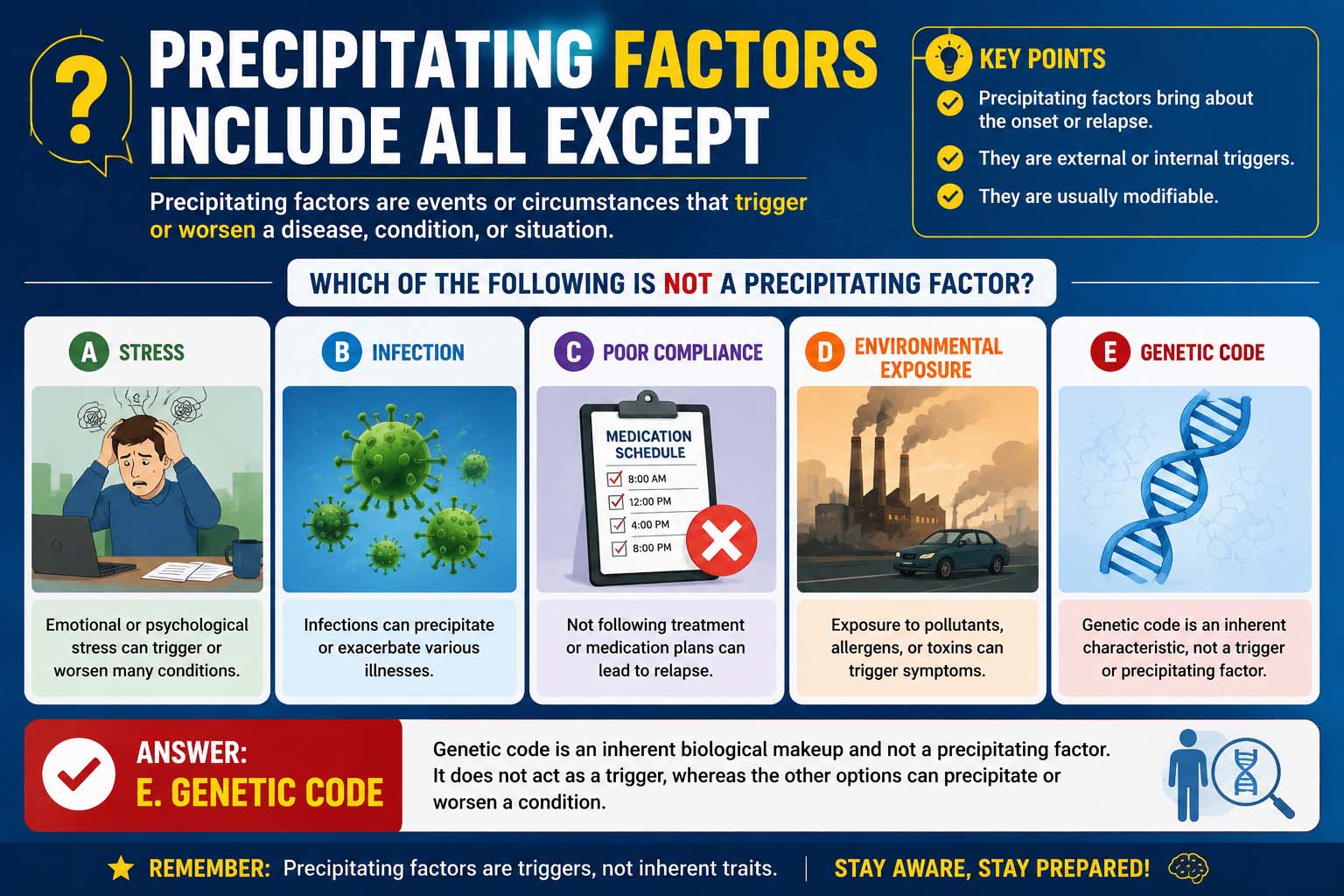
In medical and nursing education, students often encounter complex exam questions designed to test analytical thinking and clinical understanding. One phrase that appears frequently in textbooks, exams, and online study resources is “precipitating factors include all except.” This type of question is commonly used in multiple-choice assessments to identify which option does not contribute to a specific condition or event. Understanding how precipitating factors work is essential for healthcare students, especially those preparing for licensing exams and clinical evaluations.
Precipitating factors are events, behaviors, or conditions that trigger the onset of a disease, emotional reaction, or medical emergency. They differ from predisposing factors, which increase susceptibility over time. Precipitating factors are often immediate causes that lead directly to symptoms or complications. Knowing how to identify these triggers can help healthcare professionals improve diagnosis and treatment planning.
Precipitating Factors Include All Except PMDB
The phrase “precipitating factors include all except PMDB” often appears in exam preparation materials and online discussion forums. PMDB is frequently associated with educational testing systems or nursing review content where students practice identifying correct and incorrect triggers for health conditions.
In healthcare, precipitating factors can vary widely depending on the condition being discussed. For example, in heart failure, precipitating factors may include infection, uncontrolled hypertension, excessive salt intake, or medication noncompliance. However, an unrelated condition or harmless behavior would represent the “except” answer in a multiple-choice question.
Students preparing for professional exams should focus on understanding why certain factors trigger disease progression. Memorizing information alone is not enough. Clinical reasoning is essential because many exam questions are designed to test conceptual understanding rather than simple recall.
When reviewing PMDB-style questions, learners should carefully analyze each option and look for the factor that does not logically fit the clinical scenario. This strategy improves accuracy and reduces confusion during exams.
PMDB Precipitating Factors Include All Except
The phrase “PMDB precipitating factors include all except” is commonly searched by students looking for explanations of exam-style medical questions. In many cases, these questions relate to psychiatric disorders, cardiovascular emergencies, or acute health episodes.
For example, in mental health nursing, precipitating factors for anxiety attacks may include emotional stress, traumatic events, lack of sleep, or substance abuse. An unrelated factor such as healthy exercise habits may serve as the “except” answer because it generally supports wellness instead of triggering anxiety.
Understanding the context of the disease process is critical. Different conditions have unique precipitating factors. In asthma, triggers may include allergens, smoke exposure, respiratory infections, and cold air. In diabetic ketoacidosis, precipitating factors can involve infection, missed insulin doses, or severe illness.
Students using PMDB resources often benefit from breaking down each answer choice individually. By asking whether the factor directly contributes to the condition, they can more easily identify the incorrect option. This analytical approach is especially useful during timed exams where quick thinking is necessary.
Healthcare educators use “all except” questions because they test deeper understanding. Rather than simply identifying correct information, students must recognize the one choice that does not belong. This requires strong comprehension of disease mechanisms and clinical relationships.
Precipitating Factors Include All Except Quizlet
Many students search for “precipitating factors include all except Quizlet” because Quizlet has become a popular study platform for medical terminology, nursing concepts, and exam preparation. Quizlet flashcards often contain definitions, practice questions, and memory aids related to precipitating factors in various health conditions.
Using Quizlet can help students reinforce important concepts through repetition and active recall. Flashcards allow learners to practice identifying triggers for diseases and distinguishing between precipitating and predisposing factors. However, relying only on memorization may not fully prepare students for real clinical scenarios.
A better approach involves combining Quizlet practice with textbook learning and case studies. Understanding the reasoning behind each answer is more effective than simply memorizing lists. For instance, students should understand why dehydration precipitates kidney injury or why emotional stress can trigger hypertension episodes.
Another advantage of Quizlet is accessibility. Students can study from mobile devices anytime, making it easier to review concepts before exams or clinical rotations. Many nursing and medical students use online learning tools to supplement classroom education and strengthen weak areas.
When using Quizlet for “all except” questions, learners should pay close attention to wording. Exam questions may include subtle clues that help identify the incorrect option. Terms like “always,” “never,” or unrelated conditions can often signal the correct answer choice in these question formats.
Precipitating Factors Include All Except:
The phrase “precipitating factors include all except:” is intentionally structured to challenge students’ understanding of disease triggers and clinical reasoning. These questions are widely used in nursing school, medical school, and healthcare certification exams.
To answer these questions effectively, students should first identify the condition being discussed. Once the disease or event is clear, they can evaluate which factors are known triggers. The remaining option is usually the correct “except” answer.
For example, in myocardial infarction cases, precipitating factors may include smoking, stress, hypertension, and high cholesterol. A factor unrelated to heart disease, such as adequate hydration or balanced nutrition, could become the “except” answer.
This question style also encourages critical thinking. Healthcare professionals must be able to distinguish between relevant and irrelevant information in clinical settings. Understanding precipitating factors allows providers to recognize warning signs, educate patients, and reduce the risk of complications.
In real-world medicine, identifying precipitating factors can improve patient outcomes. If a healthcare provider recognizes that poor medication adherence precipitated a hospitalization, interventions can focus on patient education and support. Similarly, recognizing stress as a trigger for mental health crises can lead to better coping strategies and therapy plans.
Conclusion
Understanding the concept behind “precipitating factors include all except” questions is important for students and healthcare professionals alike. These questions test more than memory because they require logical reasoning and clinical understanding. Whether encountered in PMDB materials, Quizlet flashcards, or professional licensing exams, this question style challenges learners to identify which factor does not contribute to a disease or event.