
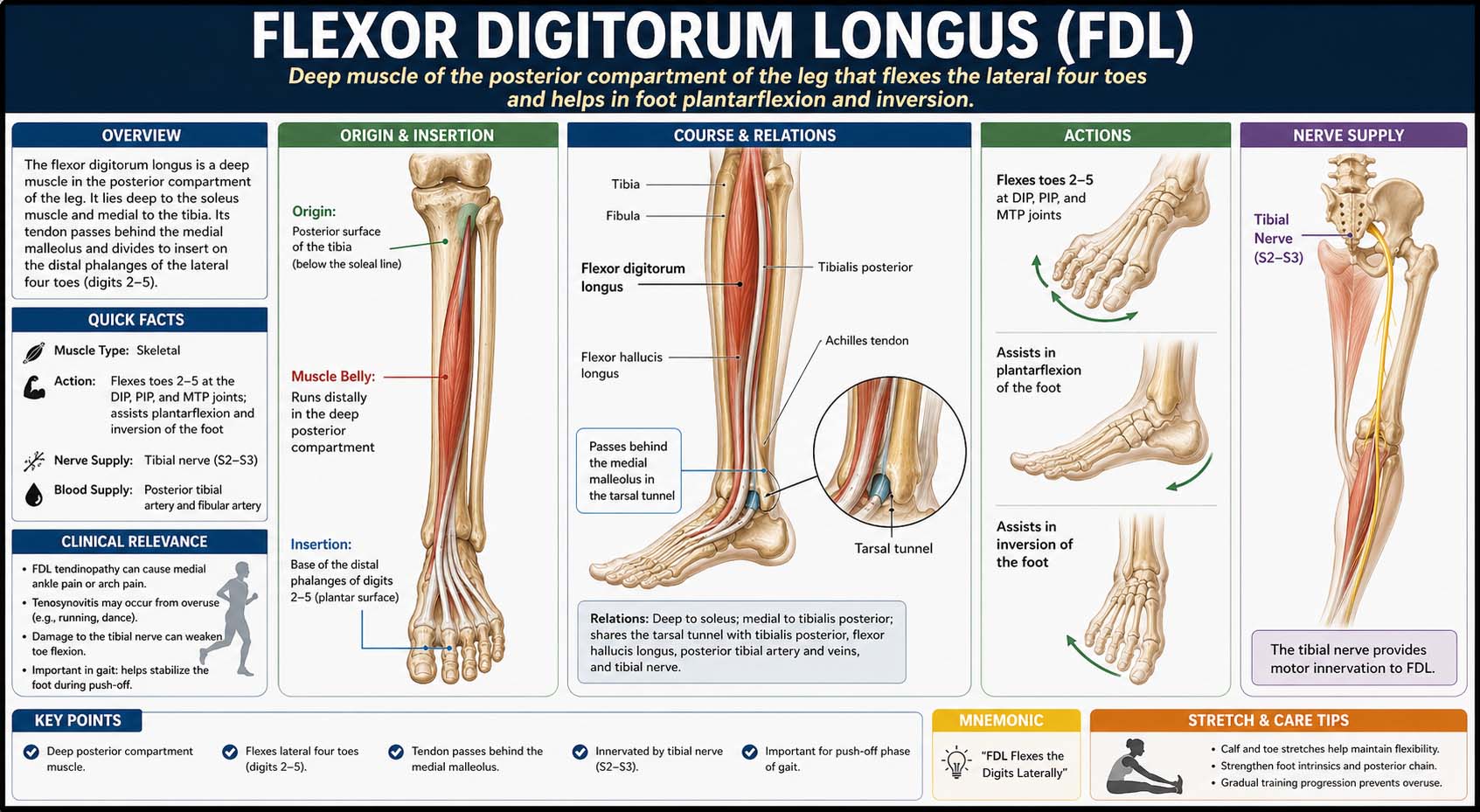
The flexor digitorum longus is an important muscle located in the lower leg that plays a key role in foot movement and toe control. It helps people walk, run, jump, and maintain balance during daily activities. This muscle is especially active when pushing off the ground while walking or standing on tiptoes. Because it is heavily involved in movement, the flexor digitorum longus can sometimes become strained or irritated.
Understanding the structure and purpose of the flexor digitorum longus can help athletes, fitness enthusiasts, and anyone dealing with foot discomfort. It is also valuable knowledge for students studying anatomy and rehabilitation professionals who work with lower limb injuries.
What Is the Flexor Digitorum Longus?
The flexor digitorum longus is one of the deep muscles in the posterior compartment of the leg. It runs down the inside part of the lower leg and extends into the foot. Its primary purpose is to bend the lateral four toes, meaning the second through fifth toes. This action is essential during walking, gripping the ground, and stabilizing the foot.
The muscle works together with other muscles such as the tibialis posterior and flexor hallucis longus. These muscles coordinate movement and support the arch of the foot. When functioning properly, the longus contributes to smooth movement and better balance.
Flexor Digitorum Longus Pain
Flexor digitorum longus pain can develop when the muscle or tendon becomes overused, strained, or inflamed. Runners, dancers, hikers, and people who spend long hours standing may experience discomfort in the lower leg, ankle, or arch of the foot. Pain often appears gradually and may worsen during activity.
Symptoms can include tenderness behind the ankle, aching along the inner foot, stiffness in the toes, or discomfort when curling the toes downward. In some cases, swelling may occur if the tendon becomes irritated. Improper footwear, flat feet, or sudden increases in activity can increase the risk of pain.
Treatment often includes rest, stretching, supportive shoes, and reducing activities that trigger symptoms. Ice can help calm inflammation, while strengthening exercises may improve long-term function. Persistent pain should be evaluated by a healthcare professional.
Flexor Digitorum Longus Origin and Insertion
Understanding the flexor digitorum longus origin and insertion is essential in anatomy. The muscle originates from the posterior surface of the tibia, mainly below the soleal line. This location gives it a strong starting point on the lower leg bone.
From there, the muscle fibers travel downward and form a tendon near the ankle. The tendon passes behind the medial malleolus, which is the bony bump on the inside of the ankle. It then enters the foot and divides into four smaller tendons.
These tendons insert into the bases of the distal phalanges of the second, third, fourth, and fifth toes. Because of this attachment, the can bend the tips of the toes effectively. Its long path from leg to foot allows it to influence several joints during movement.
Flexor Digitorum Longus Action
The main flexor digitorum longus action is flexion of the lateral four toes. This means it curls the toes downward, helping during push-off while walking or running. Toe flexion is also useful for gripping uneven surfaces and improving balance.
Another important function of the muscle is assisting plantarflexion of the ankle. Plantarflexion is the movement of pointing the foot downward, such as pressing a gas pedal or standing on tiptoes. Although stronger muscles like the gastrocnemius and soleus perform most plantarflexion, the provides supportive assistance.
The muscle also helps maintain the longitudinal arches of the foot. Proper arch support is crucial for shock absorption and efficient walking mechanics. Weakness or dysfunction in this muscle can contribute to foot instability and fatigue.
Flexor Digitorum Longus Muscle
The flexor digitorum longus muscle is considered a deep posterior leg muscle. It lies beneath the soleus and near other important muscles and tendons in the lower leg. Its position protects it while allowing smooth movement through the ankle and foot.
Blood supply to the muscle generally comes from branches of the posterior tibial artery. Nerve supply is provided by the tibial nerve, which controls many muscles in the back of the leg and foot. Healthy nerve and blood flow are necessary for normal strength and movement.
Because the muscle crosses multiple joints, it has a complex but highly functional role. It contributes to coordinated movement in the ankle, foot, and toes, making it essential for everyday motion.
Exercises and Rehabilitation
Stretching the calf and foot muscles can improve flexibility and reduce tension on the Gentle toe curls with resistance bands may help strengthen the tendon and surrounding muscles. Balance exercises can also improve foot control and reduce strain.
People recovering from injury should increase activity slowly. Supportive footwear and orthotics may be helpful if foot mechanics are contributing to stress on the tendon. Regular mobility work can also prevent stiffness and recurring discomfort.
Why This Muscle Matters
The flexor digitorum longus is often overlooked compared with larger leg muscles, yet it plays a vital role in movement efficiency. Every step you take depends on the coordinated effort of many muscles, including this one. Without proper function of the , walking and running can feel less stable and more tiring.
Athletes especially rely on this muscle during sprinting, jumping, and directional changes. Even non-athletes benefit from keeping it strong and flexible for balance and mobility.
Conclusion
The flexor digitorum longus is a key lower leg muscle responsible for toe flexion, ankle support, and maintaining balance. From understanding pain to learning the flexor digitorum longus origin and insertion, it becomes clear how valuable this structure is. Its primary flexor digitorum longus action supports walking, running, and posture, while the muscle itself works continuously during movement. Taking care of this muscle through exercise, stretching, and proper footwear can improve foot health and overall mobility.