Many students begin thinking about their future educational goals after completing a bachelor’s degree. One common question is: what is grad school? Graduate school offers advanced education beyond undergraduate studies and can help students develop specialized knowledge, research skills, and professional expertise.
Whether you want to pursue a career in business, education, healthcare, engineering, or research, graduate school may provide opportunities to expand your qualifications and career prospects.
What Is Grad School?
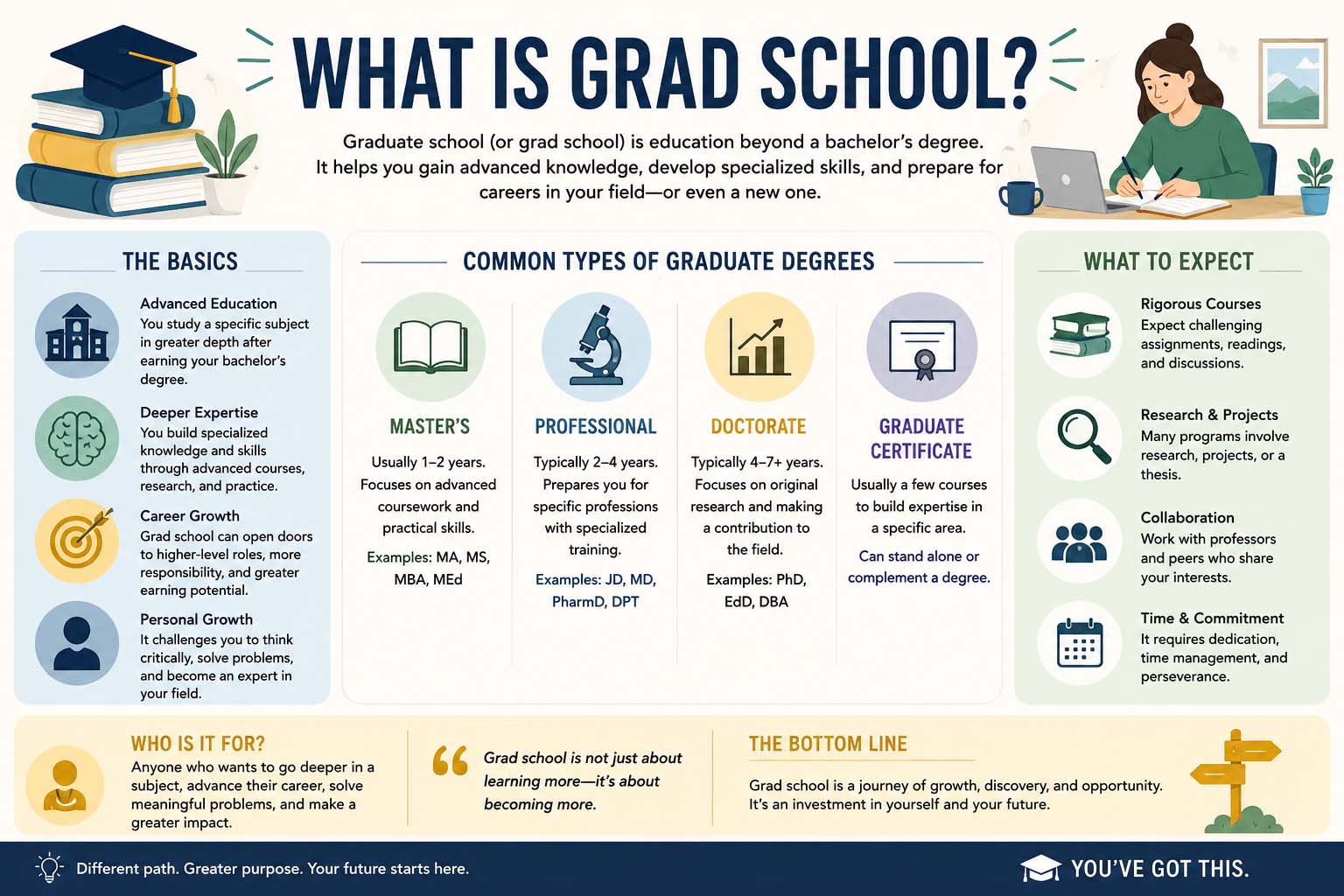
Grad school, short for graduate school, refers to advanced academic programs that students enter after earning a bachelor’s degree.
Graduate education focuses on:
- Specialized knowledge
- Advanced coursework
- Research projects
- Professional development
- Academic expertise
Unlike undergraduate programs, graduate studies often require deeper analysis, independent learning, and greater subject specialization.
Students typically attend grad school to enhance career opportunities, prepare for leadership roles, or pursue academic and research careers.
Why Do Students Attend Grad School?
People choose graduate school for many reasons.
Career Advancement
Many professions value advanced degrees.
Graduate education can help individuals qualify for higher-level positions and increased responsibilities.
Specialized Knowledge
Students gain in-depth expertise in specific fields.
Research Opportunities
Graduate programs often involve research projects that contribute to knowledge within a discipline.
Professional Credentials
Some careers require graduate-level education for licensing or certification.
Personal Growth
Many students enjoy continuing their education and expanding their understanding of a subject.
What Is a Grad School Degree?
A common question is what is a grad school degree.
A graduate degree is an academic credential earned after completing advanced studies beyond a bachelor’s degree.
Graduate degrees generally fall into several categories:
Master’s Degree
Master’s programs typically take one to three years to complete.
Examples include:
- Master of Business Administration (MBA)
- Master of Science (MS)
- Master of Arts (MA)
- Master of Education (MEd)
Doctoral Degree
Doctoral programs represent the highest level of academic achievement.
Examples include:
- Doctor of Philosophy (PhD)
- Doctor of Education (EdD)
- Doctor of Business Administration (DBA)
Professional Degrees
Certain professions require specialized graduate-level training.
Examples include:
- Law degrees
- Medical degrees
- Pharmacy degrees
These programs prepare students for specific professional careers.
What Is Grad School Degree Study Like?
Students can expect:
Advanced Coursework
Courses focus on specialized topics within a field.
Independent Learning
Graduate students often complete research and projects independently.
Academic Writing
Strong writing skills are essential in most programs.
Research Requirements
Many programs require theses, dissertations, or capstone projects.
Collaboration
Students frequently work with faculty, researchers, and professional peers.
The academic expectations are typically higher than undergraduate programs.
Types of Graduate School Programs
Graduate schools offer diverse educational opportunities.
Academic Programs
These emphasize research and scholarly study.
Professional Programs
These focus on practical workplace skills and career development.
Online Programs
Many universities now offer flexible online graduate education options.
Hybrid Programs
Hybrid programs combine online and in-person learning.
Students should choose a format that aligns with their goals and lifestyle.
Step-by-Step Guide to Applying for Grad School
Applying to graduate school requires planning and preparation.
Step 1: Identify Career Goals
Determine why you want to pursue graduate education.
Step 2: Research Programs
Compare universities, faculty expertise, costs, and program structures.
Step 3: Review Admission Requirements
Each school may have unique requirements.
Step 4: Prepare Application Materials
Gather transcripts, recommendations, and essays.
Step 5: Submit Applications
Apply before deadlines and follow all instructions carefully.
Step 6: Evaluate Offers
Compare financial aid, program quality, and career opportunities before making a decision.
What Is a Statement of Purpose for Grad School?
Many applications require a statement of purpose.
What Is a Statement of Purpose for Grad School?
A statement of purpose is an essay explaining:
- Academic background
- Career goals
- Research interests
- Reasons for choosing a program
Admissions committees use this document to understand an applicant’s motivations and potential fit within the program.
A strong statement of purpose clearly explains how graduate education supports future objectives.
What Is a Personal Statement for Grad School?
Another important application document is the personal statement.
A personal statement focuses more on the applicant’s personal experiences, challenges, achievements, and life journey.
It often discusses:
- Personal growth
- Educational experiences
- Leadership activities
- Unique perspectives
While similar to a statement of purpose, a personal statement places greater emphasis on the individual rather than academic goals alone.
Tips for Writing Strong Graduate School Essays
Graduate admissions essays play a major role in the application process.
Be Authentic
Write honestly about your experiences and goals.
Stay Focused
Keep the essay organized and relevant.
Highlight Achievements
Showcase accomplishments without exaggeration.
Explain Your Goals
Clearly connect your future plans to the graduate program.
Proofread Carefully
Grammar and spelling errors can create a negative impression.
Well-written essays help applicants stand out from other candidates.
Benefits of Earning a Graduate Degree
Graduate education offers many potential advantages.
Increased Career Opportunities
Advanced credentials may open doors to specialized positions.
Higher Earning Potential
Many professions reward advanced education with higher salaries.
Professional Networking
Students build relationships with professors, industry experts, and peers.
Research Experience
Graduate programs often provide opportunities to contribute to meaningful projects.
Leadership Development
Many programs help students develop management and decision-making skills.
These benefits make graduate school an attractive option for many individuals.
Is Grad School Right for You?
Graduate education is not necessary for every career.
Students should consider:
- Career goals
- Financial investment
- Time commitment
- Personal interests
- Industry requirements
Some professions place significant value on advanced degrees, while others prioritize work experience.
Carefully evaluating your objectives can help determine whether graduate school is the right path.
FAQ
What is grad school?
Grad school refers to advanced education pursued after earning a bachelor’s degree.
What is a grad school degree?
A graduate degree is an advanced academic credential such as a master’s, doctoral, or professional degree.
What is a statement of purpose for grad school?
It is an admissions essay explaining academic interests, career goals, and reasons for pursuing graduate education.
What is a personal statement for grad school?
A personal statement discusses personal experiences, achievements, and background relevant to the application.
How long does grad school take?
Program length varies. Master’s degrees often take one to three years, while doctoral programs may require several additional years.
Conclusion
Understanding what is grad school is an important step for students considering advanced education. Graduate school provides opportunities to gain specialized knowledge, improve career prospects, develop research skills, and pursue professional growth.