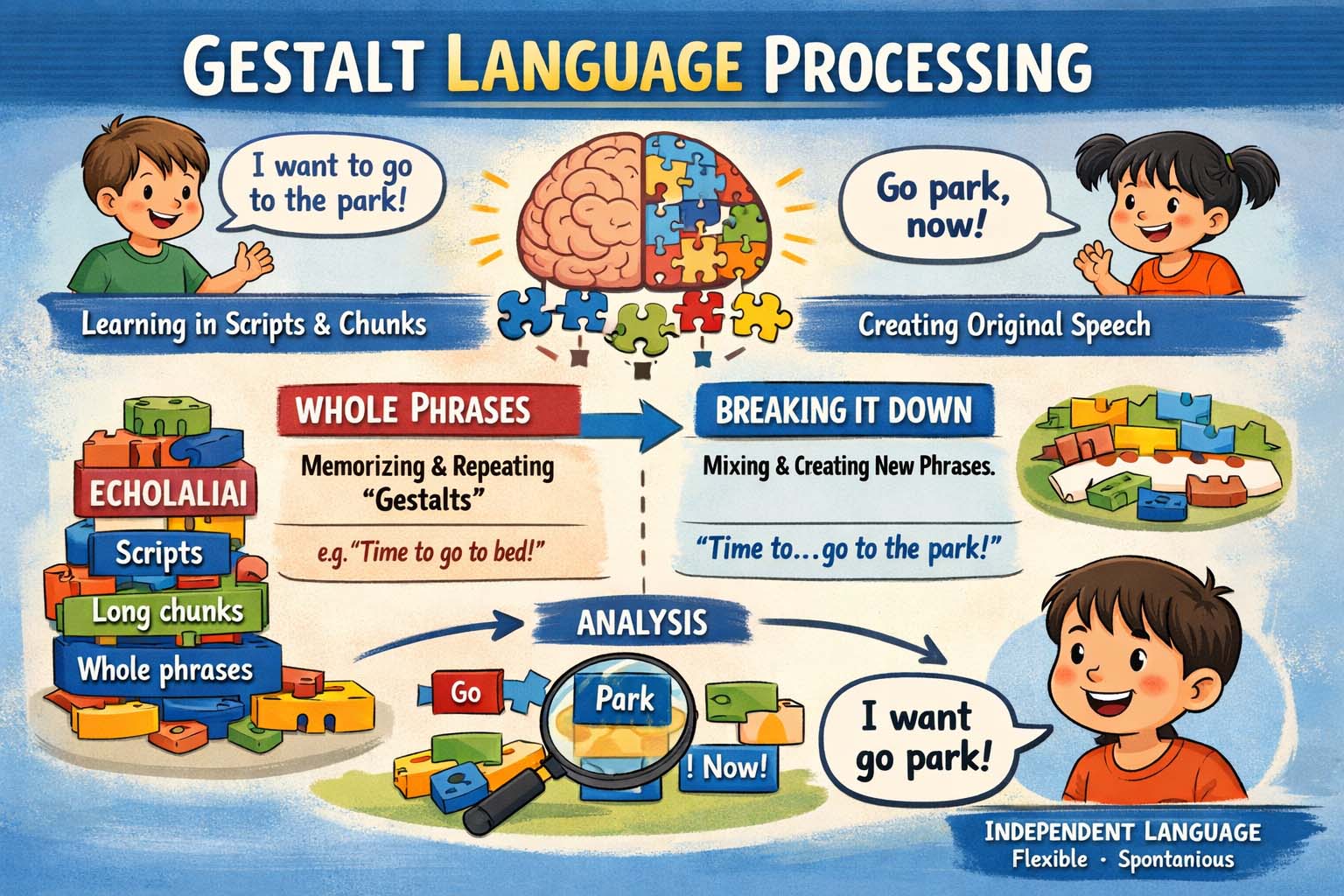
Gestalt language processing is a natural way some children and adults learn language by understanding and using whole phrases before breaking them into smaller parts. language processors often memorize chunks of language they hear in daily life, such as phrases from parents, teachers, songs, or favorite shows. Over time, they begin to separate those phrases into smaller units and create their own original sentences.
This topic has gained more attention in speech therapy, child development, and education because it helps parents and professionals better understand how language develops differently from one person to another. Learning about can help caregivers support communication in a respectful and effective way.
What Is Gestalt Language Processing?
Many parents ask, what is gestalt language processing and how is it different from traditional language learning? In simple terms, it is a style of language development where a person first learns large chunks of speech instead of isolated words. outside!” each individual word.
This is different from analytic language processing, where a child learns single words first, then combines them into phrases and sentences. Neither method is wrong. They are simply different pathways for learning language.
Speech-language pathologists often observe in children who use scripts, repeated phrases, or echolalia. These repeated phrases are meaningful attempts to communicate and should be respected as part of development.
How Gestalt Language Processing Works
A gestalt language processor often hears language in emotionally meaningful situations. They may remember the exact tone, rhythm, and wording of a phrase connected to an experience. For example, hearing “Time for bed!” every night may lead them to use that phrase later.
Over time, the learner starts to break these memorized chunks into smaller parts. Eventually, they can mix and match words creatively. This progression is an important sign of growth and language understanding.
The process may look different from child to child. Some move quickly through stages, while others need more time and support. Patience and responsive communication are key.
Gestalt Language Processing Stages
Experts often describe gestalt language processing stages as a developmental sequence. While exact models can vary, the general stages include:
Stage 1: Whole Scripts
The learner uses memorized phrases exactly as heard. Examples include lines from cartoons, songs, or family routines. These scripts often carry emotional meaning.
Stage 2: Mitigated Phrases
The learner begins changing parts of scripts. They may combine pieces of two known phrases or shorten longer scripts.
Stage 3: Single Words and Short Combinations
At this point, the person starts isolating individual words from scripts and using them more flexibly.
Stage 4: Original Sentences
The learner creates new sentences using grammar rules and vocabulary they now understand more independently.
Stage 5 and Beyond: Advanced Language Use
More complex grammar, storytelling, abstract thinking, and conversation skills continue to develop.
Understanding these stages of gestalt language processing helps caregivers see progress that may otherwise be missed.
Gestalt Language Processing and Autism
Some people search for gestalt language processing not autism because they want to know if this style of learning only happens in autistic individuals. The answer is no. While gestalt language processing is commonly discussed in autism communities, it is not limited to autism.
Autistic children may be more likely to be identified as gestalt language processors because scripting and echolalia are more noticeable in clinical settings. However, non-autistic children can also learn language this way. Language development exists on a spectrum, and many children use a mix of learning styles.
It is important not to assume that gestalt language processing automatically means autism. A full developmental evaluation by qualified professionals is the best way to understand a child’s communication profile.
How Parents Can Support Gestalt Learners
in helping gestalt language processors grow communication skills. One of the best strategies is modeling natural, meaningful language during everyday routines.
Use short phrases connected to real experiences. For example, during snack time say, “Want apple?” or “More juice?” Keep language warm and engaging.
Respond to scripts as communication attempts. If a child repeats a movie line when frustrated, try to understand the feeling behind it rather than stopping the repetition.
Expand language gently. If a child says, “Let’s go!” you might reply, “Let’s go outside!” This adds meaning without pressure.
Why Respecting Communication Matters
Historically, repeated speech was sometimes discouraged. Today, many professionals understand that scripts, echolalia, and memorized phrases can be valuable communication tools. They may express needs, emotions, excitement, or attempts to connect socially.
When adults respect these communication efforts, children often feel safer and more motivated to interact. Supportive environments lead to stronger progress than correction-focused approaches.
Common Misunderstandings
One common myth is that scripted speech means a child does not understand language. In reality, many learners understand much more than they can express.
Another myth is that gestalt processors should be forced to use single words only. This can slow natural development. Instead, supporting the learner’s current stage often works better.
comparisons with others are rarely helpful.
Conclusion
Gestalt language processing is a valid and meaningful way some people learn to communicate. often begin with whole phrases and later break them into smaller flexible parts. By understanding gestalt language processing stages, families and professionals can better recognize progress and provide effective support.
Whether someone is autistic or not, this language style deserves respect and understanding. Knowing what is gestalt language processing helps create more inclusive communication environments where every learner can thrive.